
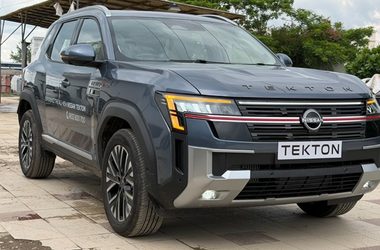

New Delhi: Premium electric mobility startup Trev Mobility plans to raise $2 million in its upcoming funding round as it looks to nearly triple its fleet, expand into major Indian cities and strengthen its technology and operational capabilities.
The company currently operates 105 premium electric vehicles and aims to increase the fleet to 300 vehicles by the end of the current financial year. Its longer-term target is substantially larger: 2,500 premium EVs by 2031, supported by expansion across metropolitan markets and selected Tier-2 cities.
The planned fundraising comes as Trev moves towards profit-after-tax, or PAT, positivity at an annualised revenue run rate of approximately ₹15 crore.
Trev has previously raised ₹3.5 crore from its own customers, including CXOs and frequent users of the service. The company says the investment from customers reflects confidence in its chauffeur-driven electric mobility model.
From two vehicles to more than 100
Trev began operations with just two vehicles and has since expanded its fleet to 105 EVs. Rather than positioning itself as another mass-market ride-hailing service, the company has focused on the premium end of the market, combining electric cars and SUVs with professionally managed chauffeurs.
“We have built Trev around a very clear customer need a reliable, premium and professionally managed mobility experience. Having grown from two vehicles to over 100, our next phase is about taking this model to more markets while maintaining the experience that differentiates us. We are looking to raise $2 million to accelerate that journey,” said Naveen Gupta, Founder, Trev Mobility.
Unlike conventional ride-hailing aggregators, Trev operates its own chauffeur service, allowing it greater control over vehicles, drivers and the overall customer experience.
Around 90% of its fleet is leased, largely through financial leases, while vehicle maintenance is managed by Trev. The fleet currently includes premium electric vehicles from MG and BYD, with the company evaluating additional models as India’s electric passenger vehicle market develops.
AI cameras monitor driver behaviour
Technology is also playing a growing role in Trev’s operations.
The company uses AI-enabled cameras to monitor chauffeur behaviour, including signs of driver fatigue, aggressive driving, smoking and seatbelt violations. The system is intended to improve safety as well as consistency in service standards — areas where even a premium badge on the bonnet cannot do all the work.
Drivers are employed on fixed salaries and receive incentives, periodic increments and insurance benefits. Trev says the employment model is designed to improve driver retention while providing customers with a more consistent chauffeur experience.
Bengaluru and Mumbai on expansion roadmap
Trev plans to enter Bengaluru, Mumbai and other major metropolitan markets through its own operations as part of the next phase of expansion.
At the same time, the company is evaluating asset-light and quasi-asset-light partnerships that could allow it to expand faster without giving up control over its service standards.
Select Tier-2 cities are also on the company’s radar, although Trev intends to retain its premium positioning rather than compete directly with high-volume ride-hailing platforms.
“We are not trying to compete for every ride. There is a distinct segment of customers for whom the quality of the car, chauffeur, safety and overall experience matters significantly. We believe premium electric mobility can become a category, and our focus is on building Trev as a strong player in that space,” Gupta added.
Betting on a specialised premium EV segment
Trev expects India’s electric mobility industry to become increasingly divided into distinct categories, including mass-market ride-hailing services, regional EV operators, business-to-business fleet providers and specialised premium mobility companies.
Its strategy is to position itself at the higher end of that spectrum, using electric vehicles, managed chauffeurs and technology-based safety systems as the central elements of its offering.
Whether premium chauffeur-driven EV mobility develops into a sizeable category will depend on customer demand and the economics of operating expensive electric fleets at scale. Trev’s proposed $2 million funding round and planned expansion to 300 vehicles will therefore represent an important test of whether its model can travel beyond its current footprint without leaving the premium experience behind.