


Dehradun: Toyota Kirloskar Motor has completed and initiated a series of education, healthcare, public-wellness and livelihood projects in Uttarakhand that are expected to benefit more than four lakh people, the company announced on Saturday.
The initiatives are being undertaken under a memorandum of understanding between Toyota Kirloskar Motor, or TKM, and the Uttarakhand government. The broader partnership covers long-term corporate social responsibility programmes in Khatima, in Udham Singh Nagar district, and Haldwani, in Nainital district, beginning in the 2025-26 financial year.
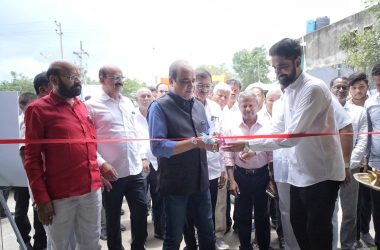
A formal handover ceremony was held in Dehradun on July 10 during CSR Dialogue 2026. It was attended by Uttarakhand Chief Minister Pushkar Singh Dhami, Cabinet Minister Ganesh Joshi, legislators Khajan Das and Umesh Sharma Kau, senior state government officials and representatives of Toyota Kirloskar Motor.
The education component includes infrastructure improvements at government schools and anganwadi centres across Udham Singh Nagar and Nainital. According to the company, the projects will benefit 13,532 students.
The upgrades include child-friendly learning materials, classroom furniture, improved kitchens for preparing mid-day meals and better sports facilities. The latter are intended to increase participation in physical activities and help students prepare for district- and state-level competitions — proving that school infrastructure sometimes needs to support both textbooks and tracksuits.
TKM has also begun a project to modernise science laboratories at nine government schools in Khatima, benefiting more than 7,000 students.
Community assessments found that some laboratories were still using scientific equipment and models that were between 15 and 20 years old. The company said it would provide modern apparatus, equipment and models to encourage practical learning and strengthen science education.
Healthcare forms the largest part of the programme by projected reach. TKM is providing essential medical and non-medical equipment to the Khatima Sub-District Hospital and primary health centres in Deori and Chakarpur.
The intervention is expected to benefit more than three lakh residents and support the management of over 1,500 maternity cases every year. It is intended to address gaps in emergency, maternal and child healthcare infrastructure in the region.
The company has also established open-air gym facilities at three locations in Khatima and developed a dedicated children’s play area at another site. These facilities are expected to serve nearly 60,000 people, with a particular focus on providing accessible recreation and exercise spaces for women, senior citizens and children.
Under its livelihood programme, TKM has installed a solar power system at a quilt-making centre in Gadarpur, Udham Singh Nagar district. The facility supports more than 120 women associated with local self-help groups.
The solar installation is intended to provide a reliable electricity supply for operating heavy machinery, reduce dependence on conventional power and improve productivity at the centre.
Chief Minister Pushkar Singh Dhami said the state’s development depended on expanding opportunities for children, women and local communities.
“Uttarakhand’s development journey depends on creating stronger opportunities for our children, women and communities. We appreciate the commitment shown by all participating corporates to supporting the state through interventions that strengthen education, improve access to healthcare and promote sustainable livelihoods. These initiatives address important community needs while creating long-term social impact. Partnerships between the government and responsible corporations play a critical role in building resilient communities and accelerating inclusive development across the state, ensuring that growth reaches every section of society,” Dhami said.
Vikram Gulati, Country Head and Executive Vice President, Corporate Affairs, Toyota Kirloskar Motor, said the company viewed education, healthcare and livelihood opportunities as interconnected elements of community development.
“Sustainable communities are built through education, healthcare, and livelihood opportunities. At Toyota, these are interconnected pillars of development that we prioritize across all our initiatives. Our work in Uttarakhand is designed to create long-term social infrastructure that empowers children, supports women, and improves community well-being. Together with the Government of Uttarakhand, we aim to build scalable and sustainable models that create meaningful impact for generations to come,” Gulati said.
Other officials present at the ceremony included Vishwas Dabar, Vice Chairman of the Infrastructure Monitoring Council; R.K. Sudhanshu, Principal Secretary; Vinay Shankar Pandey, Secretary; Dr. Saurabh Gaharwar, Managing Director of SIDCUL; and Manmohan Mainali, Additional Secretary.
Toyota Kirloskar Motor said it has undertaken community programmes in India since 2001 across education, environmental protection, road safety, skill development, healthcare, hygiene and disaster management.
The Uttarakhand partnership reflects a broader shift in corporate social responsibility from short-term assistance towards durable public infrastructure. Its longer-term value, however, will ultimately be measured not at handover ceremonies but in better-equipped classrooms, safer maternity care and more dependable livelihoods for the communities using these facilities.