

Nha Trang, Vietnam: Vietnamese electric vehicle manufacturer VinFast is accelerating its transition towards software-defined vehicles, investing in proprietary software, artificial intelligence (AI), advanced driver-assistance systems (ADAS) and Level 4 automated driving technology as it seeks to strengthen its position in the global automotive industry.
At the V-Creator All Star Summit 2026, held in Nha Trang, Vietnam, from November 15 to 19, the automaker presented an engineering roadmap combining in-house technology development, international partnerships and the resources of its parent company, Vingroup.
The strategy reflects a broader transformation across the automotive industry, where competitive advantage is increasingly determined by computing power, software architecture and artificial intelligence. Horsepower, it appears, is no longer the only power figure worth discussing.
VinFast VF 8 Leads Software-Defined Vehicle Transition
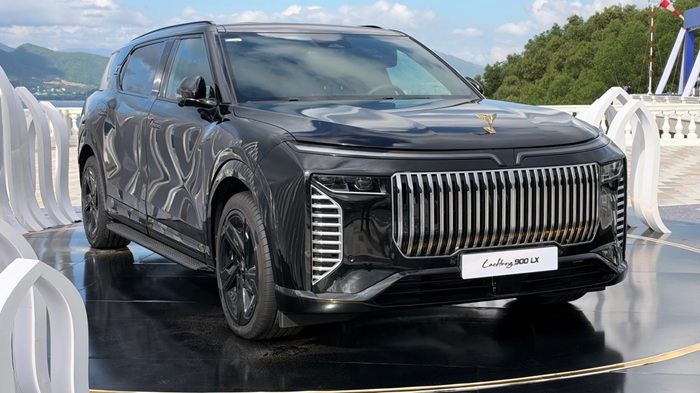
The all-new VinFast VF 8, launched in Vietnam in May 2026, represents a significant step in the company’s technological evolution.
Alongside improvements to its chassis, suspension and driving dynamics, the electric SUV features a next-generation electrical/electronic (E/E) architecture developed internally by VinFast.
At the centre of this architecture is a Central Vehicle Computer (CVC), designed to coordinate multiple vehicle functions, improve software integration and support future technological development.
The new VF 8 also marks the first commercial deployment of VinFast’s internally developed advanced driver-assistance systems. These include highway driving assistance, adaptive cruise control, lane-keeping assistance, automatic emergency braking, blind-spot warnings and surround-view monitoring.
Developing these technologies internally could give VinFast greater control over engineering costs, system integration and future vehicle development.
According to its 2025 annual report, VinFast employed nearly 2,500 in-house research and development professionals at the end of the year, including more than 600 software engineers.
VinFast Pursues Level 2 and Level 4 Automated Driving
Prof. Dr. Duong-Van Nguyen, VinFast’s Deputy CEO overseeing ADAS and autonomous driving, outlined a dual-track technology development strategy at the summit.
The company is focusing on advancing Level 2 and enhanced Level 2 driver-assistance systems for passenger vehicles while simultaneously developing Level 4 automated driving technology for future mobility applications.
For its near-term ADAS development, VinFast is adopting a hybrid architecture combining AI-powered perception, sensor fusion and conventional rule-based algorithms for motion planning and vehicle control.
The approach is intended to balance computational efficiency, predictable system behaviour, safety validation and affordability, particularly for mass-market vehicles.
Nguyen also presented advanced automated parking and vehicle-summoning capabilities, technologies that could make navigating tight parking spaces considerably less stressful.
However, Level 2 driver-assistance systems continue to require constant driver supervision and do not qualify as autonomous driving.
For higher levels of automation, VinFast is exploring end-to-end learning and Vision-Language-Action (VLA) models, an emerging field of automotive artificial intelligence.
VLA technology combines visual perception, contextual reasoning and action generation, potentially enabling vehicles to better understand complex traffic situations, anticipate hazards and make context-aware driving decisions.
These technologies remain under development and validation.
Vietnam’s Chaotic Traffic Could Become an AI Advantage
VinFast’s technology strategy could benefit from an unlikely resource: Southeast Asia’s notoriously complex urban traffic.
Vietnam’s roads, characterised by dense motorcycle traffic, unpredictable interactions between road users and rapidly changing conditions, present significant challenges for automated driving systems.
For AI engineers, however, these challenges could provide valuable opportunities to collect real-world driving data. A busy Vietnamese intersection may offer a more demanding examination than many controlled testing environments.
VinFast is seeking to leverage the broader Vingroup ecosystem, particularly Green SM, its affiliated electric mobility services operator.
Access to commercial fleet operations could provide diverse driving datasets for training, testing and refining AI-powered driving systems.
The company’s development framework includes data collection, scenario identification, AI training, simulation, benchmarking and vehicle-level validation. Complex real-world driving situations can also be recreated virtually to evaluate software performance.
Successfully developing systems capable of handling Southeast Asia’s demanding traffic conditions could help VinFast build engineering expertise applicable to international markets.
Autobrains and NVIDIA Technology Support VinFast’s Roadmap
“Partner to move fast. Build in-house capabilities to go far.”
The principle, presented by Nguyen at the V-Creator summit, summarises VinFast’s approach to balancing international technology partnerships with proprietary engineering development.
In January 2026, VinFast announced a strategic partnership with automotive AI specialist Autobrains to develop enhanced Level 2 driver-assistance systems and explore more cost-efficient automated driving architectures.
Initial pilot testing had begun on VinFast VF 8 and VF 9 vehicles.
In June 2026, the collaboration expanded to include a next-generation Level 4 automated driving programme based on the NVIDIA Drive Hyperion platform.
Under the roadmap presented at the summit, VinFast has identified 2026 as a period for technology validation and platform selection, followed by industrialisation and planned initial service deployment in 2027.
Potential applications include Vinhomes Green Paradise in Can Gio, Vietnam.
The proposed milestones remain subject to further engineering development, safety validation and applicable regulatory approvals and requirements.
Making Intelligent Vehicles Accessible to Mass-Market Customers
While automotive manufacturers worldwide are investing heavily in increasingly sophisticated software, VinFast is also emphasising affordability and practical customer benefits.
“A smart car should give drivers fewer things to worry about and more time to enjoy life,” said Tapan Ghosh, CEO of VinFast Asia, at the summit.
The automaker envisions connected vehicles capable of learning from usage patterns, anticipating maintenance requirements, recommending charging locations and delivering personalised assistance.
Such capabilities could be particularly relevant in rapidly developing automotive markets such as India, Indonesia and the Philippines, where affordability, practicality and ownership convenience remain important considerations for buyers.
The challenge for VinFast will be to translate increasingly sophisticated technology into reliable, intuitive and accessible features without significantly increasing vehicle ownership costs.
As the global automotive industry moves towards intelligent, connected and software-defined vehicles, VinFast’s ambitions are extending well beyond electrification. For the relatively young Vietnamese automaker, its next defining achievement may not be measured solely in battery capacity or driving range, but in how intelligently its vehicles operate — and how successfully it can make that intelligence accessible to everyday motorists.