
Mumbai: Tata Motors Passenger Vehicles Ltd. (TMPVL) reported consolidated revenue of ₹95,799 crore for the quarter ended June 30, 2026, an increase of 9.3% year-on-year, as strong growth in its domestic passenger vehicle business helped offset weaker volumes and profitability at Jaguar Land Rover. Consolidated profit before tax, excluding exceptional items, stood at ₹1,606 crore, down ₹2,344 crore from the year-ago quarter.
The company reported an EBITDA margin of 7.4%, down 130 basis points year-on-year, while EBIT margin declined 90 basis points to 2.4%. Profit after tax stood at about ₹900 crore. Free cash flow was negative ₹11,800 crore, largely due to seasonal working-capital requirements, taking consolidated net debt to ₹42,200 crore.
The numbers presented something of a two-speed quarter: revenue moved firmly forward, while profitability had to navigate a rather more congested road.
Tata Passenger Vehicles Revenue Surges 64.8%
The standout performance came from Tata Passenger Vehicles, where revenue rose 64.8% year-on-year to ₹17,930 crore. Volumes increased 46%, significantly outpacing the broader industry, according to the company.
Electric vehicle volumes more than doubled, rising 112% year-on-year. Tata Motors said quarterly EV sales exceeded 34,000 units, supported by new launches and stronger demand. EVs accounted for 19% of Tata PV volumes during the quarter, while CNG vehicles contributed 27%.
The company’s Vahan market share stood at 14.3%, placing it at No. 2 during Q1 FY27, while its EV Vahan market share remained at 39%.
Tata PV’s EBITDA margin improved by 30 basis points to 4.3%, while its EBIT margin improved by 230 basis points to negative 0.5%. Profit before tax, excluding exceptional items, was around breakeven compared with a loss of roughly ₹100 crore in the corresponding quarter last year.
Detailed group financials show Tata PV EBITDA increasing to ₹763 crore from ₹439 crore a year earlier, while the EBIT loss narrowed sharply to ₹85 crore from ₹299 crore.
The domestic business ended the quarter with free cash flow of ₹1,100 crore, cash of ₹10,900 crore and gross debt of ₹2,900 crore, resulting in net cash of ₹8,000 crore.
Shailesh Chandra, Managing Director & CEO, Tata Motors Passenger Vehicles Limited, said:
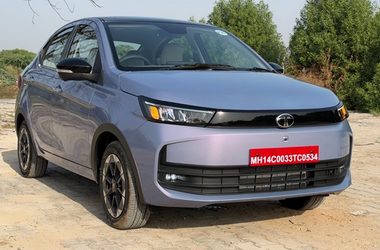
“Q1 FY27 marked a strong start to the year for Tata Motors PV, with industry-beating 46% YoY volume growth driven by robust customer demand and the success of our recent launches. Our leadership in electric mobility strengthened further, with record quarterly EV volumes of over 34,000 units and 112% YoY growth. The new avatars of Tiago and Punch have received a strong response, with robust bookings across powertrains, reinforcing the strength of our multi-powertrain strategy. We are encouraged by the growing adoption of EVs across segments and the rapid mainstreaming of electric mobility in India.
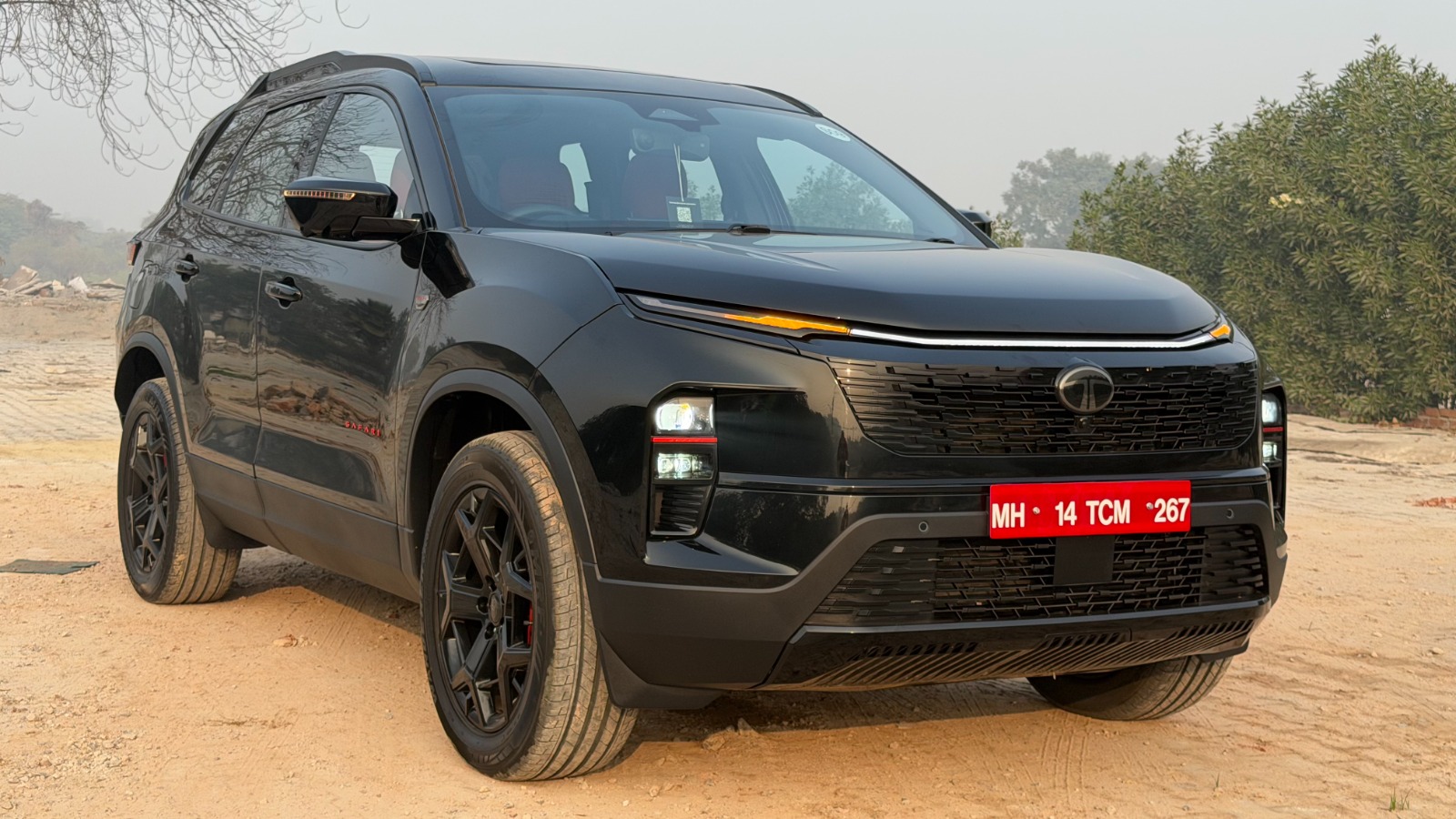
While supply constraints affected Sierra volumes during the quarter, customer interest remains strong and the Sierra.ev has seen a positive response. In Q1 FY27 we delivered a resilient financial performance while being impacted on account of elevated levels of commodity and forex.
Supported by a strong order book, exciting product pipeline, sustained demand, and focused margin improvement initiatives, we remain confident of maintaining growth momentum and delivering sequential improvement through the rest of the year.”
JLR Revenue Falls as Supply Constraints Bite
Jaguar Land Rover faced a more difficult quarter. Revenue declined 9.6% year-on-year to £5.973 billion after wholesale volumes fell 9.2%. TMPVL attributed the decline to temporary supply constraints, including a fire at a major component supplier, disruption linked to the Middle East conflict and the planned wind-down of outgoing Jaguar models ahead of Jaguar Type 01.
JLR’s adjusted EBIT margin fell to 2.8% from 4.0% a year earlier. Profit before tax, excluding exceptional items, dropped 68.9% to £109 million, while profit after tax declined to £66 million from £248 million.
Profitability was also affected by higher Variable Marketing Expense, or VME, which increased to 7.1% from 4.1%, alongside adverse foreign-exchange movements and lower volumes. The mix of Range Rover, Range Rover Sport and Defender, however, improved to 80.8% from 77.2% a year earlier.
JLR generated negative free cash flow of £998 million during the quarter and ended June with £1.7 billion of cash. Total liquidity stood at £5.9 billion, including undrawn credit and financing facilities.
PB Balaji, Chief Executive Officer, said:
“JLR delivered first quarter profits of £109m and an adjusted EBIT margin of 2.8%. Despite the near-term industry challenges, we continue to see strong demand for our brands and look forward to the launch of four sensational new products in the coming months: Range Rover Electric, Range Rover Sport Electric, Range Rover GT and Jaguar Type 01.
I would like to thank all our people, suppliers and retail partners for their continued dedication, resilience and support.”
Group Profitability Comes Under Pressure
At the consolidated level, EBITDA declined to ₹7,128 crore from ₹7,618 crore in Q1 FY26 despite higher revenue. EBIT fell to ₹2,272 crore from ₹2,879 crore, while profit before tax excluding exceptional items dropped to ₹1,606 crore from ₹3,950 crore.
The divergence largely reflected strong expansion in the Indian passenger vehicle business being counterbalanced by softer JLR volumes, higher commodity and foreign-exchange costs and increased marketing expenditure in the luxury division.
Dhiman Gupta, Chief Financial Officer, TMPVL, said:
“Q1 FY27 was a quarter where we focused on carrying forward the growth momentum in the domestic business and preparing for an important transition year at JLR. Some of the challenges of FY26 i.e. supply constraints and elevated commodities / FX continued to impact performance in Q1 FY27. We delivered a resilient quarter and are confident to drive growth through new launches, debottleneck supply constraints, and take focused actions to deliver margin improvements.”
Four New JLR Products Planned
TMPVL said geopolitical developments and luxury-market trends remain areas to watch. JLR is expected to broaden its battery-electric vehicle portfolio with four products in the coming months — Range Rover Electric, Range Rover Sport Electric, Range Rover GT and Jaguar Type 01.
The company said commodity costs are expected to remain elevated in the domestic business, although demand continues to be healthy alongside increasing EV penetration. Its near-term priorities include revenue growth, cost reduction and calibrated pricing actions.
The quarter therefore underlined the increasingly different dynamics within TMPVL’s automotive portfolio: a fast-growing Indian passenger vehicle operation gaining from electric and alternative-powertrain demand, and a global luxury business navigating supply disruptions and a major product transition. How quickly JLR restores volumes and margins, while Tata PV converts rapid sales growth into stronger profitability, is likely to shape the group’s performance through the remainder of FY27.