
In a move that could quietly redefine India’s bustling streets—where three-wheelers are as common as chai stalls—Hyundai Motor Company and TVS Motor Company have officially signed a Joint Development Agreement (JDA) to co-develop and commercialize electric three-wheelers (E3Ws) tailored for India and global markets.
Announced on April 20, 2026, across Seoul and New Delhi, the partnership signals a serious push into the heart of India’s last-mile mobility ecosystem—arguably one of the most chaotic yet essential segments of urban transport. And yes, if everything goes as planned, your next auto ride might be designed in Seoul and perfected on Indian roads that test suspension systems more than any lab ever could.
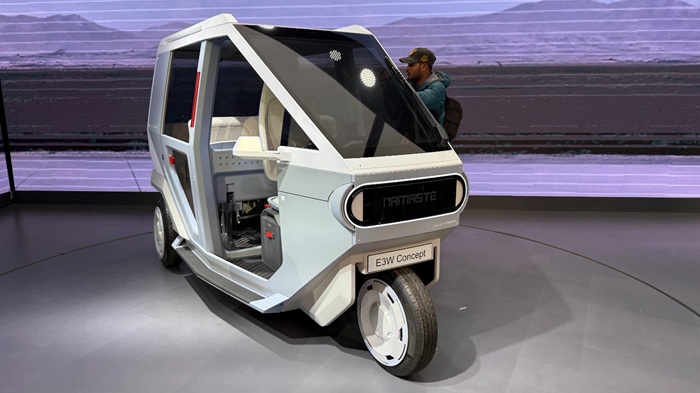
The collaboration builds on the E3W concept first showcased at the Bharat Mobility Global Expo 2025, marking the transition from concept stage to real-world production. Under this agreement, Hyundai will lead the design and co-development process, bringing its global R&D capabilities and human-centric design philosophy into play. TVS Motor, on the other hand, will anchor the project with its deep-rooted expertise in electric three-wheelers, local market insights, and manufacturing strength.
The upcoming electric three-wheeler isn’t just another EV—it’s being engineered specifically for India’s unique conditions. Think adaptive ground clearance for monsoon-hit roads, improved thermal management for tropical heat, enhanced safety systems, and flexible interiors that can switch roles from passenger carrier to cargo mover or even emergency service vehicle. In short, it’s designed to survive—and thrive—in real India, not just in PowerPoint presentations.
TVS Motor will also handle local manufacturing and sales, ensuring that the product is not only made in India but made for India. The companies have committed to high levels of localization, sourcing major components domestically. This move is expected to strengthen the supply chain, create employment opportunities, reduce costs, and improve after-sales support—because in the three-wheeler world, uptime is everything.
Joongsun Ko, Senior Vice President at Hyundai Motor, emphasized that the partnership aligns with the company’s long-term vision of improving transportation ecosystems in key markets like India. Meanwhile, Sharad Mishra of TVS Motor highlighted the collaboration as a step toward delivering scalable, sustainable mobility solutions that combine technology with real-world usability.
India, being the world’s largest three-wheeler market, serves as the natural launchpad for this initiative. The first product under this partnership will undergo extensive testing, localization, and certification before hitting the roads—ensuring it meets both regulatory standards and the expectations of millions who rely on these vehicles daily.
With dedicated cross-functional teams already in place, Hyundai and TVS are accelerating development timelines. If successful, this partnership could set a new benchmark in electric last-mile mobility—not just in India, but across similar markets globally.
And while the humble auto-rickshaw may not usually make global headlines, this time it just might—because when two automotive giants decide to reinvent it, even the smallest vehicle can drive the biggest change.