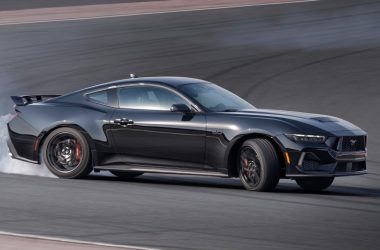



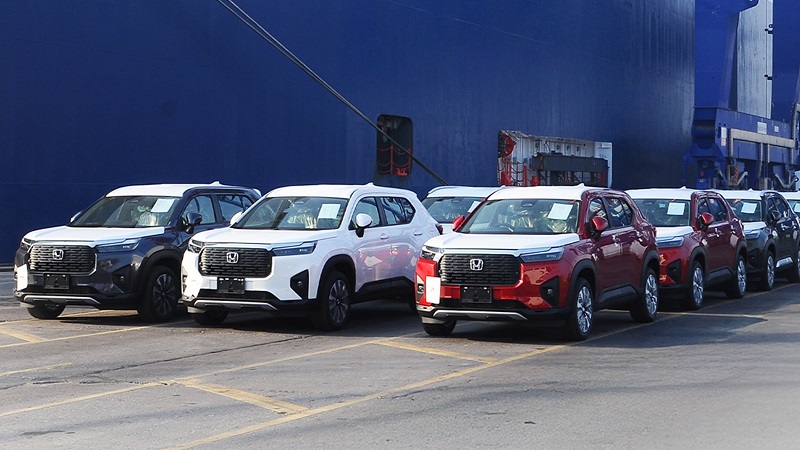
India’s economy seems to have shifted to “Sport Mode.” At the 120th Annual Session of the PHD Chamber of Commerce and Industry (PHDCCI), Union Minister for Road Transport and Highways Nitin Gadkari turned economist, environmentalist, and motivational speaker all at once—declaring that India is set to become a USD 5 trillion economy by 2027 and, quite literally, already in the driver’s seat of the global automobile industry.
India’s Economic Engine Hits Third Gear
“When we took office in 2014, India’s automobile industry ranked seventh globally,” Gadkari recounted. “Now, we’ve overtaken Japan to become the third-largest auto market in the world, worth a massive ₹22 lakh crore.”
That’s right—Japan may have invented the emoji, but India now owns the “vroom.”
The Minister added that the next pit stop is the world’s number one spot, achievable within five years—powered by research, innovation, and some seriously clever fuel chemistry.
The New Holy Trinity: Ethics, Economy, and Ecology
Echoing a balance between dharma and diesel, Gadkari urged that development must rest on three E’s—Ethics, Economy, and Ecology.
“Ethics keeps society stable, economy drives progress, and ecology keeps us alive to enjoy both,” he quipped, subtly implying that a clean conscience and clean air might just be India’s best imports.
From Maize to Mileage
In a tone that could make farmers cheer louder than Formula 1 fans, Gadkari revealed that ethanol production reforms have added ₹45,000 crore to farmers’ incomes. “We’re turning maize into money, waste into wealth, and fuel into future,” he smiled—proving once again that in Gadkari’s India, nothing goes to waste, not even sewage sludge.
(Yes, he proudly cited Mathura’s project where sewage sludge is converted into bioenergy—a move that literally turns “holy waste” into “wholesome watts.”)
Electric Dreams & Swappable Reality
Sharing a live case study from Sonipat, he spoke about electric truck battery swapping, calling it cheaper, faster, and definitely cleaner than diesel. “Electricity per kilometre is far less than diesel. Logistics costs have already dropped from 16% of GDP and will hit single digits soon.”
If logistics were an exam, India just went from “failed attempt” to “top percentile.”
Highways to Heaven (and GDP Growth)
With 25 Greenfield Expressways, new tunnels like Zojila, and high-speed corridors such as Delhi–Katra–Amritsar, Gadkari reminded everyone that infrastructure is more than concrete—it’s compound interest.
“Every ₹100 spent on highways returns ₹321 to GDP,” he noted. “Even stock brokers envy that ROI.”
Investors Over-Speeding with Confidence
Under the InvIT and TOT models, the Ministry’s first InvIT bond issue was oversubscribed seven times within hours. Gadkari called it a “signal of investor faith” —and perhaps a hint that the next bull run might be happening on the Delhi–Mumbai Expressway.
A Roadmap for 2047
Wrapping up, the Minister reiterated India’s mission to become a developed nation by 2047, with safe, sustainable, and inclusive infrastructure. “No person is waste. No material is waste,” he said—adding a line that deserves its own bumper sticker.