

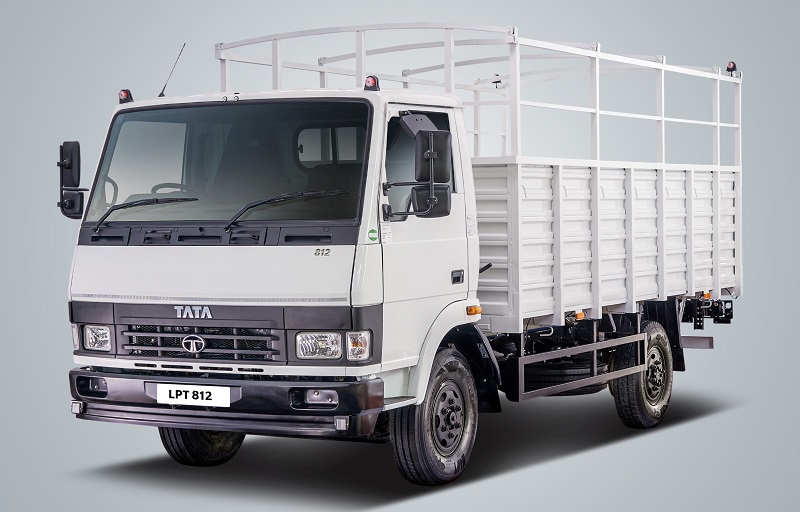
Mumbai: Tata Motors, India’s commercial vehicle colossus, has once again proved that bigger isn’t always better—sometimes smarter is. With the launch of the all-new Tata LPT 812, the company has rolled out a truck that promises to carry five tonnes of cargo on just four tyres. In short, it’s the gym-toned truck of India’s haulage world: lean, strong, and shockingly efficient.
India’s first 4-tyre truck with a 5-tonne rated payload, the LPT 812 is here to redefine what fleet profitability looks like. Factory-fitted air-conditioning (yes, even truck drivers deserve comfort), multiple load body options, and urban-friendly agility make this machine the logistics equivalent of a Swiss Army knife—minus the corkscrew.
Rajesh Kaul, Vice President & Business Head – Trucks, Tata Motors, said, “The launch of the Tata LPT 812 sets a new benchmark in customer profitability. With higher payload, superior fuel efficiency, and maximum uptime, this truck is like a retirement plan for fleet owners—except it starts paying from day one.”
Under its utilitarian hood, the LPT 812 packs the tried-and-tested 4SPCR diesel engine, producing 125hp and 360Nm torque. Translation: it can haul your goods uphill without panting, and still save enough diesel to make accountants weep with joy. With a 5-speed gearbox, booster-assisted clutch, and full S-Cam air brakes, the truck makes city haulage less of a wrestling match and more of a smooth cruise.
Designed for applications from fruits-and-vegetables to courier loads, the LPT 812 offers the rugged durability of a 6-tyre truck but with the efficiency, agility, and lower running costs of a 4-tyre setup. It’s like ordering a large thali but paying for the mini.
Warranty? A generous 3 years/3 lakh kilometres. Service network? 3,200+ touchpoints. Digital fleet management? Fleet Edge makes sure operators know exactly when their truck is busy working—or sneakily napping.
With Sampoorna Seva 2.0 and the promise of maximum uptime, Tata’s LPT 812 isn’t just another truck. It’s a four-wheeled business partner that promises to deliver profits, payloads, and perhaps, a few sighs of relief to India’s overworked logistics sector.