
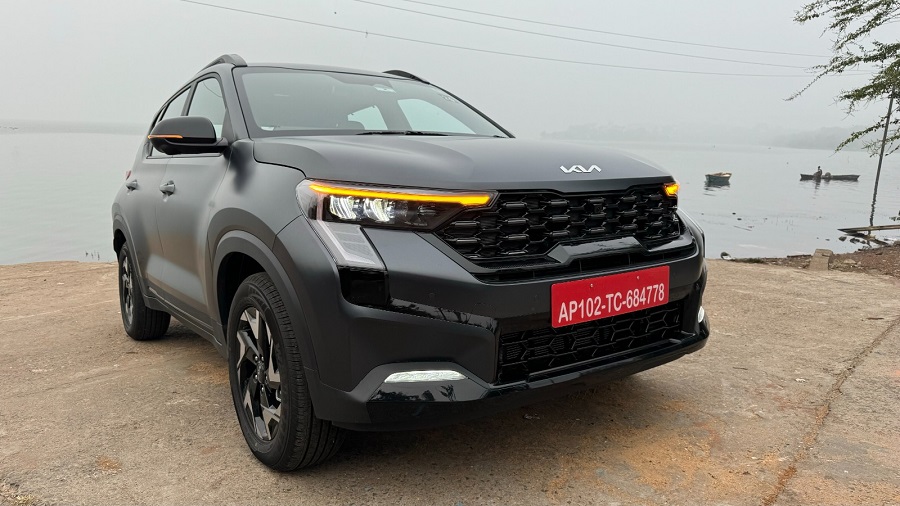
New Delhi: Kia India recorded wholesale dispatches of 28,200 units in July 2026, its highest-ever July volume since entering the Indian market, marking a 27.4% year-on-year increase from 22,135 units sold in July 2025.
The automaker also reported cumulative wholesale dispatches of 191,949 units between January and July 2026, up 16.8% from 164,274 units during the corresponding period last year.
The latest performance extends the momentum from what Kia described as its strongest-ever first half in India, with the Seltos and Sonet emerging as the principal contributors to growth.
Kia said the Seltos has consistently averaged more than 10,000 units in monthly sales since its launch in January. On a year-to-date basis, sales of the Seltos and Sonet have grown 75.7% and 34.5%, respectively.
“Our best-ever July wholesale performance reflects the continued trust of our customers and the strong acceptance of Kia’s diverse product portfolio. Building on our record H1 performance, we have maintained healthy momentum across key segments. Led by the strong performance of the Seltos and Sonet, we have seen healthy demand across Carens Clavis and MY26 Syros. Meanwhile, the Carens Clavis EV continues to strengthen our presence in the electric mobility space,” said Atul Sood, Senior Vice President – Sales & Marketing, Kia India. “We are delighted by the customer response to the newly launched Syros EV. Its segment-leading range, advanced technology, industry-leading ownership benefits and expanding EV ecosystem reflect our commitment to delivering practical and future-ready mobility solutions for Indian customers. We remain focused on strengthening our product portfolio and enhancing the ownership experience as we continue our growth journey,” he further added.
Carens, Clavis and Syros Support Growth
Alongside its higher-volume SUVs, Kia said the Carens and Carens Clavis continued to contribute to its sales performance, while the MY26 Syros also attracted customer interest.
The Carens Clavis EV, meanwhile, is helping the company expand its electric vehicle portfolio as competition in India’s EV market intensifies.
Kia has also recently introduced the Syros EV, describing it as its second Made-in-India mass-market electric SUV and the first model in its segment to offer a claimed driving range of more than 500 km.
The company said the electric SUV has received strong initial bookings, though it did not disclose booking numbers in its July sales statement.
The Syros EV offers an ARAI-certified range of 526 km and produces 171 PS. Kia says the battery can be charged from 10% to 80% using DC fast charging in 39 minutes.
Its equipment list includes Level 2 advanced driver assistance systems with 16 autonomous functions and a 30-inch Trinity Panoramic Display.
Kia is also offering ownership programmes including Assured Buyback, Battery-as-a-Service, or BaaS, and a Lifetime Battery Warranty. Such packages are increasingly becoming part of the EV sales pitch as manufacturers try to address customer concerns around battery life, resale values and upfront prices — because, in the electric-car business, the battery specification is only half the conversation.
Kia Expands Sales and Service Network
Kia India said it will continue strengthening both its internal-combustion-engine and electric vehicle portfolios while expanding its sales, service and Certified Pre-Owned network.
The automaker currently has 905 customer touchpoints across 412 cities in India, covering sales, service and ownership support in major urban centres as well as emerging markets.
Its Certified Pre-Owned network has expanded to 135 outlets, offering services including vehicle exchanges and payments for used vehicles.
Kia’s record July performance comes as the company broadens its portfolio across conventional and electric powertrains. Sustaining that growth will increasingly depend not only on established volume models such as the Seltos and Sonet, but also on how effectively newer products such as the Carens Clavis EV and Syros EV can translate early interest into consistent sales in India’s increasingly crowded automotive market.