Mumbai: Tata Motors has secured orders for more than 3,400 electric commercial vehicles across freight, logistics and passenger mobility segments, signalling a wider shift in India’s commercial transport sector from trial-stage electrification to scaled fleet deployment.
The orders include around 2,000 small commercial vehicles and pick-ups, nearly 900 trucks and about 500 buses, the company said. The vehicles will be used across a broad range of sectors, including e-commerce, logistics, FMCG and FMCD distribution, intra-city mobility, cement, steel, mining, tarmac operations, and inter- and intra-city passenger transport.
For India’s electric commercial vehicle market, the order book is notable not just for its size but also for its spread. Electric vehicles are no longer being reserved only for neatly predictable city routes; they are increasingly being considered for tougher applications where downtime, range, payload and charging access matter far more than brochure promises.
Tata Motors said the development marks a “significant inflection point” in the adoption of electric mobility for both freight and passenger transport in India. The company added that the deployment reflects growing customer confidence in electric mobility solutions under real-world operating conditions.
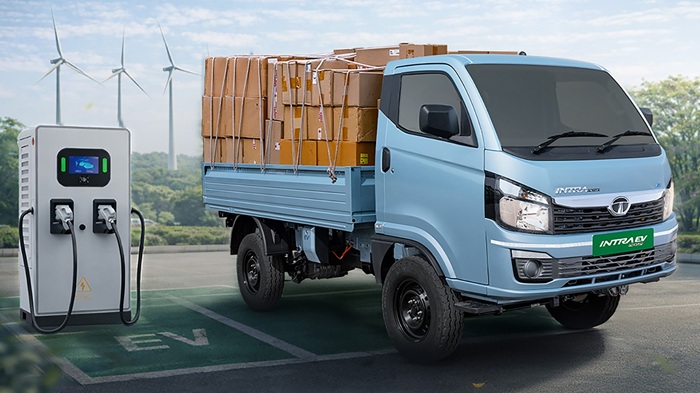
Over the past year, Tata Motors has expanded its electric commercial vehicle portfolio across multiple weight and usage categories. In the small commercial vehicle and pick-up segment, its line-up includes the Ace Pro EV, Ace EV and Intra EV, aimed at last-mile and intra-city distribution.
The company has also moved further into intermediate and heavy-duty electric commercial vehicles with the Ultra EV range in the 7-12 tonne category, along with the Prima EV 55T tractor and Prima EV 28T tipper. These models are designed for more demanding freight operations, including heavier logistics and industrial applications.
In passenger mobility, Tata Motors offers electric buses such as the Starbus EV and Ultra EV buses for intra-city and intercity operations. The company said it already has more than 3,800 electric buses operating across multiple cities, with a cumulative running of over 55 crore kilometres.
That operating experience, Tata Motors said, has helped generate real-world insights to improve reliability, efficiency and lifecycle performance. The company also said more than 17,000 Tata electric small commercial vehicles are currently on the road.
The latest orders come as businesses increasingly evaluate electric commercial vehicles not only for sustainability goals but also for operating economics. While charging infrastructure and financing remain key concerns for fleet operators, the sector is gradually moving beyond the “let us test one vehicle first” phase — a familiar rite of passage in Indian transport, often followed by several cups of tea and much spreadsheet analysis.
To support wider adoption, Tata Motors said it is taking an ecosystem-led approach that includes charging partnerships with more than 14 charge point operators, EV-focused financing solutions with banks and non-banking financial companies, fleet management through Fleet Edge, and uptime assurance programmes.
The company said it is working closely with fleet owners and customers to optimise vehicle performance, uptime, charging and financing across the vehicle lifecycle. This, it said, is aimed at making electrification both practical and profitable for businesses.
The orders strengthen Tata Motors’ position in India’s electric commercial vehicle space at a time when companies are under growing pressure to lower emissions, improve fleet efficiency and prepare for cleaner urban transport systems.
As electric commercial vehicles move into more demanding sectors and heavier-duty applications, the next phase of adoption is likely to be shaped less by novelty and more by operational reliability. For Tata Motors and the wider industry, that may be the real test of whether zero-emission commercial mobility can become part of everyday business rather than a special project parked near the company’s sustainability report.