The name Tata Safari carries a kind of legacy in India that most SUVs can only dream of. Launched back in 1998, Safari wasn’t just a car; it was a statement—one that said you had arrived, preferably after conquering half a mountain road and a muddy trail. Fast forward to 2026, and what you’re looking at now is the third-generation facelift, a Safari that has clearly gone to finishing school, learned table manners, adopted artificial intelligence, and still retained that old lion-hearted confidence.
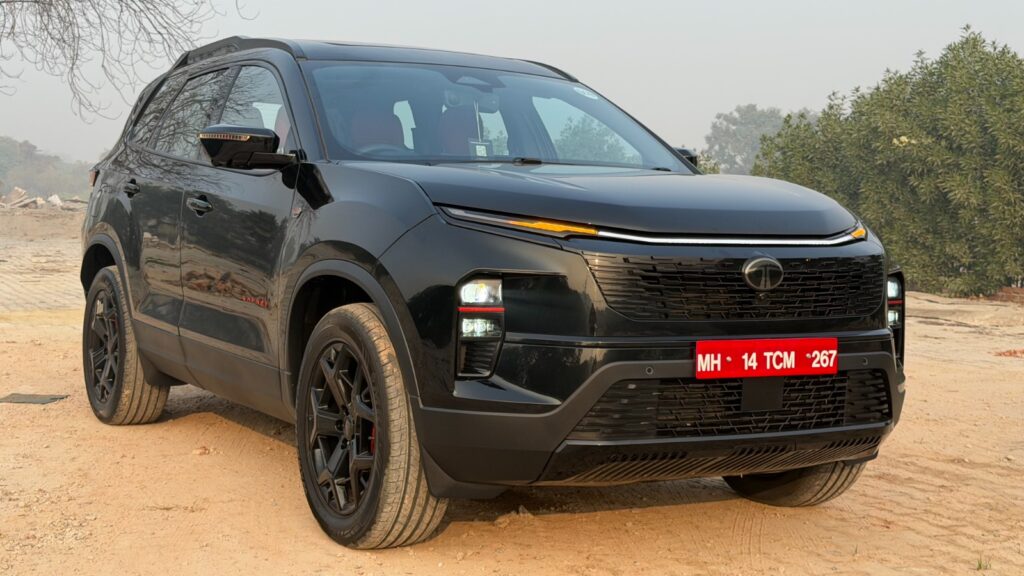
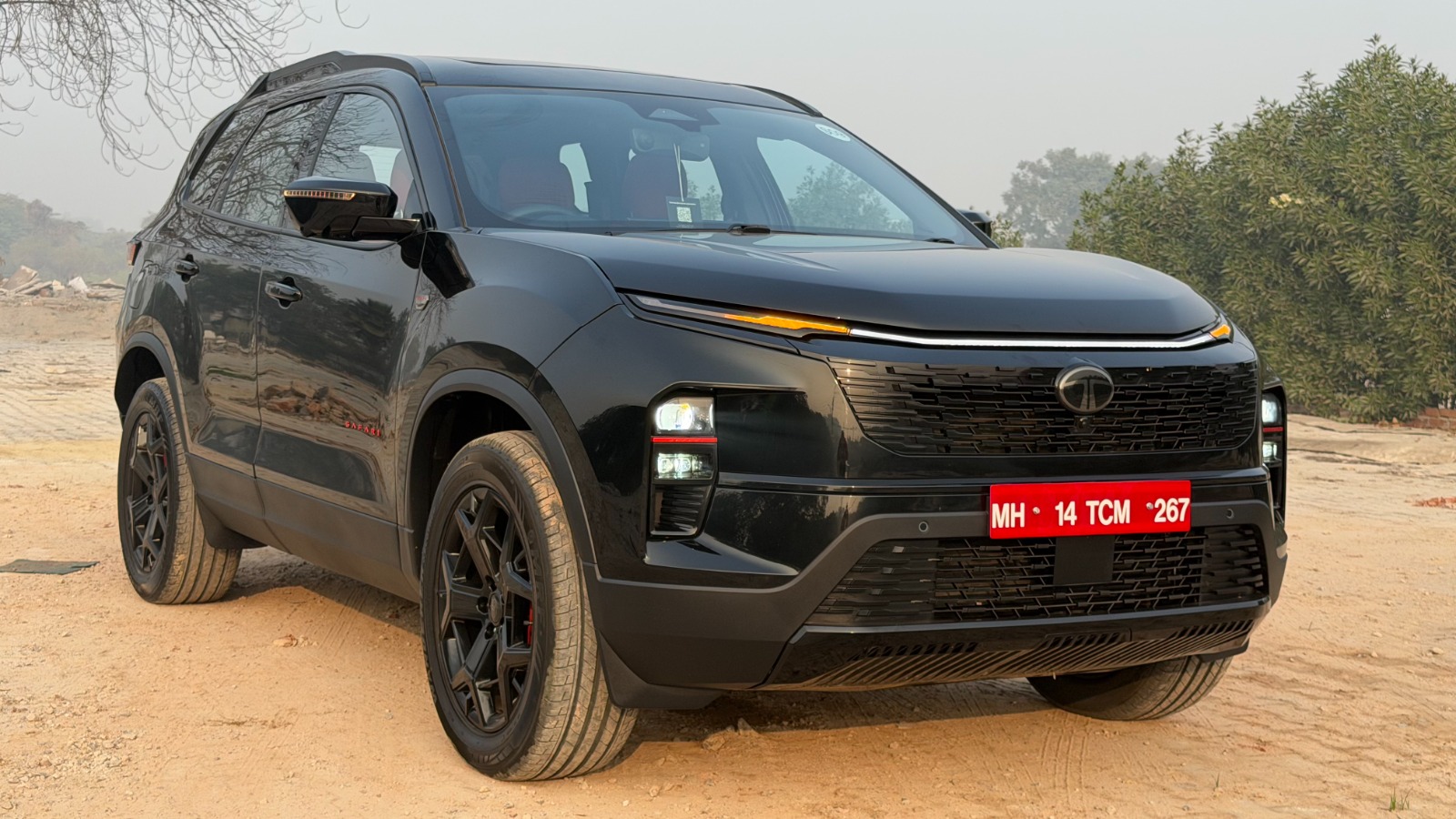
This particular example—the top-spec Adventure Ultra Red Dark Petrol—wears its authority well. At prices starting from ₹13.29 lakh ex-showroom and stretching up to ₹26 lakh, the Safari confidently plants itself in the premium Indian crossover SUV space, offering both petrol and diesel engines, along with 6-seater and 7-seater configurations. And if you’re wondering where the 5-seater sibling is hiding, that role is proudly played by the Harrier, starting at ₹12.89 lakh. Together, Harrier and Safari have already crossed the 2.5-lakh sales mark in India, which tells you this duo isn’t just popular—it’s practically a household name.
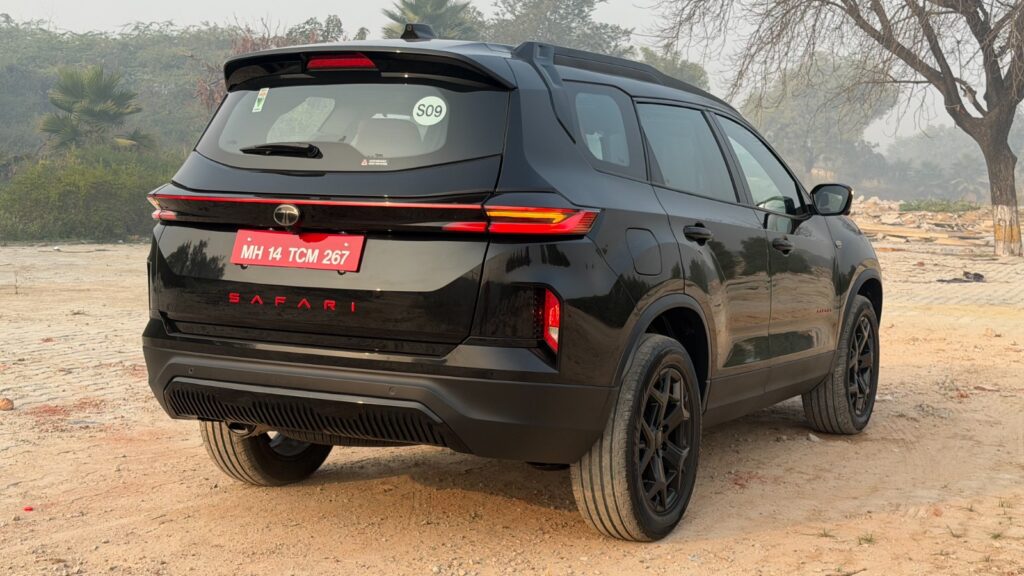
The design responsibility lies with Martin Uhlarik, the man behind Nexon and Harrier as well, and it shows. The Safari now looks muscular yet polished, like someone who lifts weights but also moisturises. The new precision-crafted parametric grille, connected LED DRLs with sequential turn indicators, and welcome-goodbye animations make every arrival feel like a small red-carpet event. Automatic bi-LED projector headlamps with high-beam assist and follow-me-home functionality ensure you don’t miss a step, while cornering LED fog lamps politely light the way when roads twist unexpectedly. There’s even a camera with a washer, because this Safari believes in clear vision—literally and philosophically.
At nearly 4.7 metres long, 1.9 metres wide, and with about 205 mm of ground clearance, the Safari has real road presence. The 19-inch Blackstone alloy wheels look suitably intimidating, backed by disc brakes on all four wheels and chunky 245/55 R19 MRF Wanderer EcoTred tyres. Colour choices include Carbon Black, White, Gold, Blue, Grey, and Copper, while the black roof is the only dual-tone option—because subtlety is clearly in fashion. Assembly happens in Pune, and yes, there’s still a proud “Vocal for Local” sticker reminding you where this lion was raised.
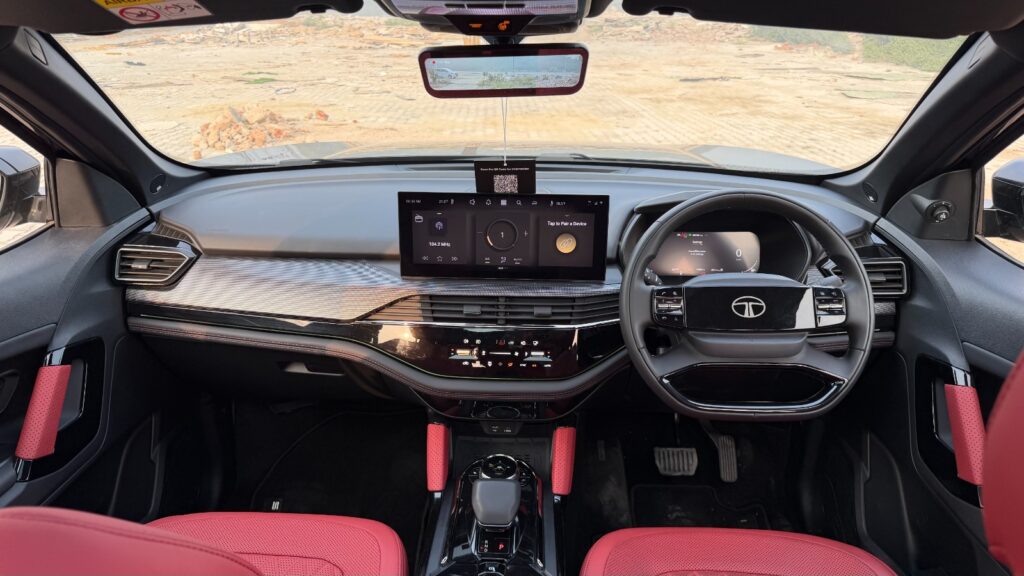
Step inside, and the Safari’s transformation becomes even more apparent. The cabin feels less like a traditional SUV cockpit and more like a premium lounge that just happens to climb mountains. Red Benecke Kaliko leatherette upholstery, winged comfort headrests, multi-colour ambient lighting, roll-up sunshades, and ventilated front seats ensure comfort is taken seriously. The 6-way power-adjustable Ergo Lux driver seat with memory, lumbar support, and welcome function feels like it knows you personally, while the 4-way power passenger seat and Boss Mode make rear-seat occupants feel dangerously important.
Technology is where this Safari flexes hard. The 14.5-inch Harman cinematic Samsung Neo QLED touchscreen is essentially a theatre with wheels, supporting Amazon Prime Video, JioHotstar, Mappls navigation, Alexa Home2Car, wireless Android Auto and Apple CarPlay, over 250 voice commands, and a full Arcade App suite. JBL’s 10-speaker setup with subwoofer and Dolby Atmos ensures your road trips sound as epic as they feel. Lower variants get slightly smaller screens, but the experience remains premium across the range.
The digital side continues with a 10.24-inch HD TFT instrument cluster, adaptive cruise control, speed assist, and a VisioneX electrochromic IRVM with built-in dashcam and DVR. Add a voice-assisted panoramic sunroof with mood lighting, dual-zone climate control with air purifier and AQI display, cooled storage, and gesture-based boot opening—and suddenly you realise this Safari is more tech-savvy than most smartphones.
Under the skin, the Safari is built on Tata’s Omega Arc architecture, derived from Land Rover’s D8 platform, the same base that underpins the Discovery Sport and Range Rover Evoque. This isn’t just marketing poetry—it translates into solid dynamics, excellent ride quality, and a reassuringly strong structure. Both Global NCAP and Bharat NCAP have awarded the Safari a full 5-star safety rating, and it backs that up with seven airbags, advanced electronic stability program with 17 functions, and a comprehensive Level 2 ADAS suite featuring 22 driver assistance technologies. From autonomous emergency braking to lane centering, blind-spot detection, rear cross-traffic alert, and even driver doze-off alert, this Safari watches the road almost as carefully as your parents watched your board exam results.
Engine choices keep things interesting. The new 1.5-litre Hyperion turbo-petrol is a thoroughly modern unit with 167 horsepower and 280 Nm of torque, tuned specifically for Safari and Harrier. It’s E20 compliant, lighter by nearly 80 kg compared to earlier setups, and built after more than 15 lakh kilometres of testing across temperatures and altitudes. AI and machine-learning-based optimisation help the engine adapt in real time, balancing performance, refinement, and efficiency. Smart Shift Assist, Launch Assist, variable pressure regulation, and advanced acoustic insulation ensure the petrol Safari feels calm in the city and confident on highways.
For diesel loyalists, the familiar 2.0-litre Kryotec 170 Multijet II continues to impress with 167 horsepower and a muscular 350 Nm of torque, paired with either a 6-speed manual or a smooth Aisin 6-speed torque converter automatic. The petrol also gets the same Aisin automatic and a manual option, along with a Land Rover-sourced shift-by-wire e-shifter that feels satisfyingly premium.
Drive modes include Eco, City, and Sport, while terrain response modes—Normal, Rough, and Wet—ensure the Safari doesn’t forget its adventurous roots. Suspension duties are handled by a McPherson strut setup up front and a semi-independent twist blade system at the rear, delivering a ride that’s composed over bad roads and confident at cruising speeds. The petrol variant, in particular, feels well balanced for city agility and relaxed highway touring.
Practicality hasn’t been sacrificed at the altar of luxury. With the third row folded, you get 420 litres of boot space, expanding to 827 litres with the second row down. There’s a 2-kg hook, 16-inch steel spare wheel, rear sensors, rear wiper with washer, defogger, and thoughtful touches like illuminated logos, safari door mascots, and even subtle lion and lioness design elements reminding you of the badge’s heritage.
In the end, the 2026 Tata Safari doesn’t try to be everything to everyone—and that’s precisely its strength. It’s spacious without being clumsy, tech-loaded without being overwhelming, safe without being boring, and powerful without being intimidating. Most importantly, it still feels unmistakably like a Safari. A grown-up Safari, yes—but one that hasn’t forgotten where it came from.
This is no longer just an SUV you drive. It’s an SUV that thinks, watches, listens, adapts, entertains, protects, and occasionally reminds you that legends don’t retire—they simply evolve.