
Back in 2011, Mahindra dropped an SUV that told Indian buyers, very confidently, that it was not here to play nice. Fast-forward to 2026, and what you’re looking at now is the second-generation facelift of that very lineage—only sharper, smarter, and clearly more self-aware. The XUV 7XO is what happens when an already successful SUV looks in the mirror, adjusts its collar, and says, “Yes, I can do more.”
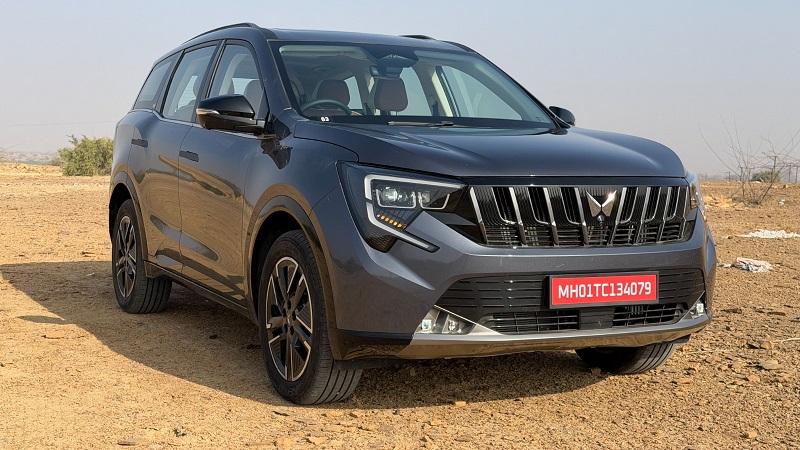
This is no longer called the XUV700. The name change isn’t cosmetic—it’s symbolic. Over 3 lakh XUVs sold in just four years meant Mahindra had earned the right to evolve the badge. And evolve it has. Prices now start at ₹13.66 lakh ex-showroom and climb up to ₹25 lakh, and the one you’re reading about here is the fully loaded AX7 Luxury—the “why not?” version of the XUV story.
Design-wise, the XUV 7XO wears confidence like a tailored suit. Designed by Pratap Bose, the man behind icons like Thar, Scorpio-N, Nexon, Harrier and Safari, this SUV blends muscle with maturity. The piano-black grille with jewel-like Talon accents doesn’t shout; it asserts. Automatic Bi-LED booster headlamps with sequential indicators, DRLs, and follow-me-home functions feel premium without trying too hard. Ice-cube cornering fog lamps sound gimmicky until you drive at night and realise they’re actually very clever.
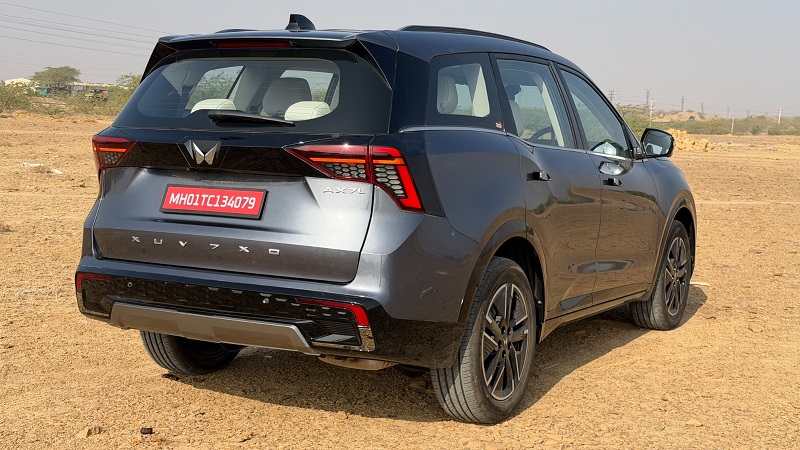
At nearly 4.7 metres long and almost 1.9 metres wide, the XUV 7XO has serious road presence. The 19-inch diamond-cut alloys wrapped in 235/55 R19 Ceat SportDrive SUV tyres fill the arches properly, and yes—disc brakes at all four corners finally feel non-negotiable in this segment. The Galaxy Grey shade seen here looks suitably grown-up, while black, white, blue, ruby, gold and a dual-tone black roof option let you play it safe or slightly dramatic.
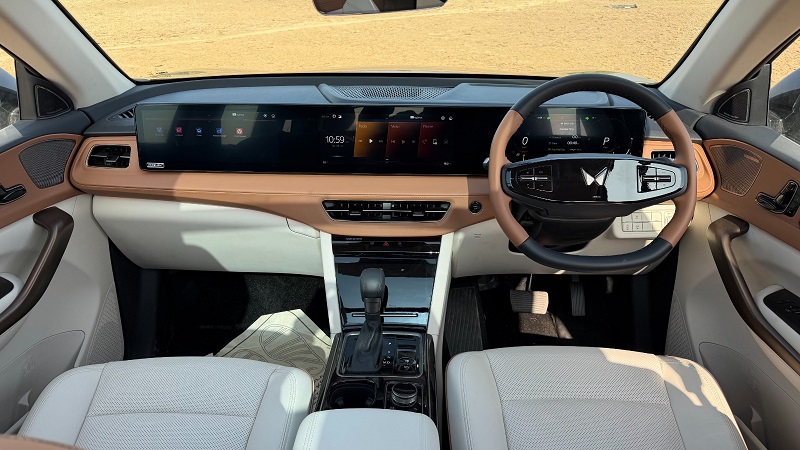
Step inside and the cabin quietly flexes. Coast-to-coast triple HD screens dominate the dashboard like a control room, powered by what Mahindra proudly calls the most powerful processor ever used in an ICE SUV—an octa-core Qualcomm Snapdragon SA8155P chipset with 16 GB RAM and 128 GB storage. Translation: no lag, no drama, and Netflix-level confidence. High-speed ethernet ensures real-time data flow, while a centralised domain architecture makes the whole car feel digitally coherent rather than feature-stuffed.
The infotainment experience is frankly wild. A 12.3-inch touchscreen with Dolby Vision supports Alexa built-in with ChatGPT, wireless Android Auto and Apple CarPlay, 43 pre-installed apps, YouTube, Prime Video, Jio Hotstar, Blinkit, Myntra, Zomato and more. Yes, you can technically shop, eat and binge-watch inside your SUV—just don’t do all three while driving. The 12.3-inch passenger screen ensures the co-driver feels equally important, and the digital instrument cluster feeds navigation, live traffic and adaptive cruise information without clutter.
Comfort is where the AX7 Luxury quietly justifies its name. Leatherette upholstery, ventilated front seats, ventilated second-row seats, plush seat padding front and rear, sunblinds, multi-zone ambient lighting and a panoramic Skyroof that Mahindra insists on calling a Skyroof—because branding matters. The 16-speaker, 1400-watt Harman Kardon audio system with Dolby Atmos and 3D surround doesn’t just play music; it performs it. Wireless charging with active cooling, multiple charging ports, device holders behind seats, and a 4-way power boss mode ensure rear passengers feel mildly superior.
Practicality hasn’t been forgotten. This is a proper 7-seater, with a 6-seater option for captain-seat loyalists. The second row folds 60/40 with a one-touch tumble, and yes, boot space is modest at around 100 litres with all seats up—but that’s the price you pay for hauling people like a responsible adult. Flush-integrated electric smart door handles add theatre every time you approach, while electrically adjustable ORVMs with memory, cameras and reverse auto-tilt make daily driving less stressful.
Under the skin, Mahindra has gone full engineering thesis. Advanced high-strength steel is used extensively, and the architecture is built to meet 5-star Bharat NCAP standards. The world-first DaVinci Damping technology processes road inputs in real time, paired with Frequency Selective Damping, stabiliser bars and hydraulic rebound stoppers to keep body motion calm without killing ride comfort. McPherson struts up front and a multi-link independent rear suspension ensure that this big SUV doesn’t feel like it skipped leg day.
Drive it, and the XUV 7XO feels sorted. Zip, Zap, Zoom and Custom drive modes actually make sense, and the micro-hybrid start-stop system keeps fuel efficiency respectable. The petrol gets Mahindra’s 2.0-litre mStallion turbo-GDI engine producing 200 hp and 380 Nm, paired with a 6-speed torque-converter automatic or manual, returning around 12 kmpl. The diesel, for torque loyalists, uses the 2.2-litre mHawk motor with up to 450 Nm in automatic form and about 14 kmpl efficiency. Front-wheel drive is standard, while all-wheel drive is available on AX7 Tech and AX7 Luxury for an extra ₹2.45 lakh—worth it if you like your weekend plans unpredictable.
Safety is where Mahindra stops being polite and starts being thorough. Seven airbags, Level 2 ADAS with Sense+ and dynamic visualisation, driver drowsiness detection, adaptive cruise, lane keep assist, AEB, blind view monitoring, a 540-degree surround camera with recording, MobilEyeQ6, hill hold, hill descent, ESP, traction control, ISOFIX mounts and an intelligent TPMS—it’s all here. Add the Adrenox+ app that lets you access 93 connected features remotely, and the car feels like it knows you… without being creepy.
Assembled in Maharashtra and backed by a 3-year unlimited-kilometre warranty, the Mahindra XUV 7XO is not trying to reinvent the Indian SUV. It’s doing something harder—refining a successful formula without losing character. It’s tech-heavy but not soulless, comfortable but not lazy, and powerful without being intimidating.
In simple terms, the XUV 7XO is what happens when an Indian SUV grows up, gets educated, learns digital manners, and still remembers how to flex when needed. And honestly, that’s a pretty good place to be.