With 489 horsepower, an enormous 39.1-inch Hyperscreen, a claimed range of 711 km and a price of ₹78.50 lakh, the new GLC Electric might just be one of the most significant Mercedes-Benz SUVs of the modern era.
There was a time when buying a Mercedes-Benz involved choosing between petrol and diesel, deciding how much wood you wanted on the dashboard and occasionally wondering whether the neighbours deserved to see the AMG badge. Things have become considerably more complicated. The new Mercedes-Benz GLC Electric arrives with two electric motors, an 800-volt electrical architecture, a dashboard that could embarrass a home cinema and a panoramic roof containing 162 illuminated stars. Stuttgart, evidently, has not lost its appetite for engineering excess.
The GLC Electric, however, is considerably more important than its collection of technological party tricks suggests. It represents Mercedes-Benz’s attempt to bring electric mobility into the heart of its mainstream luxury SUV business, rather than treating battery-powered vehicles as distant relatives wearing unusual clothes.
And the best part? It still looks unmistakably like a Mercedes-Benz.
Familiar name, entirely different machine
Launched in India in 2026, this is the first generation of the Mercedes-Benz GLC Electric, internally designated X540. Although it shares its name with the conventional GLC, the similarities are largely philosophical rather than mechanical. This is not a petrol-powered GLC with its engine removed and several hundred kilograms of batteries squeezed underneath. It is an independently developed electric crossover SUV.
Underneath sits Mercedes-Benz’s dedicated MB.EA-M electric vehicle platform, which also underpins the C-Class Electric. The architecture represents a significant technological progression from the company’s earlier generation of electric vehicles, particularly the EQC, which the GLC Electric effectively replaces.
The design is credited to Gorden Wagener, the influential automotive designer whose Mercedes-Benz design portfolio encompasses programmes such as the A-Class, S-Class, GLE, CLK, EQ range, VLE, SLR McLaren, Mercedes-AMG One and the spectacular Vision Mercedes-Maybach 6. His influence is evident in the GLC Electric’s combination of traditional Mercedes-Benz elegance and rather unapologetic futurism.
The broader GLC family has already recorded more than 22,000 sales in India, giving the electric derivative a familiar and commercially significant nameplate. The GLC family has manufacturing and assembly operations across India, Germany, China and Thailand, with the Indian-market electric model assembled locally at Mercedes-Benz’s Chakan facility near Pune.
More importantly, Mercedes-Benz appears to have realised that customers buying electric luxury cars do not necessarily want them to resemble futuristic household appliances.
Pricing: Electricity without an extravagant premium
The Mercedes-Benz GLC Electric is available in India in a single GLC 400 4Matic AMG Line variant, priced at ₹78.50 lakh, ex-showroom.
The conventional petrol and diesel GLC range starts at approximately ₹77 lakh, while the high-performance Mercedes-AMG GLC Coupé commands around ₹1 crore.
That makes the electric model particularly interesting. For only ₹1.50 lakh more than the starting price of the combustion-powered GLC, customers get a substantially different vehicle with considerably more power, a dedicated electric platform and an extensive technology package.
India does not currently receive the long-wheelbase version, Premier Edition or rear-wheel-drive derivatives available in certain international markets. Instead, Mercedes-Benz has opted for a comprehensively equipped dual-motor model, conveniently saving customers from spending three weekends studying variant brochures.
The AMG Line designation brings sportier visual treatment and equipment, although it should not be confused with a full-fledged Mercedes-AMG performance model. Then again, with 800 Nm of torque available, explaining that distinction to your passengers might prove difficult.
Exterior design: The return of the Mercedes face
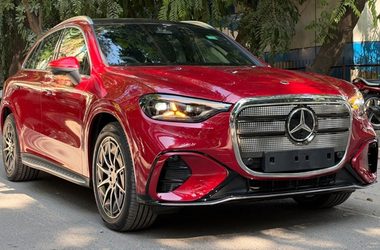
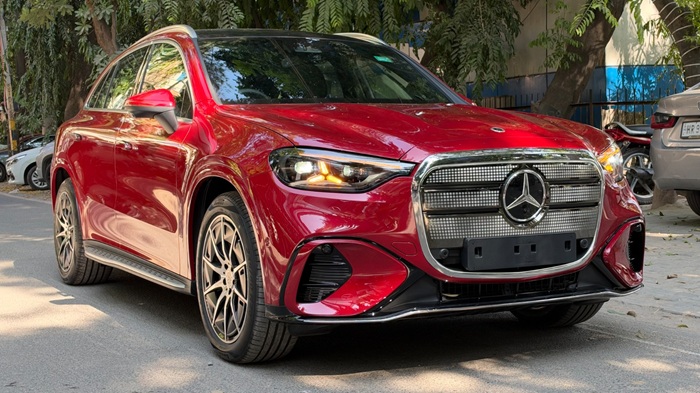
The most significant design statement on the GLC Electric is undoubtedly its front grille.
After experimenting with relatively minimalist front-end treatments on earlier electric Mercedes-Benz models, Stuttgart has rediscovered the importance of a proper, recognisable face. The illuminated grille panel gives the GLC Electric an imposing visual identity, especially after sunset, when it announces its arrival with rather more enthusiasm than the average SUV.
Electric cars may not require conventional radiator grilles to the same extent as combustion-engined vehicles, but Mercedes-Benz understands that a grille serves another purpose entirely: prestige.
The sophisticated Digital Light headlamps complement the front-end design and incorporate Adaptive Highbeam Assist Plus, various lighting modes, topographical compensation and Dynamic Ultra Range Highbeam functionality. These technologies are designed to adapt illumination to road conditions and surrounding traffic, making them particularly relevant on poorly lit Indian highways.
Finished here in Manufaktur Patagonia Red Metallic, the GLC Electric possesses a distinctly sophisticated character. The deep red shade highlights its flowing surfaces without making the vehicle look excessively theatrical. Customers preferring a more restrained appearance can choose from black, silver, blue, grey and white exterior colours.
The side profile is characterised by smooth bodywork, flush-fitting door handles and generous proportions. The aluminium-look running boards with rubber studs introduce a traditional SUV element to an otherwise futuristic design.
There is something mildly amusing about installing running boards on a technologically advanced electric crossover, but they provide a useful foothold and give the vehicle a more substantial visual presence.
The electrically adjustable, folding and auto-dimming exterior mirrors incorporate turn indicators, cameras and logo projection functionality. Electrically heated rain-sensing wipers further underline Mercedes-Benz’s attention to everyday convenience.
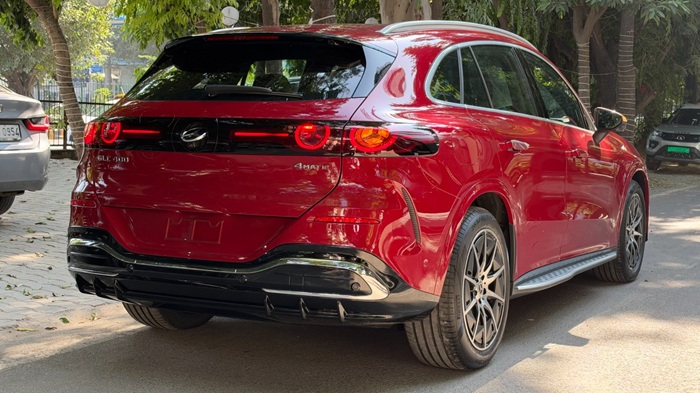
At the rear, the LED tail lamps maintain the futuristic styling theme, while the electrically operated charging flap replaces the familiar fuel-filler arrangement. Naturally, there are no exhaust pipes attempting to convince onlookers that something particularly exciting is happening underneath.
The GLC Electric looks expensive without resorting to excessive aggression. It is modern, slightly flamboyant and recognisably German.
Dimensions, wheels and practicality
At approximately 4,800 mm long, 2,100 mm wide and 1,600 mm tall, the GLC Electric occupies a substantial amount of road space. It is large enough to deliver the presence expected of a premium SUV without entering the geographical territory normally occupied by a GLS.
Its kerb weight, however, is a rather considerable 2,673 kg, with a gross vehicle weight of 3,040 kg. That places it firmly in the heavyweight division of luxury crossovers.
The towing capacity of up to 2,400 kg is equally impressive, demonstrating that the electric powertrain is not merely designed for fashionable urban commuting. Customers with trailers or recreational equipment will appreciate the substantial pulling capability.
The 12.1-metre turning circle is something worth remembering in congested Indian cities. A vehicle of this width is unlikely to regard a narrow market lane as its natural habitat, regardless of how sophisticated its parking cameras might be.
The AMG Line rides on attractive 20-inch, 10-spoke AMG light-alloy wheels wrapped in staggered Pirelli Scorpion tyres. The front wheels wear 235/50 R20 104H rubber, while the rear receives wider 265/45 R20 108H tyres.
These extra-load, radial, tubeless run-flat tyres are tasked with managing considerable vehicle weight and immediate electric torque. The staggered arrangement also contributes to the muscular stance, although replacement costs and tyre wear are worth considering.
Disc brakes are fitted at both ends.
Practicality is one area where the dedicated electric architecture pays substantial dividends. The conventional rear luggage compartment offers 570 litres of storage, expanding to 1,740 litres with the rear seats folded. The 40:20:40 split-folding arrangement allows longer objects to be accommodated without necessarily sacrificing the entire rear seating area.
There is also a generous 128-litre front luggage compartment, or frunk, which provides an ideal location for charging cables and smaller luggage.
Having storage beneath both the bonnet and the tailgate is one of those electric-car advantages that makes traditional engine compartments suddenly appear rather inefficient.
Interior: Stuttgart meets Silicon Valley
Open the door and the GLC Electric reveals an interior that makes most conventional luxury SUVs look technologically conservative.
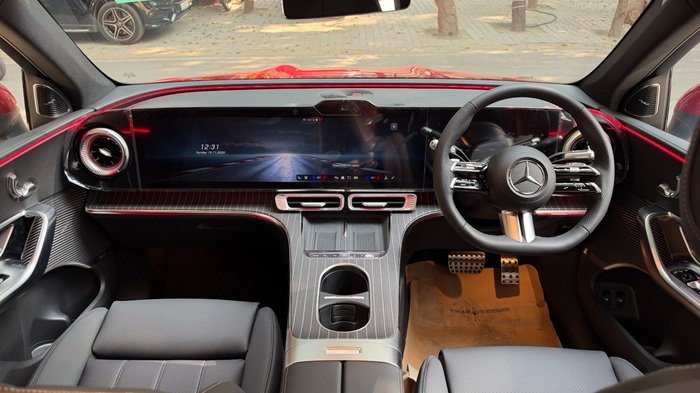
The dominant feature is the extraordinary 39.1-inch, 8K MBUX Hyperscreen, featuring a pixel density of 220 PPI, a 60 Hz refresh rate and matrix backlighting.
The dashboard is less a collection of instruments and more an uninterrupted technological landscape. Mercedes-Benz has effectively taken the concept of an infotainment system and stretched it across a considerable portion of the cabin.
Whether this is the future of luxury or simply the future of fingerprint removal will depend on your personal relationship with technology.
Behind the three-spoke Nappa leather-wrapped multifunction sports steering wheel sits a 10.1-inch digital instrument cluster. The steering wheel incorporates controls for telephone functions, audio volume, cruise control and instrument display operation.
Interestingly, a head-up display is not available on the Indian-market GLC Electric. Considering the extensive display technology elsewhere in the cabin, its absence is surprising. A projection system displaying essential driving information directly ahead would have complemented the digital cockpit particularly well.
Mercedes-Benz has attempted to balance all this glass and electronics with traditional luxury materials. The ship’s deck wood trim introduces warmth and visual depth, while Black ARTICO man-made leather upholstery provides a restrained, premium atmosphere. Brown and beige interior colour options are also available.
ARTICO may not deliver the same traditional appeal as genuine leather upholstery, particularly to buyers spending close to ₹80 lakh, but its appearance and maintenance-friendly nature should appeal to many owners.
The electrically adjustable front comfort seats are comprehensively equipped, incorporating four-way lumbar support, heating, ventilation and massage functions. In Indian conditions, seat ventilation is arguably more valuable than several dozen decorative lighting settings, particularly after parking outdoors on a summer afternoon.
The cabin also features an auto-dimming interior rear-view mirror and two-zone THERMATIC automatic climate control with ENERGIZING AIR CONTROL.
Two wireless charging pads at the front eliminate the usual disagreement over whose smartphone deserves to be charged first.
Mercedes-Benz’s signature active ambient lighting system offers 64 colours, allowing occupants to transform the atmosphere from understated executive lounge to something resembling a particularly expensive nightclub.
The heat- and noise-insulating acoustic glass is another meaningful addition. In an electric car, where the absence of combustion-engine noise makes wind and tyre sounds more noticeable, effective acoustic insulation becomes particularly important.
A panoramic roof with its own constellation
Perhaps the most extravagant feature inside the GLC Electric is its SKY CONTROL panoramic roof.
The system incorporates 162 illuminated stars, nine individually switchable zones, UV protection and individual glare protection. The transparency of the glass can be electronically adjusted, allowing occupants to control the amount of light entering the cabin.
Unlike a conventional panoramic sunroof with a mechanically operated blind, this system turns the glass itself into an adjustable component of the interior environment.
It is an impressive combination of engineering and theatre. Mercedes-Benz has effectively provided customers with their own miniature night sky, presumably because the actual sky was no longer sufficiently premium.
The panoramic roof also enhances the sense of openness in the rear cabin. However, definitive assessments of rear headroom, under-thigh support and long-distance seating comfort would require a proper road test, particularly given the packaging considerations associated with a large underfloor battery.
Infotainment: There is very little it cannot do
The 14-inch LCD central touchscreen supports an extensive range of functions through the MBUX ecosystem, while the front passenger receives a dedicated 14-inch display.
The MBUX Virtual Assistant handles voice commands and provides access to various vehicle functions. Navigation is supplemented by Local Search, Send2Car functionality and Live Traffic Information, all of which have obvious benefits for everyday journeys.
The transparent bonnet function uses camera technology to help the driver understand the area immediately ahead of the vehicle, making it useful in tight spaces or when negotiating uneven surfaces.
Beyond conventional automotive functions, the system supports an App Store, video streaming, games, social media, music streaming, NewsFlash, selfie and video camera functionality, software updates and sound personalisation.
Apple CarPlay, Android Auto, USB connectivity, FM radio and conventional audio functions are also supported.
It is an extraordinarily comprehensive entertainment ecosystem, although one suspects that most owners will spend the majority of their journeys using navigation, music and climate control rather than exploring every available application.
The real challenge for Mercedes-Benz is ensuring that technological abundance does not compromise simplicity. A luxury vehicle should make life easier, not require an introductory computer science course before adjusting the air conditioning.
Audiophiles are treated to a 15-speaker Burmester 3D surround sound system producing 670 watts and supporting Dolby Atmos. The sophistication of the audio hardware complements the acoustically insulated cabin, which should provide a particularly favourable listening environment.
Powertrain: 800 Nm and absolutely no petrol
The mechanical heart of the GLC 400 4Matic Electric consists of a 94 kWh lithium nickel manganese cobalt oxide battery, commonly referred to as NMC chemistry, supplied by Contemporary Amperex Technology Co., Limited, better known as CATL.
Energy is delivered to two permanent-magnet electric motors, creating Mercedes-Benz’s electric 4Matic all-wheel-drive system.
Combined output stands at an impressive 489 horsepower and 800 Nm of torque, figures that would have belonged to serious high-performance SUVs not particularly long ago.
Power is transmitted through a two-speed automatic transmission, an interesting engineering decision in a category where single-speed reduction gearing is far more common.
The additional ratio helps reconcile the conflicting requirements of rapid acceleration and efficient operation at higher speeds. Electric motors have a broad operating range, but optimising their speed for different driving conditions can deliver performance and efficiency advantages.
There is no conventional engine to warm up, no turbocharger waiting to build boost and no elaborate sequence of gear changes before the vehicle gets moving.
The electric motors are capable of delivering substantial torque almost immediately. In practical terms, that should make joining fast-moving traffic and executing highway overtakes remarkably straightforward, provided the driver exercises some restraint with the accelerator.
Mercedes-Benz claims a 0–100 km/h acceleration time of just 4.3 seconds and a top speed of 210 km/h.
Those are serious performance figures for a vehicle weighing nearly 2.7 tonnes. The laws of physics have not been abolished, but Mercedes-Benz has certainly negotiated a favourable arrangement with them.
For drivers missing the soundtrack of a conventional performance car, the GLC Electric also generates a sporty artificial engine sound through the interior speakers.
Traditional enthusiasts may consider this automotive karaoke. Others might appreciate the additional sense of occasion during enthusiastic acceleration.
Driving dynamics: Performance meets considerable mass
Mercedes-Benz offers five DYNAMIC SELECT driving modes: Eco, Comfort, Sport, Individual and Terrain.
Eco prioritises efficiency, Comfort is intended for relaxed everyday driving, and Sport delivers a more performance-oriented response. Individual allows drivers to tailor available vehicle settings, while Terrain provides a configuration intended for more challenging surfaces.
The dual-motor 4Matic arrangement should provide strong traction, particularly when accelerating on wet roads or uneven surfaces. Unlike mechanically driven all-wheel-drive systems, electric motors allow drive torque to be managed electronically with considerable flexibility.
The Indian-market specification features a comfort suspension setup with passive damping, designed to provide composed behaviour across different road surfaces.
This is a notably sensible decision for an Indian luxury SUV, where broken tarmac, poorly designed speed breakers and unexpected potholes are more common than perfectly surfaced mountain roads.
The relatively generous tyre sidewalls should also contribute to impact absorption, although the reinforced construction of run-flat tyres can introduce additional firmness over sharp-edged imperfections.
The positioning of the battery beneath the passenger compartment helps concentrate substantial mass lower in the vehicle. In principle, this should improve stability and reduce the tendency towards excessive body movement compared with a similarly tall vehicle carrying its weight higher up.
Nevertheless, 2,673 kg remains 2,673 kg. Under hard braking or during rapid directional changes, that mass places considerable demands on the tyres, suspension and braking system. Electric torque can disguise weight during acceleration, but corners are considerably less forgiving.
The GLC Electric’s underlying engineering suggests a character focused more on effortless speed, secure traction and refined long-distance travel than outright sports-car agility.
Precise steering feedback, braking modulation, low-speed suspension compliance and handling balance remain areas requiring direct evaluation rather than conclusions drawn solely from specifications.
Ultimately, this is a Mercedes-Benz crossover with considerable performance reserves, not necessarily a substitute for an AMG sports car.
Range and charging: The 711 km conversation
Mercedes-Benz claims a driving range of up to 711 km from the 94 kWh battery, placing the GLC Electric among the more compelling long-distance electric luxury SUVs.
Such a figure has considerable psychological significance. Range anxiety becomes less intimidating when a vehicle can theoretically travel distances comparable to many conventional petrol-powered SUVs.
Actual driving range, of course, depends on speed, traffic, ambient temperatures, air-conditioning usage, driving style, passenger load and terrain. Sustained high-speed motorway driving will generally consume considerably more energy than relaxed urban operation.
The GLC Electric’s 800-volt electrical architecture is particularly important. Higher-voltage systems can facilitate substantial charging power while helping manage electrical current and associated thermal demands.
DC fast charging is supported at up to 330 kW, allowing the battery to gain 70 percentage points of charge, from 10 to 80 per cent, in approximately 22 minutes under suitable conditions.
That is roughly enough time for a coffee, a sandwich and a brief investigation into why motorway service-station sandwiches cost what they do.
For domestic charging, the supplied specifications indicate approximately 15 hours and 15 minutes for a full charge using a 7 kW AC charger. The notes also quote 10.5 hours using a 22 kW charger, although Mercedes-Benz India separately lists approximately five to six hours with a 22 kW AC wallbox. The actual charging duration will depend on the vehicle’s onboard charging capability and available electrical supply.
A reliable home charging installation would make the GLC Electric particularly convenient for everyday ownership. Public charging infrastructure, however, remains an important consideration for buyers frequently travelling between smaller Indian cities.
The car is technologically prepared for extremely rapid charging. Finding a compatible charger capable of consistently supplying 330 kW is another matter entirely.
Safety: An extensive electronic safety net
The Mercedes-Benz GLC Electric comes equipped with nine airbags and an extensive suite of active and passive safety technologies.
Active Distance Assist DISTRONIC helps manage following distances, while Blind Spot Assist Plus, lane-keeping functionality and brake assist contribute to driver support in various traffic conditions.
The evasive steering function is designed to assist during certain emergency avoidance manoeuvres, while the PRE-SAFE system helps prepare occupants and the vehicle for potentially dangerous situations.
An acoustic presence indicator addresses the relatively silent nature of electric propulsion at low speeds, helping alert nearby road users to the vehicle’s presence.
The 360-degree camera, parking assist and Manoeuvring Assist are especially valuable considering the GLC Electric’s substantial dimensions. Exit warning functionality helps reduce the risk associated with opening doors into approaching traffic.
Other equipment includes a passive person presence reminder, tyre pressure monitoring system and a fluorescent safety jacket.
These systems offer meaningful assistance, although none should be interpreted as a replacement for an attentive driver. Indian traffic occasionally presents situations that would challenge even the most sophisticated German software.
No independent crash-test rating is assumed for this particular Indian-market specification.
Ownership and accessories
Mercedes-Benz offers an extensive selection of accessories for the GLC Electric, including floor mats, microfibre cleaning cloths, fluorescent jackets, illuminated scuff plates, child seats, folding shopping crates, hubcaps, valve caps, charging cables, roof boxes, bicycle racks and storage bags.
The roof box and bicycle rack options complement the vehicle’s practical ambitions, while the storage accessories make effective use of its generous luggage capacity.
Long-term ownership considerations include home charging installation, battery warranty coverage, insurance premiums and the replacement cost of its substantial staggered tyres.
The electric powertrain should eliminate several conventional maintenance requirements associated with combustion engines, including engine oil changes. However, the vehicle’s considerable weight, sophisticated electronics and premium components mean that electric ownership should not automatically be confused with inexpensive ownership.
The competition: Mercedes has arrived early
The GLC Electric enters a relatively unusual position in the Indian market, with few immediate direct rivals combining its size, performance, range and luxury positioning.
The upcoming BMW iX3 represents its most obvious long-term challenger. BMW’s traditional emphasis on driver engagement could appeal to enthusiasts looking for a more dynamically focused electric SUV, while its Neue Klasse architecture promises formidable electric vehicle technology.
The Audi Q6 e-tron is another anticipated competitor, offering an alternative interpretation of German electric luxury, with sophisticated engineering and a more restrained design philosophy.
Existing alternatives such as the BMW iX1 appeal to customers seeking a more compact premium electric SUV, while the Kia EV6 provides a compelling combination of electric performance, fast-charging technology and distinctive styling without relying on traditional German luxury branding.
The Tesla Model Y takes an entirely different approach, concentrating on software, efficiency and minimalist design. The Mercedes counters with a more elaborate cabin, traditional luxury appointments and an extensive selection of comfort-oriented features.
Perhaps the GLC Electric’s most interesting competitor, however, is sitting in the very same Mercedes-Benz showroom.
The conventional GLC remains an appealing choice for buyers who frequently travel through regions with limited charging infrastructure. The electric version counters with vastly more dramatic performance figures, an advanced digital interior and the possibility of significantly lower everyday energy costs.
At ₹78.50 lakh, the decision between the two is no longer primarily about affordability. It is increasingly about lifestyle and infrastructure.
Verdict: A Mercedes first, an electric car second
The 2026 Mercedes-Benz GLC 400 4Matic Electric represents a considerably more mature interpretation of the luxury electric SUV than the company’s earlier efforts.
Its strengths are immediately apparent. A substantial 94 kWh battery, 489 horsepower, 800 Nm of torque, 330 kW fast charging, a claimed 711 km range and genuinely useful luggage capacity make it a compelling engineering proposition.
The interior combines traditional Mercedes-Benz luxury with almost excessive digital sophistication. The Burmester audio system, massage seats, acoustic glazing and remarkable SKY CONTROL roof contribute to a sense of occasion that extends beyond acceleration figures and battery capacity.
There are compromises. The vehicle is enormously heavy, the absence of a head-up display is disappointing, the touchscreen-centric interior may frustrate traditionalists, and its width demands consideration on crowded Indian roads. The charging infrastructure required to exploit its full technological potential is not universally available either.
Nevertheless, the pricing is arguably its greatest achievement. At ₹78.50 lakh, the GLC Electric makes a persuasive case for choosing electricity without paying an extravagant premium over an equivalent combustion-powered luxury SUV.
It is best suited to buyers with dependable charging access who appreciate effortless performance, refined travel, sophisticated technology and the reassuring familiarity of the three-pointed star.
Mercedes-Benz’s greatest accomplishment here is not the 39.1-inch screen, the 162 illuminated stars or even the remarkable acceleration. It is making an electric vehicle feel like a natural progression of the Mercedes-Benz ownership experience rather than an elaborate departure from it.
The GLC Electric does not feel like a Mercedes-Benz reluctantly embracing the future. It looks like Stuttgart has finally decided that the future ought to wear a three-pointed star.