
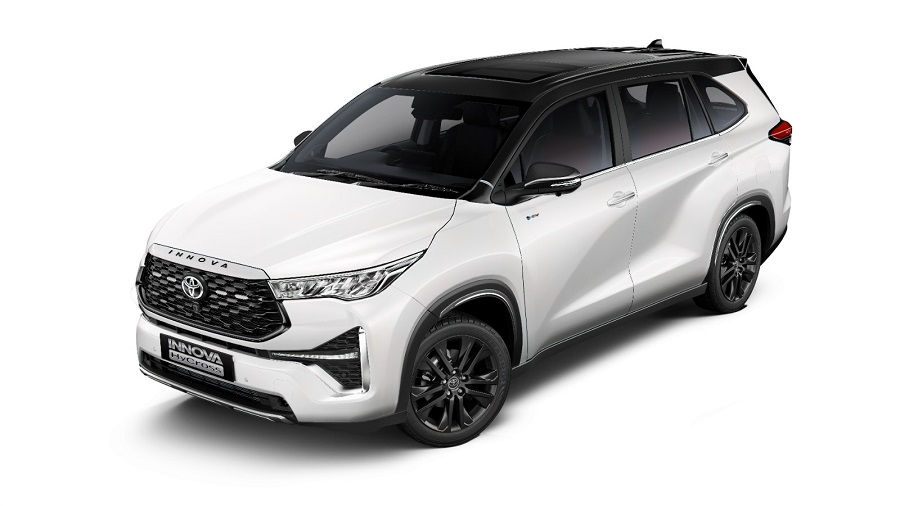
Bengaluru: Toyota Kirloskar Motor (TKM) has announced that its Innova HyCross and Urban Cruiser Hyryder have secured two entries in the Asia Book of Records following a demanding journey from the coastal plains of West Bengal to the Himalayan heights of Sikkim. The achievement highlights the capabilities of Toyota’s Strong Hybrid Electric Vehicle (SHEV) technology across dramatically different driving conditions, from near sea level to an altitude of 4,310 metres.
The Innova HyCross earned recognition for the ‘Maximum Elevation Gained by a Car in 24 Hours’, while the Urban Cruiser Hyryder secured the record for the ‘Highest Elevation Gained by a Car on One Tank of Fuel’. Both records were achieved during a journey that combined endurance, fuel efficiency and high-altitude performance.
The expedition began in Mandarmani, a coastal destination in West Bengal, and concluded at Nathula Pass in Sikkim, taking the vehicles through highways, changing landscapes and increasingly challenging mountain roads.
The route stretched from an elevation of just 2 metres above sea level to 4,310 metres, exposing both vehicles to substantial variations in altitude, road conditions and driving demands. It was an assignment that required more than simply keeping the wheels turning.
While the Innova HyCross focused on achieving the maximum elevation gain within a 24-hour period, the Urban Cruiser Hyryder faced a different challenge: gaining altitude while operating on a single tank of fuel.
The two records reflect different aspects of hybrid vehicle performance. The HyCross achievement placed emphasis on sustained driving capability, while the Hyryder’s record highlighted fuel management over a demanding uphill journey.
Toyota’s announcement, however, did not specify the exact measured elevation gain for either record or the total distance covered by the Hyryder on its single tank of fuel.
Toyota Highlights Real-World Hybrid Capabilities
Commenting on the achievement, Sabari Manohar, Executive Vice President, Sales-Service-Used Car Business, Toyota Kirloskar Motor, said, “We are delighted to receive this recognition from the Asia Book of Records. More than setting a record, this is about demonstrating what electrified technology can deliver in the real world under practical conditions We believe Strong Hybrid Electric Vehicle technology is a practical and relevant solution that can help India move towards cleaner and more sustainable mobility.”
The company said the expedition was intended to demonstrate the practical capabilities of its electrified powertrains beyond conventional testing environments, particularly under demanding terrain and elevation conditions.
Harish R., Adjudicator – Asia Book of Records, also acknowledged the achievement, saying, “Toyota Kirloskar Motor’s remarkable achievement showcases the excellence of engineering, innovation and endurance. These two automotive records highlight the impressive capabilities of Toyota’s Strong Hybrid technology across challenging terrains, setting a new benchmark for performance and sustainable mobility. Heartiest congratulations to the Toyota team on this outstanding accomplishment that brings pride to the Indian automotive industry.”
Two Different Hybrid Powertrains, One Challenging Route
Although both vehicles use Toyota’s Strong Hybrid technology, their powertrain configurations differ significantly.
The Toyota Innova HyCross is equipped with a 2.0-litre TNGA fifth-generation Strong Hybrid Electric system, producing a maximum combined output of 139 kW (183.7 hp). The hybrid setup combines a petrol engine with electric propulsion to balance performance and efficiency across varying driving conditions.
The Toyota Urban Cruiser Hyryder, meanwhile, uses a 1.5-litre petrol engine paired with the Toyota Hybrid System and an e-Drive transmission. Its hybrid configuration is designed to optimise fuel consumption by managing the contribution of the petrol engine and electric motor according to driving requirements.
Unlike a conventional petrol-only powertrain, a strong hybrid system can use electric propulsion under suitable conditions, recover energy during deceleration and automatically coordinate power delivery between its engine and motor.
These characteristics can be particularly useful on routes involving frequent changes in speed, elevation and traffic conditions, although actual efficiency depends on terrain, driving style and other operating factors.
A Test of Hybrid Technology Beyond City Roads
India’s varied geography presents an interesting testing ground for electrified vehicles. From coastal highways and congested urban roads to steep mountain passes, vehicles must operate across a wide range of temperatures, altitudes and driving conditions.
Toyota’s latest records offer a demonstration of how strong hybrid powertrains can be used beyond the stop-start traffic environments with which they are commonly associated.
However, record-setting drives and everyday vehicle ownership are different propositions. Such achievements illustrate specific performance capabilities but do not, by themselves, establish comparative fuel economy, long-term durability or operating costs under normal conditions.
For Toyota Kirloskar Motor, the recognition comes as automotive manufacturers continue exploring different approaches to reducing fuel consumption and emissions, including hybrid-electric and fully electric powertrains.
The journey from Mandarmani to Nathula Pass underscores a broader point in India’s evolving automotive landscape: electrification is not limited to battery-electric vehicles, and hybrid technology remains another approach to improving efficiency. As the industry moves towards cleaner mobility, the ability of different powertrain technologies to perform reliably across India’s diverse geography will remain an important measure of their practical relevance.
Overview of the record:
| Vehicle | Record | Achievement |
| Innova HyCross | Maximum Elevation Gained by a Car in 24 Hours | Time taken – 22 hours 52 minutesAltitude – 4,310 metres above sea level |
| Urban Cruiser Hyryder | Highest Elevation Gained by a Car on One Tank of Fuel | Fuel taken – 1 full tankAltitude – 4,310 metres above sea level |