

Surat, Gujarat: Toyota Kirloskar Motor (TKM), in partnership with the District Panchayat, Surat, has launched Toyota-E-Kaksha, a mobile computer education initiative designed to provide hands-on digital learning to approximately 1,000 Grade 8 students annually across 50 government schools in Surat district.
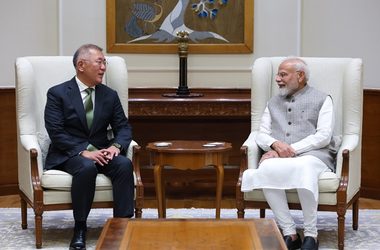
The programme was inaugurated on Friday by Gujarat Deputy Chief Minister Harsh Sanghavi in the presence of Devendra Prakash Meena (IAS), District Development Officer, Surat District Panchayat, and senior officials from Toyota Kirloskar Motor.
At the centre of the initiative is a specially equipped mobile classroom featuring 21 computers, internet connectivity, educational software and interactive digital learning tools. The bus will travel between government schools, allowing students to receive practical computer education without requiring a permanent computer laboratory at each location.
In other words, instead of students travelling to a computer lab, the computer lab will come to them.
Mobile Classroom to Reach 50 Government Schools
Toyota-E-Kaksha follows a Memorandum of Understanding (MoU) signed between Toyota Kirloskar Motor and the District Panchayat, Surat, on March 11, 2026.
Under the agreement, TKM will provide the mobile computer education bus, which will operate across government schools in the district. The programme aims to introduce students to fundamental computer skills and digital learning technologies before they enter higher secondary education.
With an annual target of 1,000 students across 50 schools, the initiative seeks to improve access to technology-based education, particularly for students who may otherwise have limited opportunities for practical computer training.
The project also reflects a broader effort to address disparities in access to digital education, as computer literacy becomes increasingly important for academic development, employment opportunities and everyday communication.
Gujarat Deputy Chief Minister Highlights Equal Access to Digital Education
Speaking at the inauguration, Gujarat Deputy Chief Minister Harsh Sanghavi emphasised the importance of ensuring that children have access to technology regardless of where they study.
“Digital literacy is the foundation on which our children will build their future, and every child, whether in a city or a village, deserves an equal opportunity to learn. Toyota-E-Kaksha takes the classroom directly to the students, ensuring that young learners in our government schools gain hands-on exposure to computers well before they reach high school. I appreciate the Surat District Panchayat and Toyota Kirloskar Motor for coming together on this meaningful initiative, which strengthens our commitment to quality education and to building a digitally empowered Gujarat.”
The initiative combines public-sector participation with corporate support, with the district administration and Toyota collaborating to extend practical technology education to government school students.
Toyota Kirloskar Motor Focuses on Foundational Digital Skills
Vikram Gulati, Country Head and Executive Vice President, Corporate Affairs, Toyota Kirloskar Motor, said the programme was intended to make digital education more accessible to children regardless of their school’s location.
“At Toyota, we believe that education is one of the most powerful enablers of progress, and in today’s world, being digitally literate is as essential as being able to read and write. Toyota-E-Kaksha is our effort to make sure that a child’s school or location does not limit their access to technology. By bringing a fully equipped computer classroom to students’ doorsteps, we hope to spark curiosity, build confidence and prepare young minds for the opportunities of tomorrow. We are grateful to the Government of Gujarat and the Surat District Panchayat for their partnership, and we remain committed to contributing to quality education and the vision of a Digital India.”
According to the company, the mobile classroom is intended not only to introduce students to computers but also to encourage curiosity, confidence and familiarity with digital tools.
The emphasis on practical exposure is significant because digital literacy extends beyond understanding how computers work. Increasingly, students need the ability to use technology effectively for learning, accessing information and developing skills relevant to future careers.
A Model That Could Expand Beyond Surat
Toyota Kirloskar Motor has indicated that Toyota-E-Kaksha is intended to serve as a sustainable, government-partnered model for digital education that could potentially be replicated in other districts.
The concept of a mobile computer classroom allows educational infrastructure to be shared across multiple schools, rather than remaining restricted to a single institution.
However, the long-term effectiveness of the initiative will depend on factors such as the frequency of school visits, the quality of instruction and the extent to which students develop usable computer skills.
For now, the programme has a defined annual target of reaching 1,000 Grade 8 students across 50 government schools in Surat district.
Part of Toyota’s Wider Community Development Initiatives
Toyota Kirloskar Motor has been involved in community development programmes in India since 2001, with initiatives covering education, environmental protection, road safety, skill development, health and hygiene, and disaster management.
The company works with government departments and civil society organisations on projects intended to address community needs. These efforts form part of its broader philosophy of “Creating Mobility for All.”
Toyota-E-Kaksha extends that approach into digital education, an area where accessibility and early exposure can influence students’ future learning opportunities.
As technology becomes more deeply integrated into education and employment, programmes that bring computer training directly to government schools could help narrow gaps in access to digital learning.
For Surat’s participating students, the immediate benefit is straightforward: an opportunity to gain practical experience with computers within their own school environment. The larger question is whether the mobile classroom model can deliver sustained learning outcomes and become a practical template for improving digital education access elsewhere in India.