


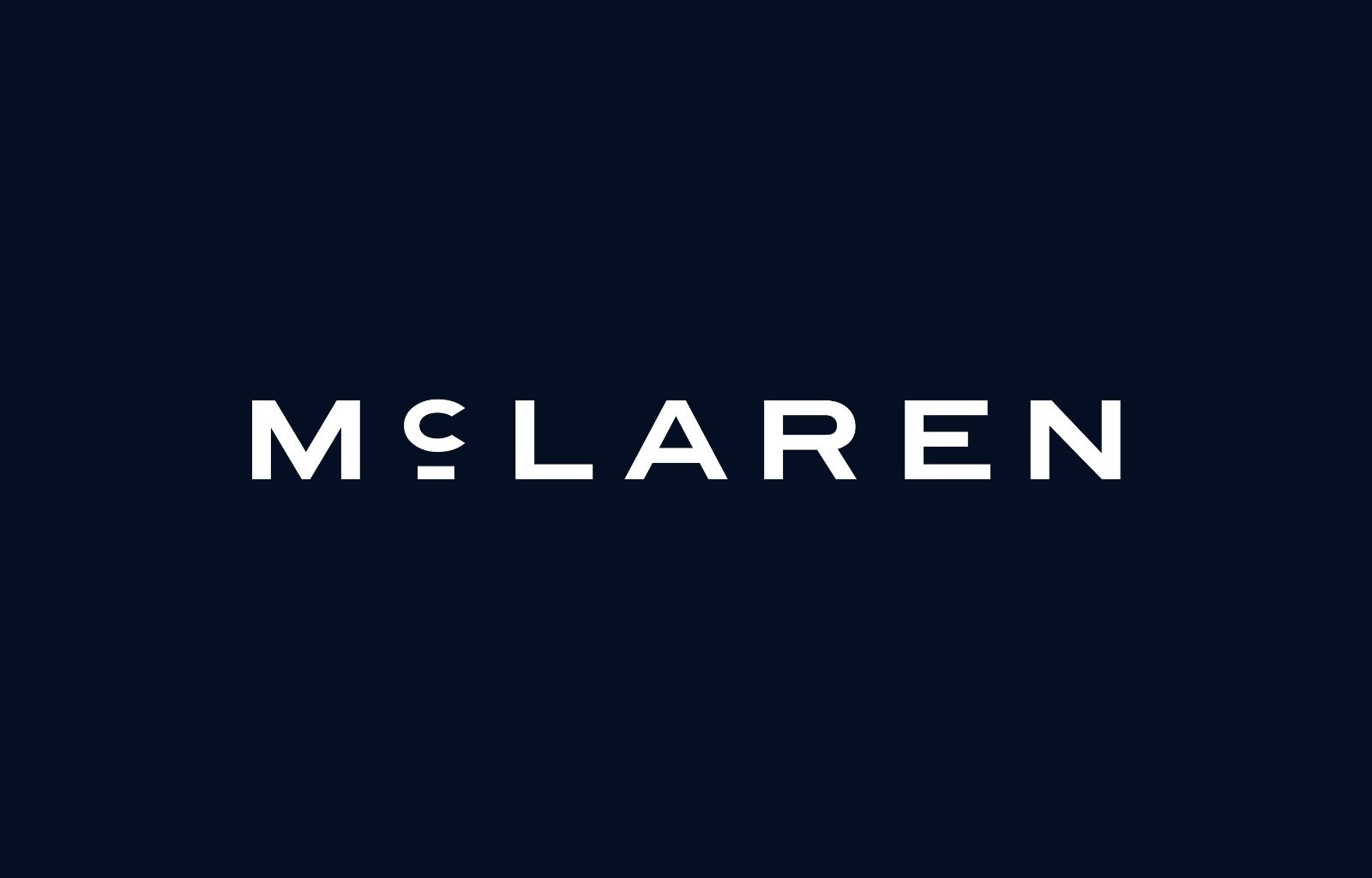
McLaren has unveiled an evolved global brand identity spanning McLaren Automotive and McLaren Racing, introducing a redesigned wordmark inspired by founder Bruce McLaren’s family history while retaining familiar elements including the Speedmark, papaya colour and Speedy Kiwi.
The British marque said the updated visual identity is intended to connect its past, present and future as it expands its automotive business, racing programmes and wider community of clients and fans.
At the centre of the redesign is a new McLaren wordmark inspired by the sign once displayed above the McLaren family Service Station in Remuera, Auckland, New Zealand.
Owned by Bruce McLaren’s parents, Les and Ruth McLaren, the service station was where the future racing driver and engineer built the car that would eventually take him to his first racing victory.
By reworking that historic lettering for the modern brand, McLaren is attempting to place its origins more visibly within its contemporary design language — proof, perhaps, that even a company obsessed with going faster occasionally finds value in looking in the rear-view mirror.
The wider identity retains the Speedmark, one of McLaren’s most recognisable visual symbols, while papaya continues as a defining brand colour. McLaren has also introduced an expanded colour palette inspired by significant moments from its history.
The Speedy Kiwi remains part of the identity as a reference to Bruce McLaren’s New Zealand heritage.
McLaren said the updated identity reflects the company’s broader ambitions beyond building high-performance cars and competing in motorsport, including greater personalisation, expanded experiences and a stronger community around the marque.
“There is something uniquely special about McLaren. Throughout our history, we’ve never been content to follow established paths. We’ve always looked ahead, driven by a restless desire to innovate, create and push beyond expectations. This evolution of our visual identity captures that spirit. It’s a reflection of the journey we are on as a company. It marks the beginning of a new chapter for McLaren, giving a physical expression to the ambition, creativity and forward momentum that is shaping our future.”
David Woodhouse, Chief Creative Officer, McLaren Automotive
McLaren Racing and McLaren Automotive developed the identity by examining their shared archives and tracing design elements from Bruce McLaren’s early years in New Zealand through to the company’s present-day operations.
“McLaren has evolved enormously over the years, but looking back through our shared history across Racing and Automotive, it’s poignant how much of Bruce’s original vision and spirit still runs through the business today. This evolved identity perfectly bridges that proud heritage with our future ambition. It celebrates the symbols and stories our fans, partners and team mates already know and love, while giving us a more connected expression of where we’re heading next. It feels unmistakably McLaren.”
Lou McEwen, Chief Marketing Officer, McLaren Racing
Identity change follows broader McLaren expansion
The branding update arrives during a period of significant change for McLaren.
Throughout 2026, the company has increased its focus on Bruce McLaren’s history and early ambitions, including renewed attention on the M6GT, described by McLaren as one of the earliest expressions of its founder’s road-car vision.
That heritage narrative has also been connected with the reveal of the McL 6GT, which McLaren describes as a contemporary signal of its design and performance ambitions.
McLaren Racing, meanwhile, has marked its 1,000th Formula One Grand Prix and announced a Hypercar challenger for the FIA World Endurance Championship, adding another major programme to its international motorsport activities.
The WEC entry also gives McLaren another opportunity to pursue motorsport’s unofficial Triple Crown, traditionally associated with victories at the Monaco Grand Prix, Indianapolis 500 and 24 Hours of Le Mans.
£500 million UK investment and SUV plans
The visual refresh also comes as McLaren Automotive prepares for a broader product and manufacturing expansion.
The company recently confirmed plans for a £500 million investment programme to expand its manufacturing and engineering footprint in the United Kingdom.
That programme is expected to support McLaren’s next phase of long-term growth, including plans to move beyond its traditional focus on two-seater sports cars.
Among the most significant developments is an upcoming McLaren SUV, which will push the company into a new vehicle segment as it seeks to broaden its customer base and product portfolio.
For a brand whose modern road-car reputation was built around machines such as the McLaren F1, expanding into an SUV represents a substantial strategic shift — although in today’s performance-car market, even the most exotic manufacturers have discovered that practicality can be rather profitable.
McLaren said the evolved identity is not intended as an endpoint, but as the foundation for a visual system that can continue developing alongside the company.
More broadly, the redesign illustrates how McLaren is attempting to balance two priorities that can occasionally pull in different directions: preserving the engineering, racing and design heritage associated with Bruce McLaren while building a larger and more diversified global business.
The familiar papaya, Speedmark and Kiwi remain, but the message around them is changing. As McLaren expands into new products, racing categories and customer experiences, its refreshed identity is designed to ensure that the brand’s next chapter still carries a visible connection to where the story began.