


PUNE: Delhivery and Bajaj Auto have announced a partnership to deploy 200 Bajaj Riki eCarts across Delhivery’s last-mile delivery network, marking the first phase of a wider plan to add around 1,500 Bajaj electric three-wheelers by 2026-27.
The official flag-off took place on Tuesday at Bajaj Auto’s facility in Akurdi, Pune. The companies said the deployment will extend fleet electrification beyond major metros into Tier-2 and Tier-3 cities, where last-mile logistics is expanding rapidly and traffic has little patience for inefficiency.
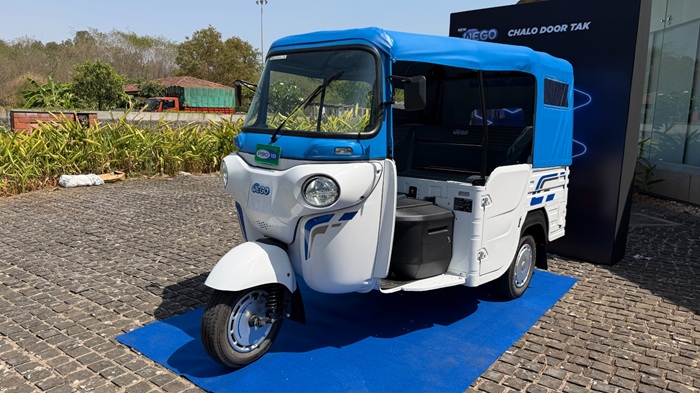
The first batch will include the Bajaj Riki C4005 eCart, designed for cargo delivery operations. The vehicle comes with an electric powertrain, two-speed automatic transmission, low maintenance requirements and a claimed range of more than 100 km on a single charge.
Delhivery said the vehicles will be paired with its automated route-optimisation systems, allowing delivery partners to complete more drop-offs per trip. The company expects the shift to improve operating efficiency and increase daily earnings for riders by reducing running costs per kilometre.
Prashant Gazipur, Chief Operating Officer, In-City Operations at Delhivery, said, “Our collaboration with Bajaj Auto addresses the economic well-being of our delivery partners while advancing both our environmental goals and those of our clients. By combining our intelligent routing systems with highly efficient cargo EVs, we are creating a more profitable model for our riders and offering our clients a cleaner, lower-carbon supply chain. Furthermore, this deployment across metros and emerging tier 2 and below markets ensures our last-mile network is physically safer, financially more rewarding, and supportive of shared ESG commitments.”
Samardeep Subandh, President, Intra-City Business at Bajaj Auto, said, “This partnership with Delhivery has the potential of transforming last mile cargo transport, with Delhivery’s scale and technology and Bajaj Auto’s expertise in 3-wheeler electric mobility. With this partnership we are launching the Bajaj Riki C4005 (eCart). The Bajaj Riki C4005 offers 100+ kms of range on a single charge, excellent reliability and durability along with better comfort and ergonomics for drivers. Partnering with Delhivery has the potential to make an impact on last mile logistics not only across metros but also Tier-2 and Tier-3 cities.”
The companies said the electric cargo vehicles are also aimed at improving rider safety and comfort. The eCarts feature ergonomic seating and weather protection, which can help reduce fatigue during long delivery hours, particularly in heavy traffic and extreme seasonal conditions.
The vehicles are designed to carry larger and denser payloads more securely than conventional two-wheelers, reducing physical strain on delivery partners while improving load-handling capability.
From an environmental perspective, the switch from internal combustion vehicles to electric three-wheelers will help cut tailpipe emissions in congested urban areas. Delhivery said the move supports its broader fleet electrification plans and its efforts to reduce Scope 3 greenhouse gas emissions in line with its ESG goals.
For Bajaj Auto, the partnership strengthens its presence in the commercial electric mobility segment, particularly in cargo transport. For Delhivery, it adds another layer to the company’s technology-led logistics network at a time when faster, cleaner and safer deliveries are becoming central to India’s urban supply chain.
The partnership reflects a broader shift in India’s logistics sector, where electric mobility is no longer just a sustainability headline but increasingly a business decision driven by lower running costs, improved efficiency and better working conditions for delivery partners.