



Lucknow: Tata Motors has hit a landmark milestone—rolling out its 10 lakh (1 millionth) commercial vehicle from its Lucknow facility, marking over 35 years of manufacturing excellence in Uttar Pradesh. And in a fitting nod to the future, the milestone vehicle wasn’t just any truck or bus—it was a zero-emission electric bus, quietly signalling that the next lakh might be a lot greener (and quieter).
The historic rollout was flagged off by Uttar Pradesh Chief Minister Yogi Adityanath alongside Natarajan Chandrasekaran, in the presence of senior government officials and Tata Motors leadership, including Managing Director & CEO Girish Wagh.
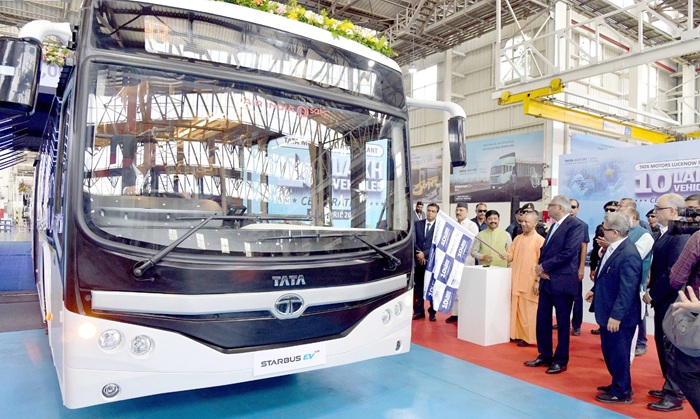
Calling it a proud moment for the state, Yogi Adityanath highlighted how the milestone reflects Uttar Pradesh’s growing industrial strength and its ambition to become a trillion-dollar economy. He emphasised that Tata Motors’ journey in the state mirrors the larger story of India’s manufacturing evolution—powered by skilled talent, infrastructure growth, and a rapidly expanding market.
Established in 1992, the Lucknow plant has grown into one of Tata Motors’ most significant commercial vehicle hubs. Spread across nearly 600 acres, the facility produces a wide range of trucks and buses, including next-generation electric and even fuel-cell-powered vehicles. With an annual production capacity exceeding one lakh units, it serves both domestic and international markets—essentially keeping India (and parts of the world) moving, one truck at a time.
Speaking at the event, N. Chandrasekaran noted that the milestone is a testament to the strong partnership between Tata Motors and Uttar Pradesh. Over the decades, this collaboration has not only delivered vehicles but also created livelihoods, built skills, and fostered industrial growth at scale.
Beyond production numbers, the Lucknow facility stands out for its people-first approach. It supports over 8,000 livelihoods and has actively invested in skilling initiatives such as Kaushalya, Lakshya, and Saksham programmes. These initiatives, along with apprenticeship models, have helped thousands of young individuals gain industry-relevant skills—proving that the assembly line is also a training ground for future careers.
Inclusivity has also found a place on the shop floor, with increasing participation of women and employment opportunities for people with disabilities—making the plant not just a manufacturing hub, but a reflection of evolving workplace diversity in India’s industrial sector.
On the sustainability front, the facility ticks all the right boxes. It operates as a water-positive plant and runs entirely on renewable energy, significantly reducing its carbon footprint. Add to that the use of Industry 4.0 technologies, AI-enabled systems, and robotics, and you get a factory that’s as smart as it is responsible.
As India’s commercial vehicle sector accelerates towards cleaner and more efficient mobility solutions, Tata Motors’ 10 lakh milestone is more than just a number—it’s a signal. A signal that the road ahead will be electric, intelligent, and perhaps just a little less noisy.
And if the next milestone vehicle is anything like this one, don’t be surprised if it arrives silently—but makes a lot of noise in the industry.