

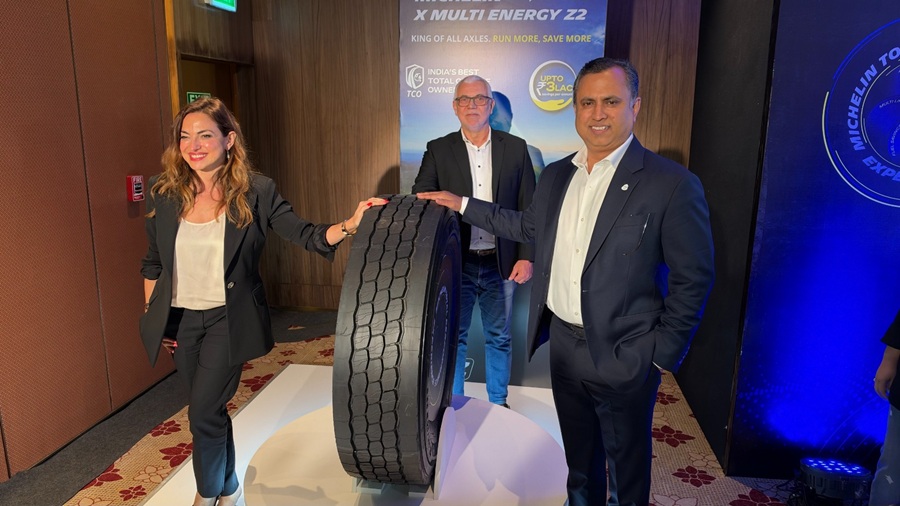
Michelin has introduced the X Multi Energy Z2, a new-generation truck and bus tyre manufactured in India, promising fuel savings of up to 13% and tyre life improvements of up to 25% compared with competing products. Developed for Indian road conditions and tested on domestic highways, the new tyre will be available nationwide from November 1, 2026, through Michelin Tyres & Service stores and approximately 300 authorised dealers.
Positioned by the French tyre manufacturer as India’s most fuel-efficient offering in the all-position truck tyre category, the X Multi Energy Z2 is designed to address three major concerns for commercial fleet operators: fuel consumption, tyre longevity and vehicle downtime.
According to Michelin, the tyre delivers fuel savings of up to 6% in the 295/80R22.5 tubeless configuration and up to 13% in the 295/90R20 tube-type configuration compared with leading competitors. The company estimates that these improvements could increase fleet operating margins by up to 3%, while potentially reducing carbon dioxide emissions by up to eight tonnes.
Fuel efficiency remains particularly important for India’s trucking industry, where fuel accounts for approximately 50% of overall fleet expenditure. Even relatively modest improvements in consumption can therefore translate into substantial savings for operators managing large fleets and long-distance routes.
Longer Tyre Life and Improved Durability
Beyond fuel efficiency, Michelin claims the X Multi Energy Z2 can deliver up to 25% longer tyre life than its nearest competitor in the same size.
The improvement is attributed to the company’s Carbion blend technology, which produces a stronger and more consistent tread compound intended to reduce wear and extend service life.
Michelin also reports an 11% improvement in summit strength compared with leading competition, a durability advantage designed to reduce tyre-related downtime and improve vehicle productivity.
These developments are aimed at lowering the total cost of ownership (TCO), an increasingly important consideration for transport businesses evaluating tyres beyond their initial purchase price.
The tyre’s longevity claim is based on Michelin’s internal research simulations and extrapolated data collected between 2023 and 2025, rather than completed real-world lifetime testing of the new product.
Improved Wet and Dry Handling
The X Multi Energy Z2 also incorporates Michelin’s patented InfiniCoil+ technology, designed to optimise the tyre’s contact patch and maintain stability throughout its operating life.
In the 295/80R22.5 size, Michelin claims the tyre offers improved wet and dry handling compared with leading competitors, supported by a contact footprint up to 5% larger than competing products of the same dimension.
The larger footprint is intended to improve grip and traction, particularly relevant for heavy commercial vehicles operating across India’s varied road surfaces and changing weather conditions.
Michelin India Highlights Lower Fleet Operating Costs
Speaking at the launch, Shantanu Deshpande, Managing Director, Michelin India, said:
“India’s commercial vehicle sector is the backbone of the nation’s economy, and fleet owners are increasingly looking beyond the upfront cost of a tyre to its overall value throughout its life.”
Deshpande said the product combines fuel efficiency, longer tyre life and improved robustness to help transport operators reduce ownership costs and improve productivity.
The company has also incorporated its Duracore technology to improve tyre strength and durability, with the overall objective of delivering greater operational efficiency for Indian fleet operators.
Manufactured in Chennai With a Focus on Sustainability
The X Multi Energy Z2 is manufactured at Michelin’s Chennai facility, which the company describes as one of its greenest production plants.
According to Michelin, the facility operates with a zero-carbon footprint and sources nearly 45% of its energy from renewable sources. The tyres are also manufactured using up to 30% recyclable materials.
By combining reduced rolling resistance with extended service life, the company aims to lower both fuel consumption and the environmental impact associated with commercial road transport.
The launch also complements Michelin’s wider portfolio of tyre management, monitoring and fleet management services, which are intended to help transport operators plan maintenance, monitor performance and reduce unplanned downtime.
Fuel Efficiency Claims Based on Indian Highway Testing
Michelin’s fuel-efficiency assessments were conducted by its research and development teams between June 22 and June 28, 2026, on the Namakkal–Dindigul highway using an Ashok Leyland 16-wheeler 4825 vehicle.
The tests were designed to represent highway operating conditions and were performed using new tyres.
Separate footprint and durability assessments were conducted at Michelin’s Chennai manufacturing facility in July 2026.
The company cautions that actual performance may vary depending on vehicle load, tyre pressure, terrain, operating conditions and driving habits. The published comparisons are based on Michelin’s own testing and assessments, with the competing tyre brands not identified in the announcement.
With the X Multi Energy Z2, Michelin is strengthening its presence in India’s commercial vehicle tyre market at a time when fleet operators are under continuing pressure to manage costs and improve efficiency. While the claimed improvements will ultimately need to demonstrate their value across varied real-world operating conditions, the launch highlights a broader shift in commercial transportation: the economics of a tyre increasingly depend not on what it costs to buy, but on how much it costs to run over thousands of kilometres.