

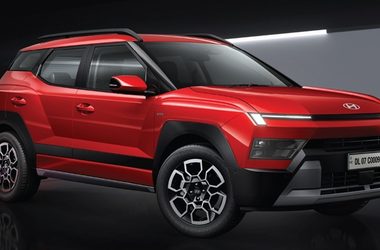
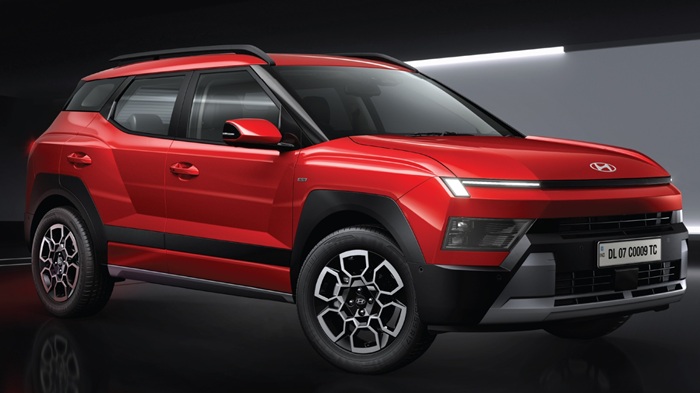
Gurugram: Hyundai Motor India Limited (HMIL) has revealed the safety features and structural engineering of its upcoming Hyundai Bayon ahead of its scheduled India launch on October 26, 2026. The new Intelligent Utility Vehicle will offer more than 80 safety features, including 23 Level 2 advanced driver assistance functions, while more than 35 safety features, including six airbags, will be standard across all variants.
Built on Hyundai’s Global K Enhanced Platform, the Bayon features a reinforced body structure incorporating 69% advanced multi-grade high-strength steel. The company says the vehicle has been engineered to meet 5-star Indian safety standards, although this does not constitute an independently awarded crash-test rating.
The BAYON will also feature Hyundai SmartSense Level 2 Pro ADAS, combining radar-based assistance, camera technologies and intelligent highway-driving functions. Its safety hardware includes three radars and 12 parking sensors.
Hyundai Bayon Gets 69% High-Strength Steel Body Structure
One of the most significant aspects of the Bayon’s safety engineering is its reinforced body architecture.
According to Hyundai, the vehicle’s body structure uses 69% advanced multi-grade high-strength steel, incorporating Hot Stamping (HS), Ultra High Strength Steel (UHSS), Advanced High Strength Steel (AHSS) and High Strength Steel (HSS).
These materials have been strategically integrated into the vehicle’s structural design to improve rigidity, manage collision forces and protect the passenger compartment.
Hot-stamped components are used in critical areas, including the front apron, dashboard, rear floor and side reinforcements. The rear-floor side members are designed to improve protection during rear-end collisions.
The structure also incorporates dual-box construction, multiple load paths and a ring-type architecture. Together, these engineering measures are intended to distribute impact energy more effectively and reduce the likelihood of intrusion into the passenger cabin.
Hyundai describes the Bayon as engineered for 5-star Indian safety standards. However, an official crash-test result would be required to establish whether the vehicle achieves that rating.
Hyundai SmartSense Level 2 Pro ADAS Offers 23 Functions
The BAYON will feature Hyundai SmartSense Level 2 Pro, an advanced driver assistance package offering 23 functions intended to support drivers across highways, city roads, intersections and parking environments.
Among its key technologies are Forward Collision Warning, Forward Collision-Avoidance Assist for cars, pedestrians and cyclists, and collision-avoidance assistance for junction turning and direct oncoming traffic.
The vehicle will also offer Blind-spot Collision-Avoidance Assist, Blind-spot Collision Warning, Lane Departure Warning, Lane Keeping Assist, Driver Attention Warning and Safe Exit Warning.
For highway driving, the Bayon includes Smart Cruise Control with Stop & Go, Lane Following Assist, Highway Driving Assist and navigation-based smart cruise control functions for curves and speed-control zones.
These systems are designed to assist with maintaining appropriate speeds, following vehicles ahead and supporting lane positioning under applicable driving conditions.
The technology should prove particularly relevant on India’s increasingly extensive expressway network, although Level 2 assistance still requires drivers to remain attentive and responsible for controlling the vehicle.
Six Airbags and Over 35 Safety Features Standard
Hyundai has confirmed that the Bayon will offer more than 35 safety features as standard across all variants, rather than limiting essential protection equipment to higher-priced models.
Standard safety equipment includes:
- Six airbags
- Electronic Stability Control (ESC)
- Hill-Start Assist Control (HAC)
- Tyre Pressure Monitoring System (TPMS) – High
- Rollover sensor
- Emergency Stop Signal (ESS)
- Three-point seatbelts and seatbelt reminders
- ISOFIX child-seat anchorages
- Rear parking sensors
- Central locking
- Burglar alarm
- Headlamp escort function
The provision of six airbags and electronic stability control across the range reflects the increasing importance of standard safety equipment in India’s passenger vehicle market.
In addition to passive safety systems, the Bayon will offer all-wheel disc brakes and a range of active assistance technologies.
Surround View Monitor and Blind-Spot Cameras Improve Visibility
The Bayon’s safety package extends beyond collision protection to include technologies designed to make everyday driving and parking less demanding.
Its Surround View Monitor provides a comprehensive view of the vehicle’s surroundings, helping drivers navigate tight parking spaces and crowded urban environments.
The Blind-spot View Monitor displays areas that may otherwise be difficult to observe through conventional exterior mirrors.
Front parking sensors add further assistance while manoeuvring, while Rear Cross-Traffic Collision Warning and Rear Cross-Traffic Collision-Avoidance Assist are designed to help identify and respond to approaching traffic when reversing.
Safe Exit Warning is another practical addition, alerting occupants when a vehicle approaching from behind is detected as they prepare to open a door.
The features are particularly relevant in urban environments, where cars, motorcycles, pedestrians and roadside obstacles frequently compete for limited space.
Hyundai Says Safety Has Been Integrated From the Development Stage
Commenting on the Bayon’s safety technologies, Tarun Garg, Managing Director and CEO, Hyundai Motor India Limited, said:
“At Hyundai, we believe that true innovation is meaningful only when it enhances the everyday experiences of our customers. With the Hyundai Bayon, we have combined a robust body structure, advanced safety technologies, and intelligent driver assistance systems to deliver a comprehensive safety experience. From its reinforced chassis and high-strength steel construction to Hyundai SmartSense Level 2 Pro ADAS, the Bayon is engineered to inspire confidence not only in challenging situations, but throughout every journey. This reflects our commitment to delivering intelligent mobility solutions that are safe, connected, and progressive for modern India.”
According to Hyundai, the Bayon’s underlying platform has been developed to integrate structural crash protection, electronic safety systems and driver assistance technologies into a unified safety architecture.
Hyundai Bayon Engine and Transmission Details
Alongside the safety announcement, Hyundai has confirmed the Bayon’s petrol engine and transmission specifications.
The vehicle will be powered by a four-cylinder, 1.5-litre MPi petrol engine producing 84.4 kW (115 PS) and 143.8 Nm of torque.
Customers will have a choice between a six-speed manual transmission (6MT) and Hyundai’s Intelligent Variable Transmission (IVT).
The naturally aspirated petrol engine will provide an alternative to the smaller turbocharged powertrains found in several vehicles across India’s utility vehicle market.
Hyundai has not disclosed the Bayon’s official fuel-efficiency figures in this announcement.
Ten Exterior Colour Options Confirmed
The Bayon will be available in 10 exterior colour options, covering monotone, matte and dual-tone finishes.
The range is intended to offer buyers a choice between conventional and more distinctive exterior appearances.
Hyundai has not detailed the complete list of individual colour names in its latest announcement.
Hyundai Bayon India Launch Date and Booking Details
The Hyundai Bayon is scheduled to launch in India on October 26, 2026, with bookings available through Hyundai’s official website and authorised dealerships.
Customers can reserve the upcoming vehicle with a booking amount of ₹11,000.
Hyundai has confirmed that the delivery timeline will be communicated at launch. Pricing and detailed variant-wise equipment specifications are also yet to be announced in the safety disclosure.
The Bayon’s combination of a naturally aspirated petrol engine, extensive standard safety equipment and advanced driver assistance technologies suggests that Hyundai is placing considerable emphasis on safety as a key part of its positioning.
Ultimately, the Bayon’s reception will depend not only on its equipment list but also on its pricing, real-world performance and independently verified crash protection. With the official launch only days away, Hyundai has made its safety ambitions clear; the next step will be demonstrating how effectively those ambitions translate into protection on Indian roads.


