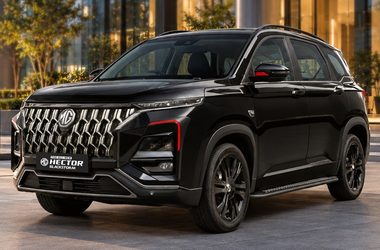
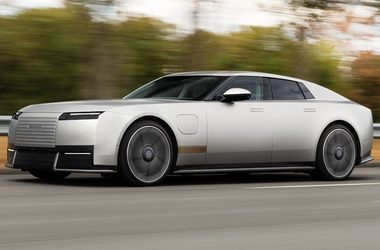

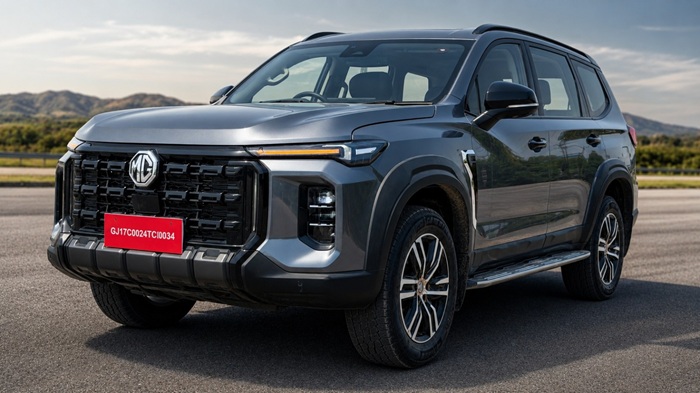
Gurugram: JSW MG Motor India has unveiled MG ADAPT, a modular vehicle platform designed to support electric, hybrid, plug-in hybrid and range-extender powertrains on a common architecture. The company said one electric vehicle and one plug-in hybrid electric vehicle based on the platform are scheduled to debut during the 2026-27 financial year.
ADAPT, short for Advance Drive Architecture Platform Technology, will underpin the company’s future New Energy Vehicle portfolio in India. According to JSW MG Motor India, it is the country’s first multi-NEV platform capable of accommodating Electric Vehicles, Hybrid Electric Vehicles, Plug-in Hybrid Electric Vehicles and Range Extender Electric Vehicles.
The architecture is intended to give the carmaker greater flexibility in developing vehicles with different propulsion systems without building an entirely separate foundation for each one — an engineering approach that could save both development time and a fair amount of automotive rearranging.
JSW MG Motor India said the platform has been designed to improve driving range, charging capability, efficiency, performance, safety and overall refinement. Its modular construction is also expected to allow faster product development and greater design flexibility.
Speaking at the unveiling, Anurag Mehrotra, Managing Director, JSW MG Motor India, said, “At JSW MG Motor India, we believe the future of mobility lies in giving customers the freedom to choose the energy solution that best suits their lifestyle, without compromising on performance, efficiency or driving experience. MG ADAPT marks a defining milestone in our New Energy Vehicle journey and reflects our commitment to bringing globally advanced technologies that are relevant to the evolving needs of Indian customers.
Designed as a highly flexible technology platform, MG ADAPT brings together multiple energy solutions on a single intelligent architecture, enabling us to deliver vehicles that are more efficient, more adaptable and engineered for the future. As we continue to expand our New Energy Vehicle portfolio, this platform will serve as the technological backbone of our future products and reinforce our commitment to accelerating sustainable mobility in India.”
Dedicated Hybrid Technology
For hybrid applications, the MG ADAPT platform integrates a dedicated hybrid engine, a dedicated battery system, an intelligent electric drive unit and a specialised hybrid transmission.
The company describes the electric drive unit as India’s first 10-in-1 Intelligent Electric Drive Unit. By combining several components into one compact system, the unit is intended to reduce mechanical complexity while improving efficiency and performance.
The platform also incorporates what JSW MG Motor India calls the world’s first Electromagnetic Dedicated Hybrid Transmission. The transmission has been developed to provide smoother power delivery, quicker response and a more refined driving experience.
The dedicated hybrid engine has been engineered specifically for electrified applications, rather than being a conventional petrol engine adapted later for hybrid use. The company said this approach is intended to deliver higher thermal efficiency and reduced fuel consumption.
A dedicated battery system supports the engine and electric motor by providing immediate electric response, improved efficiency and enhanced safety.
Four Automatic Driving Modes
An Intelligent Energy Management System monitors driving conditions and controls how the engine, battery and electric motor operate together.
The system automatically switches between four operating modes depending on the vehicle’s speed, power requirement and battery status.
In Pure Electric Drive, the vehicle operates using electric power for quieter and more responsive urban driving.
Under Series Hybrid Drive, the petrol engine generates electricity while the electric motor continues to power the wheels.
In Parallel Hybrid Drive, both the engine and electric motor deliver power, primarily when stronger performance is required.
The Engine Direct Drive mode allows the combustion engine to power the vehicle directly and is intended for efficient highway cruising.
The transitions are managed automatically, meaning drivers are not expected to conduct a small powertrain strategy meeting every time road conditions change.
Support for Range-Extender Vehicles
MG ADAPT also supports Range Extender Electric Vehicle technology. In a REEV configuration, the electric motor remains responsible for driving the wheels, while a petrol engine functions only as an onboard generator.
When the battery charge falls, the engine generates electricity to replenish it, extending the vehicle’s usable driving range without directly powering the wheels.
This arrangement is intended to retain the smooth and immediate response associated with an electric vehicle while reducing concerns about charging availability during longer journeys.
Unlike a conventional plug-in hybrid, where both the engine and electric motor may mechanically drive the vehicle, a range-extender system keeps electric propulsion at the centre of the driving experience.
A Broader Electrification Strategy
The introduction of MG ADAPT reflects the industry’s growing interest in offering several electrified powertrain options instead of relying exclusively on battery-electric vehicles.
While fully electric vehicles remain an important part of the transition towards cleaner mobility, hybrids, plug-in hybrids and range-extender vehicles can serve customers who require longer driving ranges or have limited access to reliable charging infrastructure.
With its first EV and PHEV based on MG ADAPT expected in FY 2026-27, the platform will become a key test of JSW MG Motor India’s multi-powertrain strategy. Its broader significance will depend not only on the sophistication of the technology, but also on how effectively the resulting vehicles balance cost, efficiency, charging convenience and real-world usability for Indian buyers.