
New Delhi: India’s electric mobility shift is no longer just about cleaner vehicles; it’s about the brains, brawn, and bandwidth behind the charger you plug into. Once limited to lonely AC chargers parked behind malls, the country’s EV infrastructure has rapidly transformed into a fast, intelligent, and user-friendly network built for scale. And at the centre of this transformation are five innovations reshaping how India charges up—quite literally.
Fast Charging: Because Who Has Hours to Spare?
The race to reduce charging time is getting more intense than a traffic signal countdown in Mumbai. India’s next-gen fast chargers are slashing charging times from hours to minutes, which is essential for long-distance EV adoption.
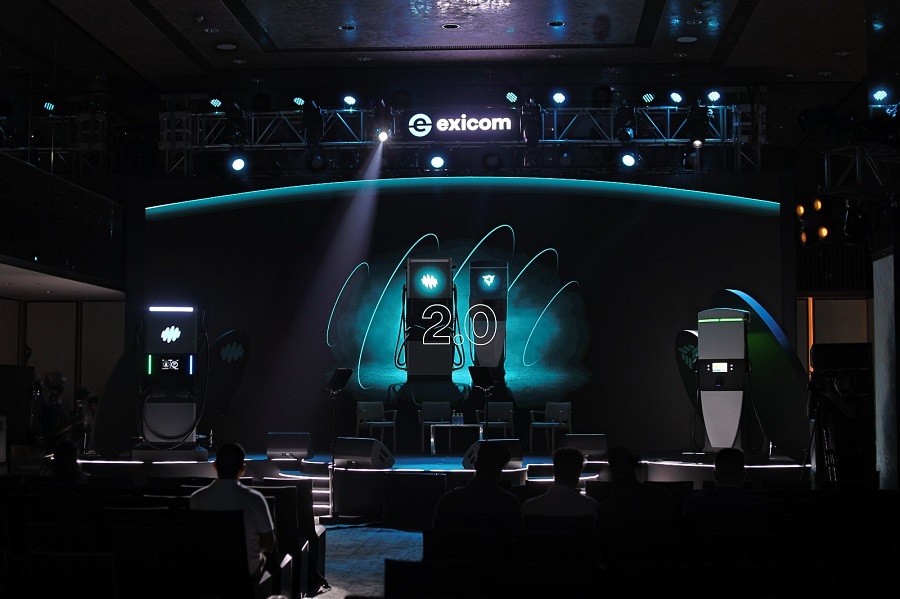
Leading the pack is Exicom’s Harmony Direct 2.0, capable of delivering up to 400 kW—the charging equivalent of downing an espresso shot in one gulp. Its scalable, modular design and predictive maintenance allow multiple EVs to fast-charge simultaneously without the system complaining or taking a timeout.
With both Indian and global players pushing modular, battery-backed, grid-friendly innovations, high-power charging is now becoming the default expectation, not a luxury.
Grid-Resilient Charging: Solar-Powered and Stress-Free
India’s grid has historically struggled with everything from peak loads to curious monkeys—but EV charging is determined to change the narrative.
The first major breakthrough: renewable-integrated hubs, such as the solar-powered EV charging facility near Bengaluru Airport. With a 45 kWp rooftop solar plant paired with 100 kWh battery storage, it keeps 23 charging points alive and kicking 24/7 while giving the local grid some much-needed breathing room.
Meanwhile, energy management systems are quietly doing the heavy lifting. Fortum’s load-balancing pilot in New Delhi dynamically adjusts charging power to match grid capacity—like having a traffic police officer for electricity flow.
Remote Monitoring: The EV Charger with a Sixth Sense
Gone are the days when a charging station would stop working and nobody noticed for days. Remote monitoring has become the industry’s secret superpower.
Players like ChargeZone and Bolt.Earth are running cloud-based, IoT-loaded networks that allow operators to monitor charger health, energy use, uptime, and even subtle complaints—all in real time.
From predictive maintenance to instant troubleshooting, remote monitoring is making India’s charging ecosystem more reliable than the average WiFi router.
Smart Interoperability: One App to Charge Them All
If early EV users had a rupee for every app or connector mismatch, they’d probably own an EV charging network by now.
Thankfully, interoperability is finally becoming mainstream. Platforms like Tata Power EZ Charge, ChargeZone, Glida, and Bolt.Earth are adopting global standards like OCPP and ISO 15118, ensuring chargers and software speak the same language.
The result? Easier payments, better roaming between networks, fewer apps, and a far more unified experience—no more digital “treasure hunts” for compatible chargers.
Connected Charging Experience: Convenience Takes the Wheel
The future of EV charging isn’t just hardware—it’s the app that shows you where the hardware is.
India’s drivers want reliable, real-time information on charger availability, health, wait times, and payment options. That’s where digital ecosystems like JSW MG Motor India’s eHub come in.
With access to 12,500 fast chargers, partnerships with 33 operators, and over 1,00,000 app downloads (as per media reports), platforms like eHub prove that user-centric design is just as important as kilowatts and cables.
India is targeting 30% EV penetration by 2030, and this next-gen charging ecosystem is setting global benchmarks—fast, smart, connected, and increasingly renewable.
If the evolution continues at this pace, India won’t just join the global EV revolution; it might quietly lead the charge.