
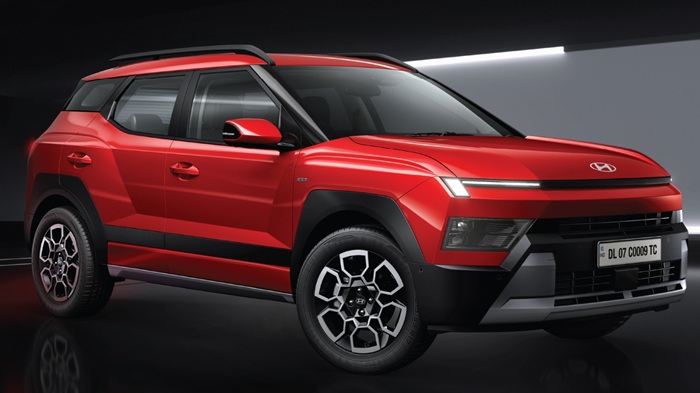
Hyundai Motor Europe has unveiled the all-new Bayon, introducing a redesigned compact SUV with a more prominent SUV identity, upgraded technology, improved passenger comfort and an expanded range of driver assistance features. The new-generation model will initially be offered with internal-combustion engines, while a hybrid powertrain producing an expected 138 PS is scheduled to join the European line-up in 2027.
The latest Bayon represents a significant evolution of Hyundai’s compact SUV, combining a more assertive exterior design with features traditionally associated with larger and more expensive vehicles. These include dual 12.3-inch digital displays, ventilated front seats, reclining rear seats, Hyundai Digital Key 2 and advanced highway driving assistance technology.
Manufactured at Hyundai Motor’s production facility in Türkiye, the all-new Bayon is aimed at European customers seeking the practicality of a compact vehicle without sacrificing comfort, technology or the visual appeal of a larger SUV.
Sharper SUV Design With Hyundai’s Art of Steel Philosophy
The all-new Hyundai Bayon adopts a more upright stance, increased ground clearance and pronounced body contours to establish a stronger SUV identity.
Its exterior styling follows a more angular interpretation of Hyundai’s Art of Steel design philosophy, incorporating defined character lines, muscular fenders, a sculpted bonnet and a full-width horizontal lighting signature.
A prominent skid plate contributes to the vehicle’s rugged appearance, while alloy wheel options measuring up to 18 inches help distinguish the new model from its predecessor.
Hyundai is also offering a wider selection of exterior colours, including three matte finishes. According to the manufacturer, this makes the Bayon the only vehicle in its segment available with matte exterior paint options.
An available contrasting black roof adds another degree of personalisation.
Hyundai Bayon N Line Brings Sportier Styling
For customers seeking a more athletic appearance, Hyundai has introduced an N Line version of the all-new Bayon.
The variant receives a dedicated exterior treatment featuring technical mesh detailing, redesigned lower-bumper winglets, 18-inch N Line-specific alloy wheels and high-gloss black cladding.
At the rear, a diffuser incorporating twin exhaust outlets strengthens the vehicle’s sporting character.
Inside, the N Line features dedicated seats upholstered in a combination of cloth and textile suede, distinguishing it from the standard versions.
The enhancements are primarily focused on design and visual character, with Hyundai positioning the N Line as a sportier interpretation of its compact SUV.
Dual 12.3-Inch Displays and Digital Key 2 Headline Technology Upgrades
Technology is among the most significant areas of improvement in the all-new Bayon.
Depending on the selected specification, the dashboard features a 12.3-inch digital instrument cluster alongside a 12.3-inch infotainment touchscreen, arranged in a curved panoramic display configuration.
Wireless Apple CarPlay and Android Auto are supported, allowing drivers to connect compatible smartphones without relying on cables.
Hyundai Digital Key 2 enables owners to unlock and start the vehicle using a compatible smartphone or smartwatch, reducing the need to carry a conventional key.
The available Entertainment Package also provides access to streaming services, including YouTube, through the infotainment display.
Other connectivity and entertainment features include wireless smartphone charging, two front USB-C ports, one rear USB-C port and an optional Bose Premium Sound System with eight speakers.
For a compact SUV, the equipment list is becoming notably less compact.
More Rear Legroom, Reclining Seats and Improved Cabin Comfort
Hyundai has placed considerable emphasis on improving passenger accommodation in the latest Bayon.
A longer wheelbase allows for increased rear legroom, which the manufacturer describes as best-in-class. Hyundai also claims class-leading headroom and shoulder room for front and rear occupants.
Rear-seat passengers benefit from reclining backrests, a centre armrest with integrated cupholders and available heated seats. Dedicated rear air ducts further improve comfort during longer journeys.
Up front, buyers can opt for heated and ventilated seats, while driver lumbar support and height adjustment for both front seats provide additional flexibility.
Other available comfort features include dual-zone automatic climate control, soft-touch cabin materials, dual ambient lighting and an openable panoramic sunroof.
The expanded equipment range suggests that Hyundai is attempting to narrow the comfort gap between compact SUVs and vehicles positioned in higher segments.
Practicality has also received attention. Internal-combustion versions are projected to offer 440 litres of luggage capacity, accompanied by additional underfloor storage and a luggage-compartment cover that can be stowed away when not required.
Hyundai SmartSense Adds Advanced Driver Assistance Features
The all-new Bayon offers an extensive range of Hyundai SmartSense driver assistance technologies designed to support drivers in urban traffic, on highways and during parking manoeuvres.
Depending on the version and market, available systems include:
- Highway Driving Assist 2 (HDA 2)
- Forward Collision-Avoidance Assist 2 (FCA 2)
- Smart Cruise Control (SCC)
- Lane Following Assist 2 (LFA 2)
- Blind-Spot Collision-Avoidance Assist (BCA)
- Blind-Spot View Monitor (BVM)
- Surround View Monitor (SVM)
- Rear Cross-Traffic Collision-Avoidance Assist (RCCA)
- Parking Collision-Avoidance Assist-Reverse (PCA-R)
The inclusion of Highway Driving Assist 2 and camera-based monitoring technologies reflects Hyundai’s effort to bring more advanced assistance systems into its smaller models.
These systems are intended to assist drivers rather than replace their responsibility for controlling the vehicle.
New Hyundai Bayon Hybrid Coming in 2027 With 138 PS
Electrification will play an important role in the Bayon’s future, although the new model will initially enter the market with conventional internal-combustion powertrains.
Hyundai plans to introduce a hybrid variant in 2027, broadening the vehicle’s appeal to customers seeking improved efficiency without transitioning to a fully electric vehicle.
The upcoming hybrid system is expected to combine a 1.6-litre gasoline direct-injection (GDI) engine with an electric motor and a six-speed dual-clutch transmission.
Combined output is expected to reach 138 PS.
The hybrid model will also introduce adaptive regenerative braking, which adjusts energy recuperation according to driving conditions.
Steering-wheel-mounted paddle shifters will allow drivers to select their preferred level of regenerative braking, adding a degree of control over the system’s operation.
Hyundai has not provided official fuel economy figures for the hybrid powertrain in the supplied announcement.
Hyundai Sees Bayon as a Stronger Contender in Europe’s Compact SUV Market
Commenting on the introduction, Xavier Martinet, President and CEO of Hyundai Motor Europe, said:
“The all-new Bayon is much more than an update. We have strengthened its SUV character with a bolder design, more space, more comfort and technologies that customers would normally expect from larger vehicles. In one of Europe’s most important segments, Bayon gives us a stronger opportunity to attract new customers. With a hybrid powertrain joining the lineup in 2027, Bayon will build on this momentum.”
The statement highlights Hyundai’s strategy of expanding the appeal of its compact SUV beyond customers primarily concerned with affordability and exterior dimensions.
By combining a more substantial SUV appearance with features such as ventilated seats, digital vehicle access, reclining rear seats and advanced driver assistance systems, Hyundai is seeking to offer a broader premium experience within a smaller vehicle footprint.
What the All-New Bayon Means for Hyundai
The introduction of the all-new Bayon reflects a broader shift in the compact SUV market, where customers increasingly expect advanced connectivity, improved safety equipment and passenger comfort previously reserved for larger vehicles.
Hyundai’s decision to introduce a hybrid powertrain in 2027 also gives the model an additional electrified option for European buyers.
While pricing, market-specific configurations and detailed performance figures remain to be clarified, the Bayon’s expanded equipment list and revised design indicate a more ambitious positioning for the nameplate.
Ultimately, the new Bayon will be judged not simply by how many features Hyundai has managed to accommodate within its compact dimensions, but by how effectively it balances comfort, practicality, efficiency and affordability in one of Europe’s most competitive vehicle segments.