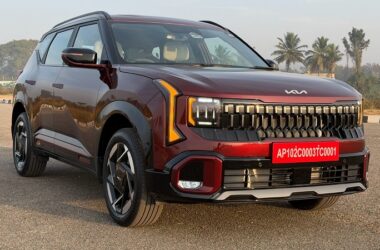




Gurugram: Hyundai Motor India Limited (HMIL) has released the first design sketches of the upcoming Hyundai Bayon, offering an early look at the exterior and interior styling of the company’s new Intelligent Utility Vehicle for India.
The sketches come shortly after Hyundai confirmed the Bayon name for the upcoming model. Developed as a global product, the vehicle adopts the company’s evolving “Art of Steel” design language, with sculpted bodywork, pronounced fenders, sharp character lines and an SUV-focused stance.
Hyundai says the Bayon has been conceived primarily for urban customers while retaining the visual character and road presence traditionally associated with SUVs.
The front design shown in the sketches is dominated by a sculpted bonnet, prominent fender volumes and what Hyundai calls its distinctive “H-Edge” lighting signature. Robust lower-body elements further emphasise the vehicle’s SUV proportions.
The overall treatment appears to favour sharply defined surfaces rather than overly complicated detailing, giving the Bayon a muscular look without turning every panel into a geometry lesson.
Commenting on the design philosophy of Hyundai Bayon, Simon Loasby, Senior Vice President & Head of Hyundai Design Center, Hyundai Motor Company, said, “As we introduce Bayon to India, we wanted it to make a confident first impression. Our goal was to create an Intelligent Utility Vehicle, where intelligent technology and thoughtful design come together for modern urban lifestyles. A high-tech interior within a tough exterior. The sculpted hood, bold fender volumes and distinctive H-Edge lighting create a strong and unmistakable presence, giving Bayon a character that feels capable, modern and distinctly its own.”
Interior Sketch Points to a Technology-Focused Cabin
Hyundai has also released an interior design sketch that previews a cabin centred around technology, connectivity and ease of use.
While detailed equipment specifications have not yet been announced, the company says the cabin has been designed around contemporary lifestyles, bringing together advanced technology, intuitive controls and connected features.
The interior is intended to contrast the Bayon’s tougher exterior appearance with a more sophisticated and technology-led environment inside.
Hyundai describes the overall concept as one in which a “high-tech interior” is combined with a more rugged exterior identity.
Designed Around Urban SUV Buyers
According to Hyundai, the Bayon was conceived around the idea of offering SUV-like confidence and styling to customers whose everyday driving largely takes place in urban environments.
Its design therefore combines familiar SUV cues — including pronounced wheel arches, a sculpted bonnet, a robust stance and distinctive lighting — with proportions intended to suit city use.
The company says precise surfaces and defined character lines were used to give the Bayon a youthful and recognisable appearance while reinforcing its SUV identity.
Inside, Hyundai is positioning the cabin as an extension of that approach, with technology, connectivity and intuitive interactions expected to play a central role.
Further technical specifications, powertrain details, dimensions, features and launch-related information have not yet been disclosed by HMIL.
The design sketches nevertheless provide the clearest indication yet of how Hyundai intends to position the Bayon in India: as an urban-focused utility vehicle that combines increasingly important digital features with the rugged visual cues buyers have come to expect from modern SUVs. As competition in India’s SUV market continues to intensify, the production version will ultimately have to prove that the confidence shown on the drawing board translates equally well to the road.