
As passengers demand safer, cleaner and more reliable journeys, drivers too are looking for better earnings stability, respect and professional growth. Urban mobility in India is entering its “better service, please” era.
India’s urban mobility story is no longer just about booking a cab, checking the fare, and hoping the driver does not cancel after asking, “Drop kahan hai?”
Across major cities, passengers are becoming more demanding, drivers are becoming more selective, and mobility platforms are being pushed to offer more than simply a ride from Point A to Point B. The next phase of India’s ride-hailing market appears to be shaped by quality, trust, safety, professionalism and service consistency.
Over the past decade, Indian consumers have become used to digital convenience. Food arrives at the doorstep, payments happen in seconds, shopping is tracked in real time, and even vegetables now come with app notifications. Naturally, expectations from mobility services have also moved up.
For passengers, price continues to matter, but it is no longer the only deciding factor. Clean vehicles, well-maintained cabins, courteous drivers, transparent pricing, safety features and reliable arrival times are increasingly becoming part of the basic expectation. In short, the customer is no longer just asking, “Kitna fare hai?” The question is now, “Will this be a decent experience?”
This shift reflects a wider change in India’s consumer behaviour. As incomes rise and urban lifestyles become busier, consumers are placing greater value on convenience, reliability and quality. Research from firms such as Deloitte, RedSeer and KPMG has also pointed toward a clear trend: Indian consumers are becoming more experience-driven and are willing to reward brands that consistently deliver dependable service.
For ride-hailing companies, that means the old discount-heavy playbook may not be enough. Promotions can attract a rider once, but trust brings them back. And in mobility, trust is built one clean seat, one polite conversation, one safe ride and one on-time pickup at a time.
The change is not limited to passengers. Drivers, too, are seeking more from mobility platforms.
India’s gig economy has become an important source of employment, and ride-hailing drivers form a major part of this workforce. According to NITI Aayog projections, India’s gig workforce is expected to grow significantly by 2029–30, underlining the increasing role of platform-based work in the country’s economy.
But as the sector matures, drivers are no longer looking only at the number of trips they can complete in a day. Predictable earnings, fair systems, transparent incentives, training, recognition, safety support and long-term stability are becoming increasingly important. For many drivers, the ideal platform is not merely one that sends more bookings, but one that offers respect and a more sustainable professional path.
This is where the future of ride-hailing becomes more interesting. Driver professionalism is now a competitive advantage. Platforms that invest in training, safety protocols, better technology tools and support systems are likely to deliver a stronger experience for passengers as well.
After all, a good ride does not begin when the passenger sits in the car. It begins much earlier—with the vehicle, the driver, the platform, the support structure and the service culture behind it.
Technology is also playing a bigger role. Digital payments, real-time tracking, route optimisation, AI-led operations and safety features are helping mobility companies offer more predictable and consistent journeys. But technology alone cannot solve everything. An app can assign the ride, but it cannot replace courtesy. A GPS can show the route, but it cannot create trust by itself.
Passengers remember how they were treated. Drivers remember how they were supported. That is where long-term loyalty is built.
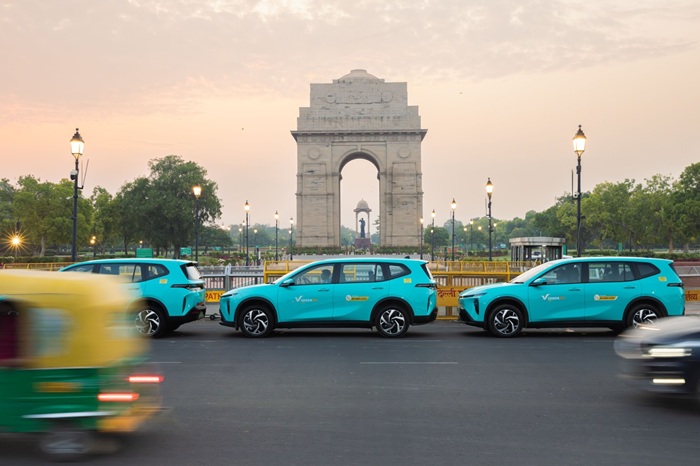
It is in this changing environment that Green SM, an electric ride-hailing brand from Southeast Asia, has started appearing on the streets of New Delhi and Gurugram ahead of its official India launch. The company has expanded across multiple Southeast Asian markets and has built its model around modern vehicles, professional drivers, technology-enabled operations and customer-focused service standards.
Its entry into India comes at a time when both sides of the ride-hailing equation are asking for more. Passengers want safer, cleaner and more comfortable journeys. Drivers want stability, support and opportunities to grow professionally. In other words, everyone wants the ride-hailing experience to stop feeling like a lottery.
While Green SM’s electric vehicle focus is important, its broader positioning appears to reflect a larger trend in urban mobility: raising standards for both passengers and drivers. The future may not be decided by who offers the cheapest fare alone, but by who can deliver a ride that feels reliable, professional and worth repeating.
India’s mobility future is unlikely to be defined by one company, one technology or one app icon on a phone screen. It will be shaped by rising consumer expectations, better service standards, improved driver opportunities and the ability of platforms to build everyday trust.
For India’s cities, the message is clear: people no longer want just a ride. They want a better journey. And preferably, one where the driver does not cancel after hearing the destination.