


New Delhi:
If the Union Budget 2026–27 were a car, the Indian automotive industry seems to agree—it’s not just well-fuelled, it’s running on premium optimism.
From Hyundai to Kia, Toyota to Mahindra, and from luxury brands like Audi to heavyweights such as Ashok Leyland and Daimler, the industry has rolled out a rare show of collective approval for Finance Minister Nirmala Sitharaman’s latest fiscal roadmap. The common verdict: this Budget doesn’t just fix potholes—it’s laying expressways to India’s manufacturing future.
Manufacturing, but Make It Global
Hyundai Motor India’s MD & CEO, Tarun Garg, summed up the mood by calling the Budget a “long-term focused roadmap” that strengthens India’s ambition to become a global manufacturing hub under Atmanirbhar Bharat. With special emphasis on rare earth corridors, EV batteries, electronics manufacturing and AI investments, the industry sees this as India quietly upgrading from “Make in India” to “Make for the World”.
Kia India echoed similar sentiments, highlighting how investments in roads, railways, freight corridors and high-speed connectivity will open up fresh opportunities for balanced growth. Translation: more highways, more factories, more cars—and fewer excuses for being late.
Rare Earths, Semiconductors & the New Gold Rush
A recurring theme across almost every industry reaction was the focus on critical minerals, rare earth processing and semiconductor manufacturing.
Toyota Kirloskar Motor welcomed the government’s push towards upstream processing of rare earth metals and the launch of India Semiconductor Mission 2.0, calling it crucial for strengthening the automotive supply ecosystem. Add to that excise relief on biogas-blended CNG and investments in Carbon Capture (CCUS), and Toyota sees this as a Budget that is not just about growth, but green growth.
Škoda Auto Volkswagen India described the Budget as a strong signal of “policy stability”—the one thing manufacturers love more than horsepower. The progress on India–EU Free Trade Agreement and support for SME clusters, they said, would deepen India’s role in global supply chains.
Infrastructure: The Real Engine of Growth
If there’s one number that made the entire industry sit up straighter, it’s this:
₹12.2 lakh crore capital expenditure for FY27.
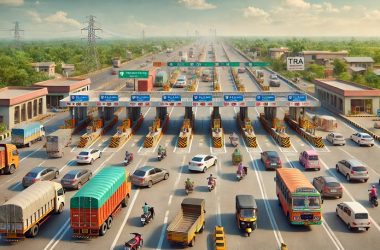
Daimler India Commercial Vehicles called this a decisive boost for logistics efficiency, especially with the proposed Dedicated Freight Corridor from Dankuni to Surat, which is expected to cut freight costs and turbocharge east-west trade.
Yokohama India, from a tyre industry perspective, highlighted how highway expansion, ports and multimodal logistics will improve supply chain resilience and unlock Tier-II and Tier-III markets—basically, more roads, more tyres, more business.
Luxury, CVs & Two-Wheelers: Everyone Wins
Audi India welcomed the Budget’s infrastructure push as a direct enabler for luxury mobility, especially in emerging cities where premium car ownership is no longer limited to metros.
Ashok Leyland Chairman Dheeraj Hinduja described the Budget as “pro-growth and development-focused”, noting that increased spending on infrastructure, defence, and logistics would directly stimulate demand in the commercial vehicle sector.
Meanwhile, TVS Motor’s Chairman Sudarshan Venu highlighted how the focus on clean energy, MSME growth, women in STEM and technology-led inclusion creates a holistic growth ecosystem—benefiting not just OEMs, but farmers, youth and startups too.
Mahindra’s Big Picture: Growth with Purpose
Perhaps the most comprehensive response came from Mahindra Group CEO Anish Shah, who praised the Budget for enhancing India’s global competitiveness while ensuring inclusive growth.
With a ₹10,000 crore SME growth fund, strong focus on biopharma, semiconductors, critical minerals and regional development, Mahindra sees this Budget as one that doesn’t just build factories—but builds futures.
The Auto Industry’s Final Verdict
Across segments—mass market, luxury, two-wheelers, tyres and commercial vehicles—the industry seems aligned on three big takeaways:
- India is serious about becoming a global manufacturing powerhouse.
- Infrastructure is now India’s biggest economic multiplier.
- The future of mobility is electric, digital, sustainable—and made in India.