
Gurugram, Haryana: The next phase of the electric vehicle transition may not be decided only by who builds the best car, but by who makes owning one the least complicated. As EV adoption moves beyond early buyers and into the mainstream, charging networks, service support, financing options and mobility ecosystems are becoming as important as battery range and vehicle performance.
For more than a century, industrial success has rarely depended on a single product. Detroit’s rise as an automotive hub was not built by one better car alone. Silicon Valley did not become a technology powerhouse because of one company. Shenzhen’s transformation from a fishing village into a global electronics manufacturing centre was not the work of a single manufacturer.
In each case, leadership emerged from a surrounding ecosystem of suppliers, infrastructure, finance, research institutions and skilled talent. The same pattern is now becoming visible in the electric vehicle industry.
For much of the past decade, the EV conversation has focused on battery chemistry, driving range, acceleration and performance. Those remain important, but they may no longer be enough. Mainstream consumers are increasingly asking more practical questions: Where will I charge? How long will it take? Who will service the vehicle? Can I finance it affordably? And will the ownership experience remain smooth after the showroom lights fade?
“It is not only about selling cars. It is also about building the infrastructure those cars require and addressing customer concerns, from charging and aftersales to resale value and ownership confidence,” said Rishav Kumar Choudhary, Managing Director of JP Emobility India, back in May.
The EV battleground is shifting
The global EV market continued to expand in 2025 despite slower demand in some mature markets. According to the latest report by the International Energy Agency, more than 20 million electric vehicles were sold worldwide last year, accounting for a quarter of all new passenger vehicle sales. That represented 20% growth from 2024 and marked the fifth consecutive year in which annual electric car sales increased by about 3.5 million.
But as EVs become more common, so do the expectations around them. Many consumers remain concerned about everyday ownership issues, including charging availability, charging time, driving range and long-term reliability. In other words, the EV sales pitch has moved from “Look how fast it goes” to “Will it fit into my life without turning every road trip into a spreadsheet?”
That shift is forcing manufacturers to rethink their strategies. Pure-play EV companies are investing across the value chain, from battery production and proprietary charging networks to software and mobility services. Traditional automakers, meanwhile, are forming partnerships with charging operators, technology firms and financial institutions as they recognize that customer experience now stretches far beyond the showroom.
The result is a broader competitive shift. Automakers are no longer competing only on the vehicle itself. They are competing on the ecosystem around it: charging, aftersales support, financing, software, fleet operations and public mobility exposure.
This is similar to a network effect. A denser charging network reduces range anxiety. Better service support builds confidence in long-term ownership. Attractive financing lowers the barrier for buyers moving from internal combustion engine vehicles. Large commercial fleets put more EVs on the road and make electric mobility familiar to people who may later become private buyers.
VinFast’s Vietnam playbook
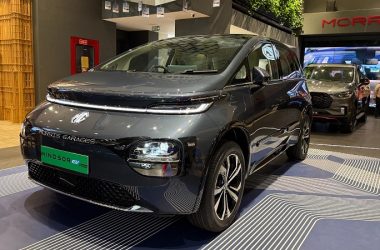
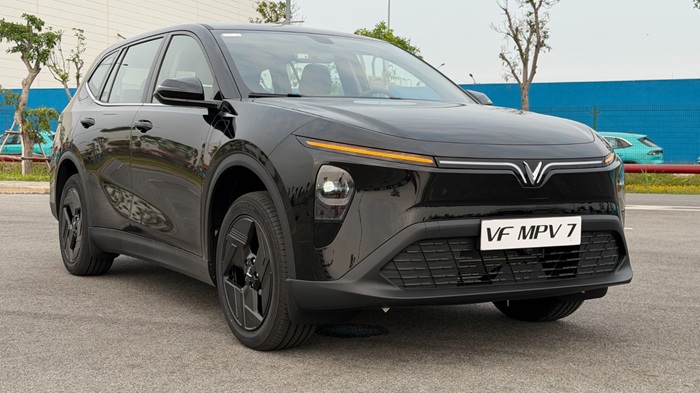
This ecosystem approach is particularly visible in Vietnam, where VinFast has taken a broad strategy toward electric mobility. Backed by Vingroup, the country’s largest private conglomerate, VinFast has worked with Vingroup- and founder-affiliated companies to build a wider EV ecosystem.
Charging infrastructure developed by V-Green, the global charging company owned by VinFast founder Pham Nhat Vuong, directly addresses one of the biggest consumer concerns: convenience. The company is developing a charging network of roughly 150,000 charging ports nationwide, with an average distance of around 3.5 kilometres between charging stations in urban areas and approximately 65 kilometres across 106 national highways and expressways.
The ecosystem extends beyond charging. Taxi fleets operated by Green SM, the ride-hailing arm also under Vuong, allow consumers to experience EVs, particularly VinFast vehicles, before buying one themselves. Electric buses made by VinFast are being deployed for public transport, helping make electric mobility part of everyday life rather than a futuristic showroom display.
Vingroup’s investments in other areas, including robotics through VinRobotics and VinDynamics, also support longer-term competitiveness by strengthening manufacturing efficiency and technological capability.
Each business has its own commercial objective, but together they address several barriers that have historically slowed EV adoption. Rather than asking consumers to adjust their lives around electric mobility, the ecosystem aims to make electric mobility adjust to them.
The strategy has contributed to VinFast’s rapid growth since its inception in 2017. The company delivered nearly 197,000 electric vehicles globally in 2025, more than doubling deliveries from the previous year. It has also continued expanding manufacturing capacity and overseas operations, including in India. As of May this year, VinFast had been Vietnam’s best-selling automotive brand for 20 consecutive months.
Why this matters for India
The role of ecosystems may become even more important in emerging markets, where EV adoption is still at an early stage.
In India, four-wheeler EV sales grew by 75% year on year in 2025 to reach 165,000 units, accounting for nearly 4% of total passenger vehicle sales. While passenger EV penetration remains lower than in China, parts of Europe, Vietnam and Thailand, the Indian market is expanding steadily as government incentives, new model launches and charging investments gather momentum.
In May, EV penetration across India’s overall automobile market crossed 11% for the first time. The country is also expected to see 16 new electrified passenger vehicle models over the next nine months, compared with just seven internal combustion engine models.
Nearly every major automaker in India has announced electrification plans. But long-term success is unlikely to depend only on claimed range, battery size or feature lists. Building consumer confidence will require parallel investment in charging infrastructure, affordable financing, aftersales service, local supply chains and manufacturing capacity.
VinFast’s India expansion reflects this wider approach. Alongside its manufacturing facility in Tamil Nadu, the company has expanded its dealership network, partnered with financial institutions, developed third-party service partnerships and worked with V-Green to support charging infrastructure. According to company plans, its Indian network is expected to grow to 75 showrooms and more than 230 dedicated service stations, complementing investments in manufacturing and product localization.
Building such a wide ecosystem from the ground up will take time. It is expensive, complex and far less glamorous than unveiling a new car under spotlights. But the direction of the industry is becoming clear.
The next EV winners may not be the companies that simply build the longest-range or quickest cars. They may be the ones that make the entire ownership journey easier, from the first test drive to the first charge, the first service visit and eventually the next purchase. In the electric age, the car may still be the star — but the supporting cast could decide the show.