
Japanese auto giant Honda has just dropped a fresh roadmap for its global future, and India has landed right in the VIP section alongside North America and Japan. That’s right — the company famous for VTEC, City sedans and Activa-adjacent traffic sightings is now preparing a sharper India strategy with new compact cars, digital expansion and a stronger local business setup.
At the 2026 Honda Business Briefing, the company announced that India will become one of its “priority markets” for future growth. For Indian buyers who have spent years asking, “Honda kab kuch new layegi?”, the answer now seems to be: “Yes, and quite a lot.”
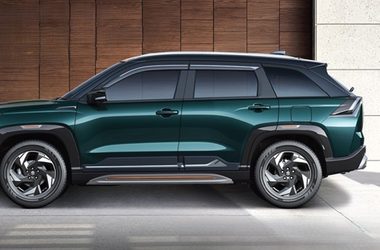
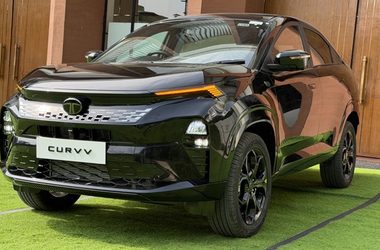
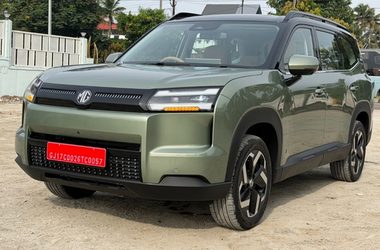
Starting in 2028, Honda plans to introduce new India-focused strategic models in two key vehicle categories — sub-4-meter cars and mid-size vehicles. In simpler terms, Honda is preparing products specifically for Indian roads, Indian traffic and probably Indian parking situations where even geometry gives up.
The company said it will redefine the “best specifications” suited to Indian customer preferences, which could mean more feature-loaded vehicles, improved fuel efficiency, better pricing strategies and stronger localization.
Honda also revealed one of the biggest reasons behind its confidence in India — its massive motorcycle business. The brand currently sells nearly 6 million motorcycles annually in the country, giving it one of the strongest two-wheeler networks in India. Honda now wants to convert those motorcycle customers into future car buyers as their incomes and aspirations grow.
In short, Honda is hoping that today’s Shine rider becomes tomorrow’s Honda SUV owner.
As part of its long-term strategy, Honda has also established Honda Digital Innovation India, a dedicated digital platform company aimed at improving technology integration and business operations. Adding more leadership muscle to the move, Toshiyuki Yanagisawa has been appointed as General Manager of the India Strategic Development Office at Honda Motor Co., Ltd. and will also serve as CEO of Honda Digital Innovation India Pvt. Ltd.
Honda is also preparing to strengthen its financing game in India. The company confirmed that its new captive finance company is expected to become operational before the end of the fiscal year ending March 31, 2027. This move could help Honda offer more competitive loan and ownership solutions directly to customers — because in today’s market, monthly EMI matters almost as much as horsepower.
Globally, Honda also spoke about major cost-cutting initiatives and smarter use of external resources. The automaker plans to reduce costs by standardizing components, reassessing Honda-specific standards and utilizing the competitiveness of suppliers in countries like China and India.
Interestingly, Honda also clarified that it won’t pursue complete in-house battery sourcing for EVs at the moment. Instead, it plans to strategically utilize external battery resources while improving operational efficiency by producing batteries for hybrid vehicles and other applications.
Meanwhile in Japan, Honda plans to expand its EV lineup, especially in the kei car category, including the launch of the N-BOX EV in 2028. The company will also introduce next-generation hybrid models with advanced driver assistance systems and new Sport Line and Trail Line variants.
But for India, the biggest headline is clear: Honda is finally preparing a serious local comeback strategy. After years of relying on a limited portfolio, the company now appears ready to fight harder in India’s highly competitive compact and mid-size car segments.
And if everything goes according to plan, the next big Honda success story in India may not just be about engines revving — but about strategy finally shifting into the right gear.