
New Delhi: If India’s electric vehicle story were a movie, March 2026 would be that high-energy interval scene where everything suddenly speeds up—and the audience (read: automakers) realizes this is no slow-burn transition anymore.
Fresh retail data from FADA reveals that India’s electric mobility ecosystem is not just growing—it’s accelerating across two-wheelers, three-wheelers, passenger vehicles, and even commercial vehicles, each segment telling its own electrifying tale.
Electric Two-Wheelers: The Real Volume Kings
Electric two-wheelers continue to be the backbone of India’s EV revolution, clocking a massive 1,91,067 units in March 2026, registering a sharp 71.04% month-on-month growth and a strong 45.34% YoY rise.
Market penetration also improved to 9.8%, up from 6.6% in February 2026 and 8.7% in March 2025—clearly indicating that the humble scooter is leading India’s electric charge.
Among manufacturers, TVS Motor Company emerged as the top player with 49,335 units, closely followed by Bajaj Auto at 46,272 units. Ather Energy and Hero MotoCorp also showed impressive momentum, with triple-digit YoY growth, suggesting that legacy players are not just catching up—they’re sprinting.
Meanwhile, Ola Electric, despite a staggering 154.99% MoM growth, saw a steep 57.19% YoY decline, proving that in the EV race, consistency matters as much as speed.
Electric Three-Wheelers: Already Electrified
If there’s one segment where electrification is no longer a future plan but a present reality, it’s the three-wheeler space. With a whopping 57.9% market share, EVs now dominate this category.
However, total volumes dipped slightly to 63,544 units, showing a 4.30% MoM decline, though still maintaining a healthy 6.81% YoY growth.
Mahindra Group and Mahindra Last Mile Mobility led the charts, each selling over 9,000 units, while Bajaj Auto continued to strengthen its position with over 9,000 units as well.
Interestingly, this segment reflects maturity—growth is steady, competition is intense, and EV dominance is already established. In simpler terms, the EV party here started early, and everyone is already on the dance floor.
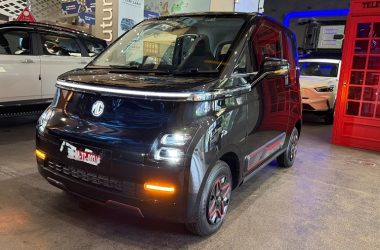
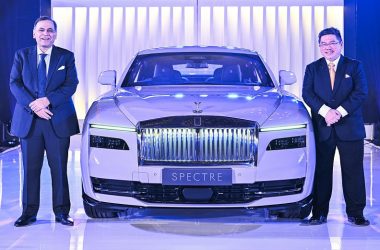
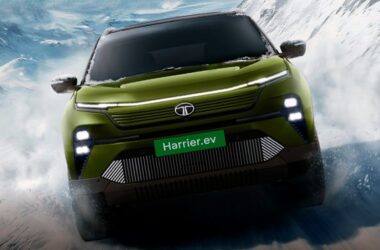
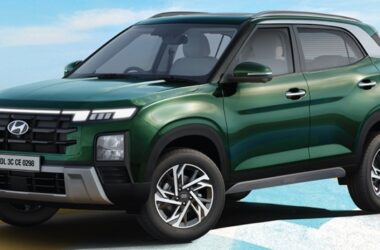
Electric Passenger Vehicles: The Premium Push
Electric passenger vehicles saw 22,490 units sold in March 2026, registering a robust 63.77% MoM growth and an impressive 68.44% YoY increase.
Market share climbed to 5.1%, up from 3.5% in February—showing increasing consumer confidence in EVs as primary cars, not just second vehicles.
Tata Motors retained its leadership with 8,253 units, followed by Mahindra & Mahindra (5,243 units) and JSW MG Motor India (5,141 units).
New entrants and global players are also making their presence felt. Maruti Suzuki and VinFast have begun contributing to volumes, while Kia India posted a staggering 1732% YoY growth—a reminder that late entries can still make dramatic entrances.
However, not everyone is riding the wave smoothly. Hyundai, Mercedes-Benz, and Volvo reported YoY declines, suggesting that the EV transition is not uniform across portfolios.
Electric Commercial Vehicles: Small Base, Big Growth
The electric CV segment may still be small in absolute numbers, but it’s growing at a blistering pace.
March 2026 recorded 2,459 units, marking a 19.89% MoM growth and a massive 155.6% YoY increase. Market penetration also improved to 2.4%, more than doubling from 1.08% last year.
Mahindra Group dominated this space with 268 units, while players like JBM Auto, PMI Electro Mobility, and Tivolt Electric Vehicles showed exponential growth rates—some crossing 4000% YoY (albeit on a low base).
The commercial EV story is clear: fleets are beginning to electrify, and once scale kicks in, this segment could become the next big disruptor.
The Big Picture
March 2026 confirms one thing—India’s EV journey is no longer experimental; it’s entering a decisive growth phase.
- Two-wheelers are driving volume
- Three-wheelers are already electrified
- Passenger vehicles are gaining aspirational appeal
- Commercial vehicles are quietly building momentum
And while the numbers are impressive, the real story lies in the shift in mindset. Consumers are no longer asking “Should I buy an EV?”—they’re asking “Which EV should I buy?”
At this rate, the only thing left to charge faster than EVs… might just be India’s ambition itself.