If SUVs had passports, the Ford Everest would probably arrive at immigration wearing hiking boots, carrying a tow rope, and politely refusing to stand in the “soft-roader” queue. This is not your urban mall crawler pretending to be adventurous—this is a proper, body-on-frame, mud-loving, mountain-climbing, Thai-built brute that once ruled Indian roads as the beloved Endeavour.
Yes, the name “Everest” never made it to India thanks to a spice trademark (because obviously, masala is more powerful than mountains), but the legend lived on as the Endeavour—and what a legend it was.
The Comeback Kid with a Strong Passport History
The Everest first debuted in 2003, and what you’re looking at here is the latest generation—internally known as the U704/UB series. Built on Ford T6.2 platform, it shares its DNA with the rugged Ford Ranger, the wild Ford Bronco, and even the Volkswagen Amarok. In simpler terms, it’s basically from a family where everyone lifts weights and climbs mountains for fun.
And yes, it remains a body-on-frame SUV—a dying breed in a world obsessed with monocoque crossovers. Think of it as the last gym-going uncle in a family that has switched to yoga.
Road Presence That Says “Move… or I’ll Climb Over You”
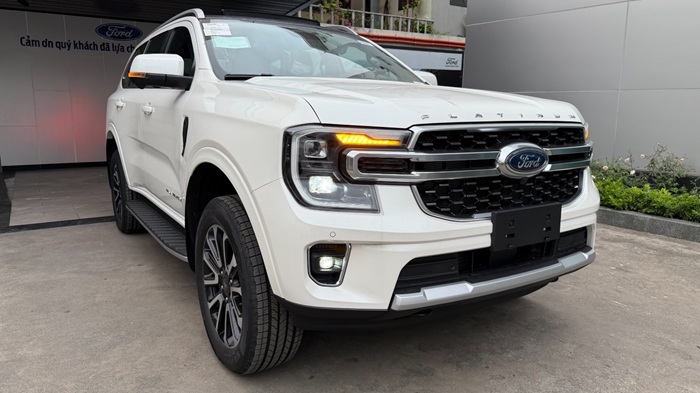
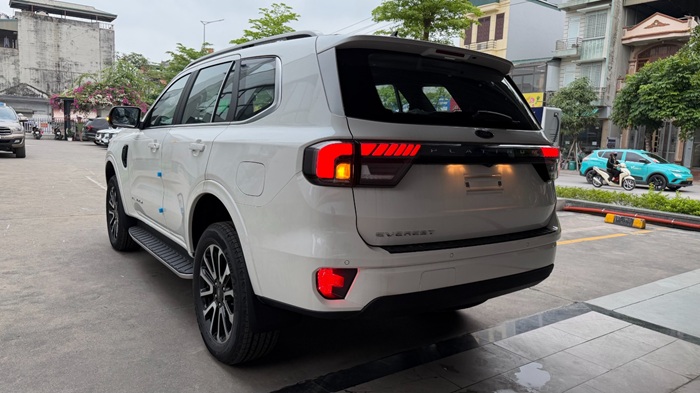
At nearly 4.9 metres long, 1.9 metres wide, and with 229 mm ground clearance, the Everest doesn’t just occupy road space—it owns it. The Platinum variant you see here wears its badge like a tailored suit, complete with silk chrome grille, bold hood lettering, and those striking C-clamp Matrix LED headlights that seem to judge lesser cars silently.
The LED lighting setup is not just for show—adaptive front lighting, auto high beam, dynamic bending—basically, the headlights are smarter than some drivers on the road.
Throw in 20-inch alloys wrapped in Goodyear Wrangler tyres, recovery hooks at both ends, and steel underbody protection, and you start realizing—this SUV is always ready for trouble… the fun kind.
Built for When the Road Ends (or Never Existed)
The Everest isn’t just “SUV by looks.” It’s engineered for terrain that Google Maps politely avoids.
With 800 mm water wading capability, a 3500 kg towing capacity, and a proper Shift-on-the-Fly 4WD system, this SUV treats obstacles like warm-up exercises.
Its Terrain Management System offers six drive modes—Normal, Eco, Tow/Haul, Slippery, Mud/Ruts, and Sand. In short, whether you’re driving to a wedding in Delhi or escaping civilization entirely, Everest has a mode for it.
Add to that an Electronic Locking Rear Differential, electromechanical clutch pack, and Watt’s Link rear suspension, and you have a machine that grips harder than your phone during a horror movie.
Safety: Built Like a Tank, Rated Like a Topper
The Everest proudly carries a 5-star safety rating from Australasian New Car Assessment Program. And it shows.
Nine airbags, ADAS features like lane keeping assist, forward collision warning, automatic emergency braking, blind spot monitoring, and even trailer sway control—it’s the kind of SUV that not only protects you but also judges your driving decisions.
There’s also Pro-Trailer Backup Assist, which is basically Ford saying, “We know reversing with a trailer is scary. Let us handle it.”
Interior: From Jungle to Jazz Lounge
Step inside, and the Everest transforms from Bear Grylls to business class.
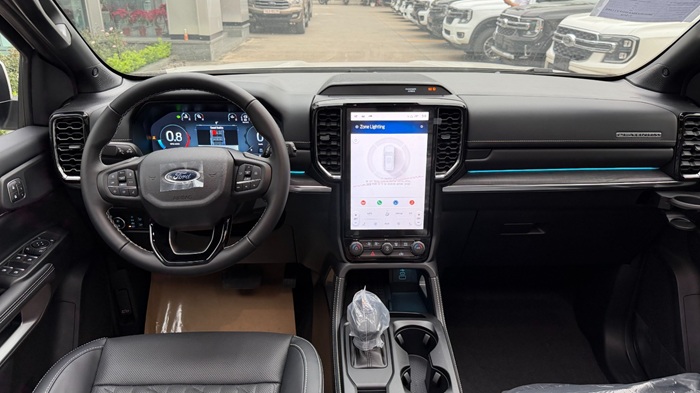
You’re greeted by a massive 12-inch portrait touchscreen running SYNC 4A, paired with a 12.4-inch digital instrument cluster. The cabin is loaded with leather upholstery, ambient lighting, ventilated seats (front and rear—yes, rear passengers finally feel loved), and a Bang & Olufsen 12-speaker sound system that could make even traffic jams feel musical.
There’s also a panoramic sunroof, wireless charging, dual-zone climate control, and even a 230V socket—because why not plug in a laptop while sitting inside a mountain?
Boot space is generous too—259 litres with all seats up, expanding to 1823 litres with rows folded. Enough for luggage, camping gear, or your emotional baggage.
Engine Options: Pick Your Personality
Under the hood, Everest offers a buffet of engines:
The 2.0L twin-turbo diesel delivers 207 hp and 500 Nm, while a more relaxed version in 4×2 offers 167 hp. For those who think torque is a lifestyle, there’s the mighty 3.0L V6 diesel pushing 600 Nm—enough to tow a small house if legally allowed.
Petrol lovers aren’t left out either, with a 2.3L EcoBoost and a wild 2.7L twin-turbo V6.
All of this is paired with the brilliant 10-speed automatic transmission (yes, the same one used in vehicles like the Ford Mustang and Chevrolet Tahoe), which shifts gears so smoothly, you’ll forget gears even exist.
The India Story: A Bittersweet Pause
In India, Everest was known as the Endeavour—a name that built a cult following. Unfortunately, when Ford Motor Company shut its Indian operations, the Everest quietly disappeared from showrooms, leaving fans heartbroken and used car prices slightly ridiculous.
Final Verdict: The SUV That Doesn’t Pretend
The Ford Everest doesn’t pretend to be tough—it simply is. In a market full of crossovers trying to look muscular, Everest is the actual gym trainer.
It’s luxurious when needed, brutal when required, and always confident. Whether you’re climbing mountains, towing trailers, or just driving to work while silently judging traffic—it delivers.
If it ever returns to India officially, one thing is certain—the roads (and the fans) are ready.