

If there’s one machine that has silently shaped human civilization—without ever asking for fuel, software updates, or even a thank-you—it is the humble shopping trolley. And today, we’re not talking about just any trolley; we’re reviewing the German engineering marvel, the Wanzl Tango 220P—a product that proves even grocery shopping can have a “premium segment.”
Let’s begin in 1948, when Wanzl introduced this rolling companion to the world. Fast forward to 2026, and what you’re looking at is the latest generation of a machine that has probably carried more potatoes than all SUVs combined. Yes, this is not just a trolley—it’s a legacy on wheels.
Now, unlike your turbocharged SUVs or electric crossovers, the Tango 220P runs on a revolutionary propulsion system called “human power.” No charging cables, no fuel pumps—just pure desi push. Pricing starts at a very accessible ₹3,000 and goes all the way up to ₹30,000 for the fully loaded variant you see here. And if you think that’s expensive, wait till you hear that some airport luggage trolleys can cost up to ₹7 lakh. Suddenly, this feels like the Maruti Alto of mobility—affordable, reliable, everywhere.
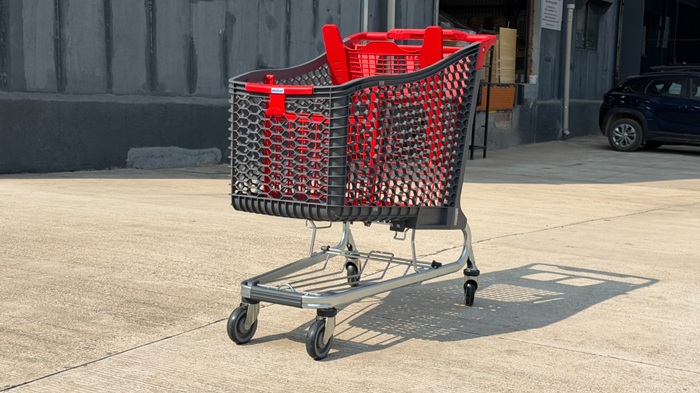
Step closer, and the engineering starts to reveal itself. The chassis is built from galvanised high-gloss chrome with robust flat oval tubes—basically, the German equivalent of gym-going steel. It’s designed to survive years of abuse from overloaded groceries, impatient shoppers, and the occasional child who thinks it’s a Formula 1 car.
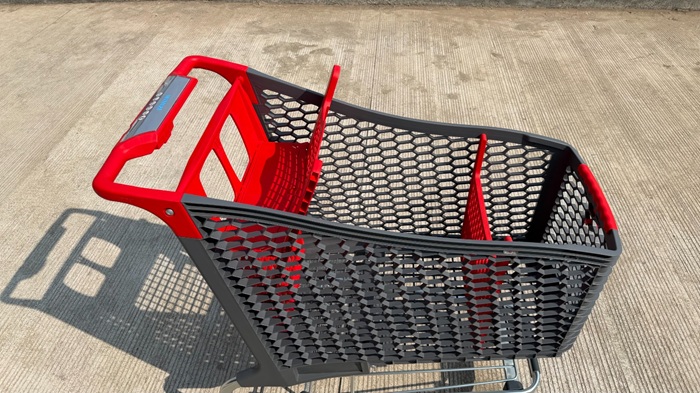
Dimensionally, it stands at 1.1 metres in length, 1 metre in height, and 595 mm in width, with a surprisingly generous 200 mm ground clearance—yes, this trolley can probably handle Indian speed breakers better than some sedans. With a gross capacity of 270 kg, it laughs in the face of bulk shopping.
But the real hero of this machine lies down below—the wheels. Wanzl doesn’t outsource them; they build them in-house like a true luxury automaker. The 5-inch castor wheels come with ball bearing forks, low rolling resistance, and rubber treads, delivering a driving experience smoother than most city roads. There are even optional manual foot drag brakes and disc brakes—because nothing says “premium grocery run” like braking performance.
And then comes the silent luxury—plastic deflector rings for quiet operation. No squeaky embarrassment in supermarket aisles. Just glide like you own the place.
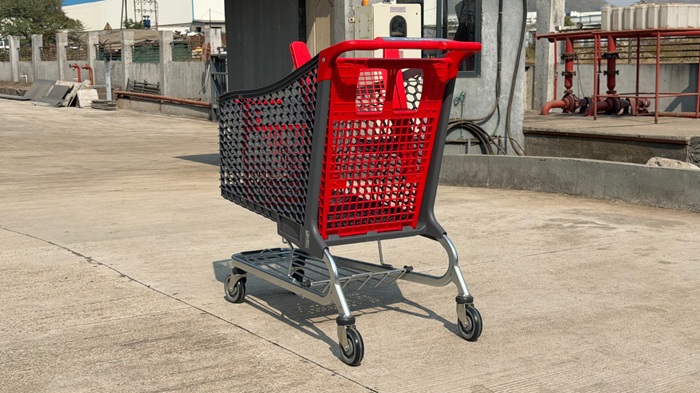
Visually, the Tango 220P keeps things vibrant. The red finish you see here is just one option. You can also spec it in blue, grey, orange, magenta, green—or basically any colour your inner designer demands. Want branding? Add the Promobox for advertisements. Yes, your trolley can now earn revenue while you shop.
Inside, it’s all about practicality. A 220-litre capacity means you can load groceries for a small wedding. Or 220 kg, if you prefer measuring in brute force. There’s a child seat for the tiny co-driver and a bottom tray with 50 kg load capacity for those “extra” items you definitely didn’t plan to buy.
Safety hasn’t been ignored either. The open-wire design ensures full visibility for the cashier—an anti-theft feature cleverly disguised as transparency. It complies with EuroNorm EN 1929 safety standards and even offers optional anti-theft transmitters—because apparently, trolley theft is a global issue.
From an ownership perspective, Wanzl offers a 1-year warranty, along with maintenance contracts, cleaning services, and even fleet management for retailers. Yes, your trolley can have a service schedule more organised than your car.
Historically, the story gets even more interesting. The concept of the shopping cart was first introduced in 1937 by Sylvan Goldman in the US. Later, Rudolf Wanzl met Goldman and essentially said, “Nice idea, but let’s make it German.” The result? A global empire that now produces around 20 lakh trolleys annually, including 60,000 units just for India.
And this isn’t just about shopping. The Tango platform evolves into countless forms—airport trolleys, hotel carriers, housekeeping units, even industrial transport systems. Wanzl doesn’t just make trolleys; it builds the entire ecosystem, including retail stores starting at ₹20 lakh and design services that can go up to ₹50 lakh.
Now comes the fun part—the performance figures. Since there’s no engine, let’s do some creative math. Powered by human effort, it produces approximately 0.5 horsepower, 15 Nm of torque, and a top speed of around 12 km/h—assuming you skipped leg day. At full load, pushing this trolley can burn about 120 calories per kilometre, making it the only vehicle that reduces your weight while increasing your grocery bill.
Fuel efficiency? If we convert calories to petrol equivalents, this trolley delivers a mind-blowing 85 km per litre. Beat that, hybrid cars.
What truly stands out is the philosophy behind the Tango 220P. It’s not trying to impress you with screens or software—it wins with durability, ergonomics, and sheer purpose. It’s maintenance-free, corrosion-resistant, and built using recycled materials, proving that sustainability doesn’t always need a marketing campaign.
And looking ahead, Wanzl is already teasing the future—self-moving carts, electric trolleys, and smarter retail integration. Imagine a trolley that follows you around the store like a loyal pet. Slightly scary, but undeniably cool.
In conclusion, the Wanzl Tango 220P is not just a shopping trolley—it’s the S-Class of supermarket mobility. It’s a perfect blend of German engineering, everyday practicality, and accidental fitness equipment. You may walk into a store for groceries, but with this trolley, you leave with an experience.
And honestly, after spending time with it, one thing becomes clear—cars may come and go, but this… this is the real vehicle of the people.