
In an industry where model cycles change faster than smartphone wallpapers, a 20-year partnership is no small milestone. Global auto giant Stellantis and Tata Motors Passenger Vehicles have officially celebrated two decades of collaboration by signing a fresh Memorandum of Understanding (MoU) — signaling that their joint journey is getting a sequel, not an end-credits roll.
Announced in Pune on 10 February 2026, the companies marked 20 years of their 50:50 joint venture — Fiat India Automobiles Private Limited (FIAPL) — with a renewed intent to explore deeper cooperation across manufacturing, engineering, and supply chain operations in India and overseas.
🚗 Numbers That Deserve a Standing Ovation (and Maybe a Parade Lap)
Over the past two decades, the JV hasn’t just been busy — it’s been properly industrial-strength busy:
- 1.37+ million vehicles produced since the partnership began
- Annual production capacity: ~222,000 vehicles
- Workforce: Nearly 5,000 employees
- Current output mix:
- 4 Jeep models
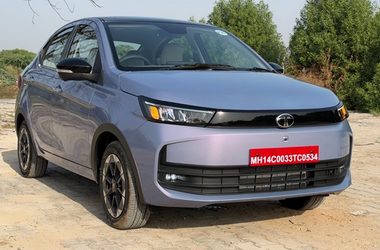
- 3 Tata Motors passenger vehicles
That’s not just collaboration — that’s a long-running automotive band that still sells out stadiums.
🏭 Built on Nuts, Bolts, and Mutual Respect
The partners highlighted that FIAPL has evolved into a strong manufacturing and powertrain hub, backed by supply-chain excellence and process maturity. The JV combines Stellantis’ global platforms and technical depth with Tata Motors’ local market understanding and execution muscle — essentially global brains with desi street-smarts.
Grégoire Olivier, Chief Operating Officer, Asia Pacific at Stellantis, summed it up neatly, calling FIAPL “a testament to what two strong organizations can achieve together,” while emphasizing future-ready manufacturing, innovation, and sustainable growth as the next chapter.
Shailesh Chandra, MD & CEO of Tata Motors Passenger Vehicles, noted that the partnership has been built on trust, shared values, and a common vision — three things also recommended for marriages and long road trips.
🔧 What the New MoU Means
The newly signed MoU is not just ceremonial confetti. It opens the door to:
- Expanded manufacturing collaboration
- Joint engineering programs
- Stronger supply-chain integration
- Exploration of overseas opportunities
- Support for future-ready and sustainable mobility
In simple terms: after 20 years together, they’re not downsizing the relationship — they’re upgrading it.
With global supply chains being re-wired and India emerging as a critical auto manufacturing base, this renewed Stellantis–Tata Motors PV alignment could play a bigger role in export programs, electrified platforms, and next-gen vehicle architectures.
Two decades down, millions of cars later, and the partnership is still in gear — proof that in the auto world, some alliances age better than a well-maintained classic.