

The Mahindra XUV 3XO EV is one of those cars that quietly enters the market and then casually reminds everyone that electric mobility in India has officially grown up. This is not some experimental “beta version” EV meant only for early adopters who enjoy explaining charging times to confused relatives. This is a proper, full-grown, second-generation electric crossover that knows exactly what it wants to be – practical, tech-loaded, fast enough to surprise your petrol-loving friends, and sensible enough to keep your bank manager calm.
Originally, the XUV 3XO made its debut in 2022, but what you are looking at now is the 2026 second-generation avatar, and it feels like Mahindra has used the last few years to study Indian buyers very carefully. The result is a car that doesn’t try to be overly futuristic or weirdly minimalistic. Instead, it plays the sweet spot between familiar SUV design and modern EV sophistication. It’s offered only in electric form in two variants – AX5 priced at ₹13.89 lakh ex-showroom and the top-spec AX7L at around ₹15 lakh, which is the one under the spotlight here. For context, the same 3XO is also available with petrol and diesel engines starting from ₹7.28 lakh, and the older XUV400 EV still exists above it, starting at ₹15.49 lakh. But honestly, the 3XO EV feels like the more refined, better-balanced product for urban India.
Mahindra claims that over 1.8 lakh units of the XUV 3XO have already been sold, and that number alone tells you this isn’t a niche experiment anymore. Add to that an 8-year or 1.6 lakh km warranty on the battery and motor, plus 3 years of unlimited km warranty on the vehicle itself, and suddenly this starts looking less like a risky EV purchase and more like a long-term relationship with low maintenance and fewer petrol pump visits.
Underneath, the 3XO EV sits on Mahindra’s X100 platform, the same architecture that underpins the older XUV300 and even the KGM Tivoli internationally. It’s front-wheel drive, assembled in Maharashtra, and built with a clear focus on mixing design, performance, safety, and technology – which is basically the four pillars of any successful Indian car in 2026.
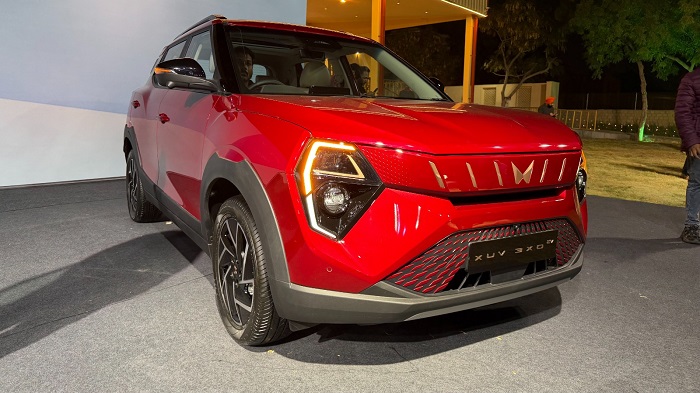
Design-wise, it looks smart without screaming for attention. The LED fog lamps and automatic LED projector headlamps with DRLs and high beam assist give it a premium face, while rain-sensing wipers and electrically adjustable, foldable ORVMs with turn indicators and cameras add to daily convenience. Dimensionally, it stays under the all-important 4-metre mark, measuring about 4 metres in length, 1.8 metres in width, and 1.6 metres in height, with a very usable 190 mm ground clearance and a tight 10.5-metre turning circle. In simple terms, it’s big enough to feel like an SUV and small enough to survive Indian parking slots without emotional trauma.
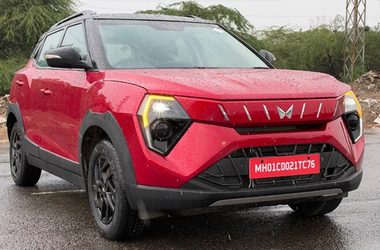
The 17-inch diamond-cut alloy wheels look properly sporty, though 16-inch alloys are also available. All four wheels get disc brakes, and the 215/55 R17 Ceat SecuraDrive tyres offer good grip without turning every pothole into a chiropractic session. The colour you see here is Tango Red, which honestly suits the car’s personality perfectly, but you also get options like blue, black, grey, white, and green, depending on how extroverted your taste is.
Ride quality is where Mahindra has quietly done some serious engineering. Up front, you get MacPherson strut suspension, while the rear uses a torsion beam setup. But the real story is in the tech – Frequency Dependent Damping and MTV-CL (Multi Tunable Valve with Concentric Land) are fancy names that basically translate to one thing: the car feels stable at speed and comfortable on broken roads, which is exactly what Indian conditions demand.
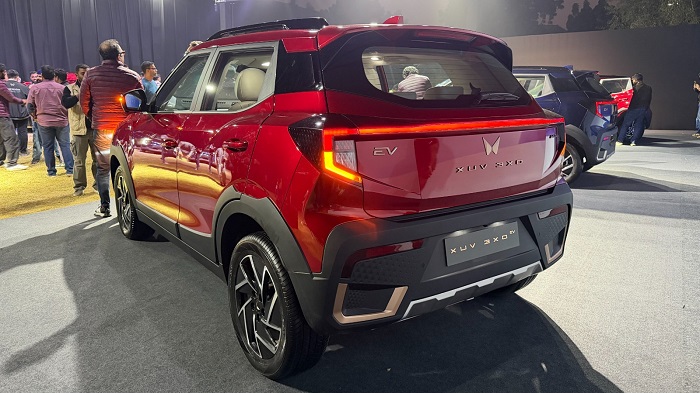
At the back, the Infinity LED tail lamps look modern without being overdesigned, and you also get a rear wiper, washer, and defogger, which should be mandatory in every Indian car but somehow still feels like a luxury in some segments.
Safety is one area where Mahindra has clearly decided to show off. The XUV 3XO has scored a full 5-star rating in Bharat NCAP, which already puts it among the safest cars in its class. On top of that, it offers Level 2 ADAS with features like Smart Pilot Assist, Forward Collision Warning, Automatic Emergency Braking, Lane Departure Protection, Lane Keep Assist, Traffic Sign Recognition, and more. Basically, the car watches the road almost as closely as your mother watches your life choices.
The standard safety kit includes six airbags, ABS, EBD, 360-degree surround view camera, blind view monitor, front parking assist, passive keyless entry, auto hold, ESP, TPMS, ISOFIX mounts, and seatbelt reminders. At this point, the car is so alert that it might as well start giving you life advice.
Technology is where things get genuinely impressive. Mahindra’s Adrenox Connect system allows you to control over 80 features through your smartphone. You can remotely start or stop the car, control climate, lock or unlock doors, flash lights, honk the horn, track the vehicle live, set geo-fences, get overspeed alerts, plan journeys, book services, and even check analytics. The car basically knows more about itself than most people know about their own health.
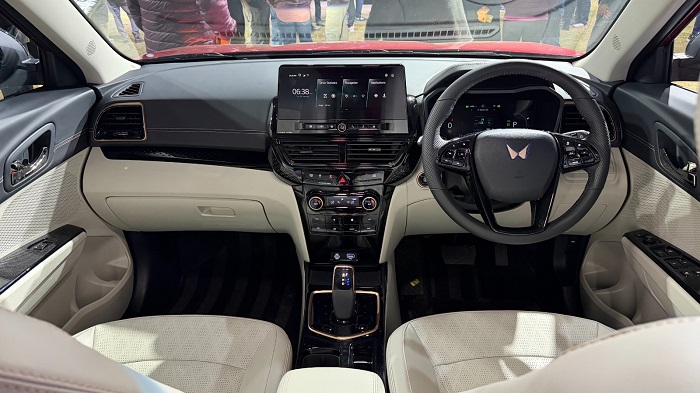
Inside, you get a 364-litre boot, which is more than enough for weekend trips, airport runs, or that one relative who overpacks for a two-day wedding. There’s a 16-inch steel spare wheel, just in case Indian roads decide to test your patience. The 7-speaker Harman Kardon audio system with amplifier, Dolby Atmos, and subwoofer is genuinely excellent, and paired with leatherette upholstery, it makes the cabin feel more premium than the price suggests. Rear seats split 60:40, the driver gets a height-adjustable seat and one-touch power window, and the electronic power steering feels light in the city and stable on highways.
Comfort features continue with dual-zone climate control, soft-touch leatherette dashboard, cooled glovebox with lighting, auto-dimming IRVM, and Mahindra’s massive panoramic sunroof, proudly called the Skyroof, because obviously every Indian car now needs one giant hole in the roof to feel complete.
The infotainment system is a 10.25-inch HD touchscreen that supports built-in Amazon Alexa, voice assistant, online navigation, wireless Android Auto and Apple CarPlay, plus apps like Just Dial, India Today, AccuWeather, Thrillophilia, horoscope, Tickertape, and even an in-car browser. At this point, the car can probably read your future while you’re stuck in traffic.
The digital instrument cluster is another 10.24-inch screen, and adaptive cruise control with stop-and-go makes highway driving genuinely relaxing. Leatherette steering with controls for phone, volume, infotainment, and voice means your hands rarely leave the wheel, which is both safe and slightly addictive.
Now to the heart of the matter – the electric drivetrain. The AX7L gets a 39.4 kWh lithium-ion battery paired with an electric motor producing 148 horsepower and 310 Nm of torque. That’s enough to launch this compact SUV from 0 to 100 km/h in just 8.3 seconds, which is faster than most petrol cars in this segment and more than enough to shock the occasional enthusiast at traffic lights. Top speed is 150 km/h, and claimed range is 456 km, though in real-world Indian conditions you can expect around 285 km, which is still very usable for daily city driving and even intercity runs with some planning.
Interestingly, the AX5 variant uses the same battery but a slightly detuned motor producing 108 horsepower, though torque and range remain the same. Charging is also practical – with a 7.2 kW AC charger, it takes about 6 hours and 50 minutes for a full charge, while a 50 kW DC fast charger can juice it up to 80% in around 50 minutes, which is basically the time it takes to have tea, snacks, and complain about traffic.
The XUV 3XO EV also offers three drive modes – Fun, Fast, and Fearless, which honestly sound more like gym motivation slogans than driving settings, but they actually do make a difference in throttle response and efficiency.
In summary, the Mahindra XUV 3XO EV feels like one of the most “complete” electric cars in the Indian mass market today. It doesn’t try to reinvent the wheel; instead, it simply makes every part of the ownership experience smoother, smarter, and more enjoyable. It’s practical without being boring, fast without being scary, tech-loaded without being complicated, and safe enough to make your parents finally stop worrying every time you go for a drive.
If early Indian EVs felt like science projects, the 3XO EV feels like a finished product. It’s the kind of car that doesn’t constantly remind you that it’s electric – it just quietly makes your daily driving easier, cheaper, and slightly more fun. And in 2026, that might just be the highest compliment any electric car can receive.