
Domestic passenger vehicle revenue hits a record ₹20,423 crore as electric vehicle sales surge 90%, while restructuring costs and commodity pressures weigh on group profitability.
Mumbai: Tata Motors Passenger Vehicles Limited (TMPVL), formerly Tata Motors Limited, reported a consolidated net loss of approximately ₹5,500 crore for the second quarter of FY27, despite a 34% year-on-year increase in revenue to ₹96,920 crore. Strong domestic vehicle demand and Jaguar Land Rover’s recovery from last year’s cyber incident supported revenue growth, while restructuring expenses, rising commodity costs and an unfavourable sales mix weighed on profitability.
For the quarter ended September 30, 2026, consolidated earnings before interest, taxes, depreciation and amortisation (EBITDA) stood at ₹5,995 crore, with the EBITDA margin improving by 630 basis points to 6.2%. The EBIT margin recovered to 1.1%, an improvement of 790 basis points year-on-year.
Profit before tax and exceptional items stood at ₹403 crore, compared with a loss of ₹5,462 crore in the corresponding quarter last year.
However, exceptional expenses of approximately ₹6,700 crore, comprising ₹3,800 crore in employee separation costs and ₹2,900 crore in asset impairments, resulted in a consolidated pre-tax loss of approximately ₹6,300 crore.
The group recorded a free cash outflow of ₹6,300 crore during the quarter, taking its net debt to ₹50,800 crore as of September 30, 2026.
Dhiman Gupta, Chief Financial Officer, TMPVL, said:
“In Q2 FY27 TMPV continued to build on its strong momentum in the domestic business, while JLR delivered resilient volumes despite global market specific challenges and wind-down of previous Jaguar models. However, adverse mix and persistent commodity pressures weighed on margins. Both businesses remain fundamentally strong, and we stay focused on executing our medium-term priorities: driving growth through new launches, accelerating cost reductions and improving cash generation.”
Tata Passenger Vehicles Records Highest-Ever Quarterly Revenue
Tata Motors’ domestic passenger vehicle business emerged as a major growth driver during the quarter, recording its highest-ever quarterly revenue of ₹20,423 crore, up 50.9% year-on-year.
Quarterly vehicle sales surpassed 200,000 units, representing a 40% increase over the previous year, while electric vehicle sales surged 90%.
According to Vahan registration data cited by the company, Tata retained its position as India’s second-largest passenger vehicle manufacturer during the quarter, with a market share of 14.3%. Its electric vehicle market share stood at 43%, despite intensifying competition from new entrants.
Alternative powertrains accounted for more than half of Tata’s passenger vehicle sales during the quarter, with electric vehicles contributing 23% and CNG-powered models accounting for 28%.
The financial performance, however, was less buoyant than the sales charts. The domestic business reported an EBITDA margin of 4%, down 180 basis points year-on-year, while its EBIT margin stood at negative 0.3%. Higher commodity prices and adverse foreign exchange movements continued to pressure profitability.
The domestic business generated positive free cash flow of ₹825 crore during the quarter and ended September with a net cash position of approximately ₹7,900 crore.
Tata Aeris, New Brand Identity and Stellantis Partnership
During the quarter, Tata introduced its new consumer-facing global brand identity, Tata.Cars, accompanied by the brand promise, “Nothing’s Too Far”.
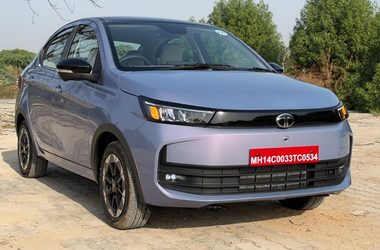
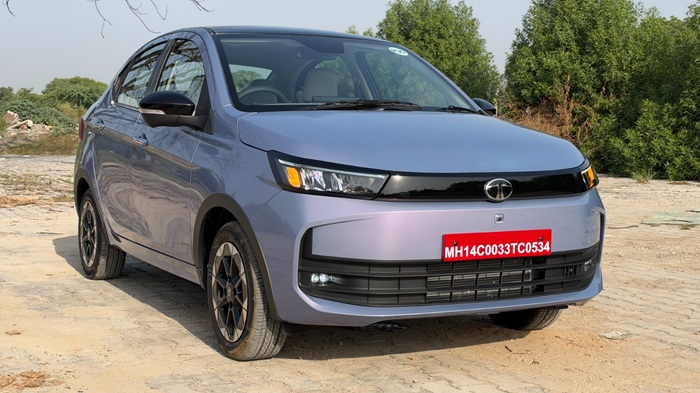
The company also launched the all-new Tata Aeris and expanded its existing product portfolio with the Curvv Series X, Sierra Legend Series and Sierra #Dark edition.
International expansion continued with the introduction of the Tata Osprey (known internationally as the Tata Nexon) in South Africa.
In another strategic development, Tata signed a memorandum of understanding with Stellantis to provide the multinational automotive group access to its advanced product technology and vehicle architecture for global products.
The company also extended its Battery-as-a-Service (BaaS) offering across its entire electric vehicle portfolio.
Shailesh Chandra, Managing Director & CEO, Tata Motors Passenger Vehicles Limited, said:
“Q2 FY27 was another quarter of strong execution for Tata Motors PV, with record quarterly sales of 200k+ units and industry-beating growth of 40% YoY reflecting robust customer demand across our portfolio. We maintained our leadership in electric mobility, recording industry-beating growth of 90% YoY in EV sales. Building on the momentum of our Q1 launches, we further strengthened our portfolio with new launchings including the all-new Tata Aeris. We also unveiled our new customer-facing identity, TATA.CARS, reflecting the evolution of our brand in step with the aspirations of today’s Indian car buyer.
We registered a Y-o-Y revenue growth of 51% and our highest ever quarterly revenues of ₹20.4K Cr in Q2FY27. While steep commodity cost pressures remained a headwind, we responded through calibrated pricing and focused cost actions.
Looking ahead, we remain focused on sustaining industry-beating growth, capitalizing on growing EV-penetration, ramping up production capacity and strengthening profitability.”
The momentum extended into the third quarter, with Tata recording its highest-ever monthly sales of 75,400 vehicles in October 2026.
Jaguar Land Rover Revenue Rises 20.3%, but Outlook Weakens
British luxury automotive subsidiary Jaguar Land Rover (JLR) reported quarterly revenue of £5.894 billion, up 20.3% year-on-year, reflecting a recovery from the cyber incident that disrupted operations during the corresponding period last year.
JLR achieved an EBITDA margin of 6.6% and an adjusted EBIT margin of 1.1%. Profit before tax and exceptional items stood at £6 million, compared with a loss of £485 million a year earlier.
Wholesale volumes improved sequentially in the United Kingdom and overseas markets, offsetting declines in China and the Middle East.
However, JLR recognised £530 million in exceptional expenses associated with restructuring activities, employee separation costs and asset write-downs.
The company reported a free cash outflow of £540 million during the quarter, with closing cash reserves of £1.8 billion and total liquidity of £6 billion.
Citing geopolitical risks, challenging market conditions and exceptional expenses, JLR revised its full-year guidance to an adjusted EBIT margin of 2–3% and an anticipated free cash outflow of approximately £1.25 billion.
Range Rover Electric, Jaguar Type 01 Lead JLR’s Electric Expansion
Alongside its financial recovery efforts, JLR unveiled three new luxury electric vehicles: the Range Rover Electric, Range Rover Sport Electric and Jaguar Type 01.
All three models will be manufactured at the company’s Solihull facility in the United Kingdom, with customer deliveries scheduled to begin in early 2027.
The Jaguar Type 01 made its world premiere in New York, marking a significant milestone in Jaguar’s transition towards a new generation of electric luxury vehicles.
JLR also confirmed plans to introduce the Range Rover GT and an entirely new electric Defender product in 2027. Both vehicles will be manufactured at its Halewood facility and will utilise the new EMA architecture.
The product expansion forms part of JLR’s planned £15–18 billion investment programme, of which £11.5 billion has been invested since 2024.
The company’s Enterprise Missions programme is targeting £1.7 billion in savings over the next two years, with the objective of reducing its break-even volume towards 300,000 vehicles.
PB Balaji, Chief Executive Officer, JLR, said:
“JLR delivered positive operating profits in the second quarter and first half of the financial year, despite ongoing global challenges. We launched three new products: Range Rover Electric, Range Rover Sport Electric and the show stopping Jaguar Type 01 at a world premiere in New York. With the proposed arrival of Range Rover GT and a new electric Defender product in the new year, we are entering a phase of exciting product launches. This, together with our growth plans for the US and disciplined execution of the Enterprise Missions to reduce our breakeven volumes to 300k units, positions us well to deliver consistent, cash-accretive growth in the coming years.
I would like to thank all our people, supply chain and retail partners for their continued support.”
Tata Motors Passenger Vehicles Q2 FY27 Financial Highlights
| Particulars | Q2 FY27 | Q2 FY26 |
|---|---|---|
| Consolidated revenue | ₹96,920 crore | ₹72,349 crore |
| Consolidated EBITDA | ₹5,995 crore | -₹71 crore |
| EBITDA margin | 6.2% | -0.1% |
| EBIT | ₹1,061 crore | -₹4,897 crore |
| EBIT margin | 1.1% | -6.8% |
| PBT before exceptional items | ₹403 crore | -₹5,462 crore |
| Domestic PV revenue | ₹20,423 crore | ₹13,529 crore |
| Domestic PV EBITDA margin | 4.0% | 5.8% |
For the first half of FY27, Tata Motors Passenger Vehicles reported consolidated revenue of ₹1,92,719 crore, an increase of 20.4% year-on-year. Consolidated EBITDA reached ₹13,123 crore, while profit before tax and exceptional items stood at ₹2,009 crore.
Outlook: Strong Sales, but Profitability Remains the Challenge
Tata Motors Passenger Vehicles identified geopolitical uncertainty, luxury vehicle demand, commodity prices and the pace of electric vehicle adoption as key factors influencing its near-term performance.
The company intends to improve domestic profitability through cost reductions, calibrated pricing measures and increased production capacity, while JLR will focus on generating sales momentum from its new electric vehicles and restructuring initiatives.
For Tata Motors Passenger Vehicles, the challenge is increasingly one of converting showroom success into sustainable profitability. With record domestic sales, an expanding electric vehicle portfolio and an ambitious luxury product offensive in Europe, the company has considerable growth opportunities. Its latest results, however, offer a familiar reminder from the automotive industry: accelerating revenue is important, but keeping costs under control ultimately determines how far that momentum can take a business.


