India’s electric mobility journey continues to accelerate, and February 2026 retail data released by the Federation of Automobile Dealers Associations (FADA) shows that EV adoption across passenger vehicles, three-wheelers, and commercial vehicles remains firmly on the rise. While month-to-month numbers show a few speed bumps, the year-on-year growth clearly indicates that the country’s electric transition is shifting from “early experiment” to “mainstream momentum.”
Starting with electric passenger vehicles (PV), February 2026 recorded retail sales of 13,733 units, reflecting a 44.48% year-on-year growth compared to 9,505 units in February 2025. However, compared to January 2026, the segment saw a 25.65% decline, suggesting that January’s strong momentum cooled slightly—perhaps the EV market briefly paused to catch its breath.
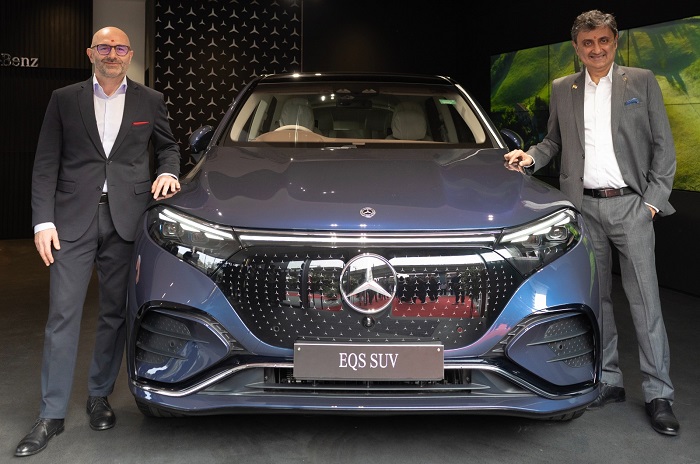
Leading the electric PV charge was Tata Motors Passenger Vehicles, retailing 5,568 units, continuing its dominance in India’s electric car landscape. JSW MG Motor India followed with 3,312 units, while Mahindra & Mahindra secured the third position with 2,913 units, posting a massive 473% year-on-year surge as its electric lineup continues to gain traction. Emerging global players also maintained their presence, with VinFast, BYD, Hyundai, Kia, and luxury brands such as BMW, Mercedes-Benz, Volvo, and Tesla India contributing to the expanding EV ecosystem. The overall EV penetration in the passenger vehicle segment stood at 3.5% in February 2026, slightly lower than January’s 3.6% but higher than the 3.0% recorded in February 2025.
Meanwhile, the electric three-wheeler segment, often considered the backbone of India’s last-mile mobility revolution, continues to electrify the streets at a much faster pace. February 2026 saw 66,398 electric three-wheelers retailed, marking a 25.09% year-on-year increase compared to 53,082 units in February 2025. On a month-to-month basis, however, sales dipped 12.37% from January’s 75,767 units, possibly reflecting seasonal demand adjustments.
In the three-wheeler EV race, Bajaj Auto retained the top position with 8,728 units, registering a healthy 90% year-on-year growth. Mahindra Group closely followed with 7,878 units, driven largely by Mahindra Last Mile Mobility, which continues to dominate fleet electrification in urban markets. TVS Motor Company also posted strong momentum with 2,447 units, recording a remarkable 691% year-on-year jump, highlighting how traditional OEMs are aggressively expanding their electric three-wheeler portfolios. Overall, the segment maintained an impressive EV market share of 56.7%, meaning more than half of India’s new three-wheelers are now electric—something diesel and CNG operators might be quietly worrying about.
The electric commercial vehicle (CV) segment, though smaller in volume, delivered the most dramatic growth story. February 2026 retail sales reached 2,051 units, representing a remarkable 156.4% year-on-year increase compared to 800 units sold in February 2025. Month-on-month numbers remained nearly stable, declining only 0.44% from January’s 2,060 units.
Tata Motors continued to lead the electric CV segment with 638 units, maintaining its leadership in electric trucks and buses. Switch Mobility secured second place with 358 units, followed by Euler Motors with 293 units, which recorded an astonishing 1,623% year-on-year growth, reflecting the rapid electrification of last-mile cargo logistics. Other notable players included Mahindra Group, JBM Auto, PMI Electro Mobility, Tivolt Electric Vehicles, and VE Commercial Vehicles, as electrification steadily expands into public transport and fleet operations. The overall EV penetration in the commercial vehicle category reached 2.03%, nearly doubling from 1.02% in February 2025.
Taken together, the February 2026 retail data paints a clear picture: India’s EV market is not just growing—it is diversifying. Passenger cars are steadily increasing their share, three-wheelers are already leading the electrification wave, and commercial vehicles are beginning to accelerate as fleet operators chase lower operating costs and sustainability targets.
In simple terms, India’s EV story is beginning to resemble a well-charged battery pack—multiple cells working together to deliver serious power. And if the current trajectory continues, the only real question may soon be whether charging stations will keep up with the enthusiasm of Indian buyers. After all, when half the auto-rickshaws on the road are electric, even the chai stall conversations might start including discussions about battery range and charging speeds.