
Every country has that one slightly embarrassing myth about itself. For Vietnam, it was a decades-old engineering joke: “We can’t manufacture a single export-ready screw.” Like most myths, it survived not because it was true, but because it was repeated. Over tea, in workshops, in classrooms—sometimes with a wince, sometimes with a laugh. It was the kind of line that felt less like comedy and more like a cultural shrug.
Then VinFast arrived and politely asked the myth to leave the room.
From Screw Anxiety to Six-Figure EV Deliveries
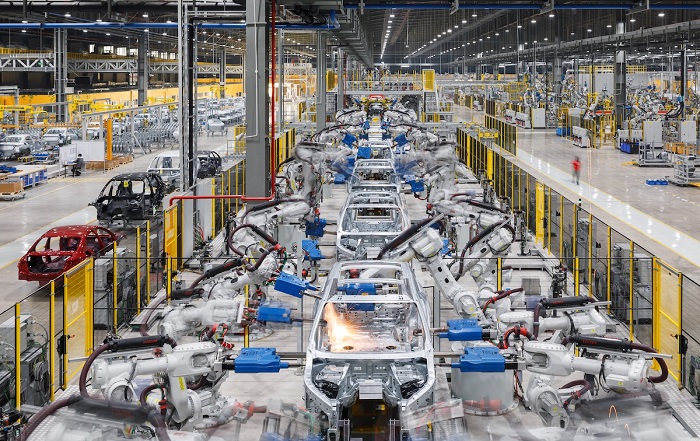
VinFast didn’t respond with a speech or a pamphlet. It responded with factories. In Hai Phong, production lines whirred to life, and Vietnam’s industrial self-image began to shift. By the end of September 2025, the company had delivered 103,884 EVs domestically. One month later, October brought an even louder punchline: 20,380 vehicles handed to customers in a single month, pushing yearly sales to 124,264.
Suddenly, nobody wanted to talk about screws anymore. They wanted to talk about batteries, platform architecture, and whether Vietnam was quietly turning into the next electric mobility powerhouse.
When Two Economies See Themselves in Each Other
It is almost poetic that VinFast’s next major automotive chapter unfolds in India—a country equally allergic to being underestimated.
Both nations have been cast as supporting actors in global industrial theatre: cheap labour, large manufacturing hubs, exporters of parts—but rarely narrators of their own high-tech story. Yet both have rewritten their roles through infrastructure, policy, and an appetite for risk that polite analysts once called “irrational ambition.”
Vietnam built Hai Phong in 21 months. Then it built another plant in Ha Tinh. Localization rose from a modest import-heavy beginning to over 60% today, with an 84% target on the horizon. More than 30% of VinFast’s Hai Phong campus is dedicated to supplier parks, and hundreds of Vietnamese SMEs—think electronics, plastics, and general machining—have quietly pivoted into EV components, motors, and body structures.
This was not a government white paper. It was a supply chain uprising.
India, watching closely, didn’t need an explanation. It already understood how a domestic industrial dream gets stitched together: in small factories, with stubborn entrepreneurs, and through carefully scaled complexity.
Winning Home Turf: The VinFast Formula
VinFast’s success in Vietnam wasn’t born from patriotic fever or marketing fireworks. It came from three promises simple enough to fit on a dealership window:
• High-quality products
• Inclusive pricing
• Generous after-sales support
The result? Eleven straight months as Vietnam’s best-selling car brand in 2025—outpacing multinational names that once dominated every boulevard.
Policy nudged people, but infrastructure grabbed their hands. Vietnam’s net-zero target by 2050 gave EV adoption a narrative; V-Green and VinFast gave it a highway. Nearly 150,000 charging points operated exclusively for VinFast users turned “range anxiety” into “range boredom.” Taxi fleets flipped to EVs, consumers relaxed, and the electric car went from exotic choice to everyday appliance.
India has seen similar inflection-point questions:
Will price drive EV adoption? Will infrastructure lead or follow? Can local suppliers scale fast enough?
Vietnam may not have all the answers, but it has something just as valuable—momentum.
The India Chapter: 400 Acres of Intent
Enter Thoothukudi, Tamil Nadu.
Four hundred acres of automation and ambition. The plant assembles VF 6 and VF 7 for domestic and regional markets. Phase one already supports 50,000 vehicles annually, with expansion potential to 150,000. Job creation ranges from 3,000 to 3,500 direct roles, and thousands more in supplier ecosystems that will sprout like mushrooms after rain.
Factories do not win markets. Networks do. And VinFast understands that India is a marathon, not a drag race.
As of late October, the company had 24 dealerships spanning Delhi, Gurugram, Noida, Mumbai, Pune, Chennai, Bengaluru, Kochi, Hyderabad, Ahmedabad, Surat, Bhubaneswar, and Jaipur—with 35 outlets targeted by year-end.
Service partnerships are equally eclectic: RoadGrid for fast charging, myTVS for maintenance, Castrol India for fluids and support, Global Assure for roadside services. And because Indian buyers trust finance more than philosophy, VinFast also shook hands with YES BANK for dealer financing, retail EV loans, and in-showroom approvals.
The Indian automotive industry noticed. So did the awards panel.
At the Jagran Hi-Tech Awards 2025:
• VinFast – EV Manufacturer of the Year
• VF 7 – EV Disruptor of the Year
For a newcomer, that isn’t polite applause. It is a standing ovation.
Global South’s Industrial Renaissance
South Korea once built ships before smartphones. China once stitched shoes before silicon. Why not Vietnam? Why not India? Why not a generation of nations that reject the idea of being industrial “support acts”?
VinFast’s push across North America, Europe, the Middle East, and Southeast Asia is more than corporate expansion—it’s cultural projection. Its parent, Vingroup, has openly set aims to showcase Vietnamese capability, not just in industry but arts and AI. No one bothered to ask permission; they simply began.
The Last Turn of the Screw
In Vietnamese engineering circles, the old screw joke survives today only as a historical footnote—like an embarrassing yearbook photo everyone pretends to find “charming.”
Engineers who once doubted their country’s industrial chops now build battery packs and propulsion systems. Technicians trained in Hai Phong now adapt software to Indian road conditions. And the vehicles they assembled move silently across Gurgaon expressways and Bengaluru tech parks.
It turns out that myths do not vanish when disproven. They vanish when irrelevant.
A screw once seen as impossible to manufacture now holds together electric crossovers streaking between state borders. With every rotation, it whispers a tiny, metallic punchline: “You doubted us?”
VinFast isn’t simply selling EVs in India. It is participating in a larger story—two nations learning, in their own distinct tempos, that industrial destiny is something you build, not inherit.