
India’s USD 74 billion auto component ecosystem is getting a full-system upgrade — and for once, it’s not a software patch that requires a reboot. Grant Thornton Bharat and the Indo–Japan Chamber of Commerce and Industry (IJCCI) have released a comprehensive new whitepaper titled “Navigating change: GST 2.0, customs, and FTA impacts on the India–Japan auto sector.” The findings point to one conclusion: between tax reforms, customs reliefs, and Indo–Japan trade diplomacy, India’s automotive sector is entering its next growth chapter with cruise control firmly engaged.
India’s automotive industry — contributing 7.1% to national GDP and nearly half of all manufacturing GDP — rolled out 28 million vehicles in 2024, marking an 8% jump from 2023. Exports crossed 4.5 million units, reinforcing the sector’s global relevance. And with Japan investing USD 43.3 billion cumulatively into India, the partnership continues to run smoother than a freshly serviced hybrid.
GST 2.0: A Policy Overhaul That Actually Makes People Smile
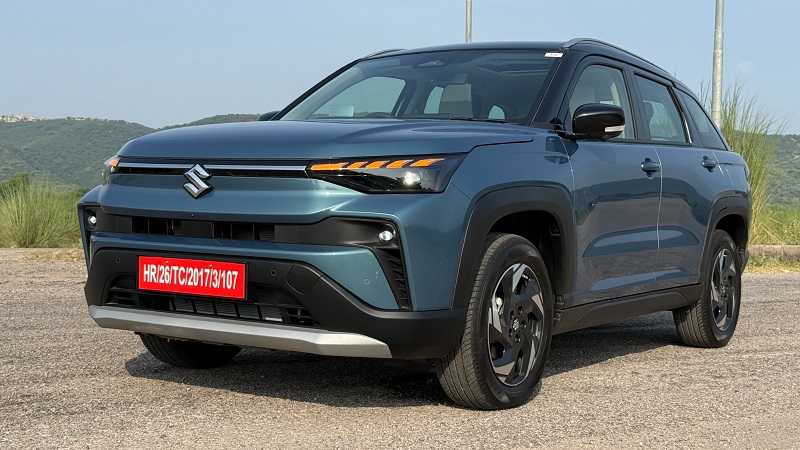
Launched in September 2025, GST 2.0 has earned rare appreciation from both automakers and customers. Small cars and sub-350cc motorcycles now attract just 18% GST (down from 28% + cess), translating into price drops of up to INR 1 lakh. Unsurprisingly, the showroom footfall spike was immediate — bookings in small cars climbed nearly 50%, proving once again that Indians love two things: value and vehicles.
Premium SUVs and high-end motorcycles have been streamlined into a flat 40% GST bracket, while EVs continue their happy streak with a 5% GST rate — making green mobility more affordable than ever.
Meanwhile, the Union Budget 2025 backed the EV value chain with customs duty exemptions on lithium-ion battery scrap and critical minerals like copper and lead. Result: smoother supply chains, cheaper components, and more jobs.
Industry Voices: “A Defining Moment”
Sohrab Bararia, Partner – India Investment Advisory at Grant Thornton Bharat, describes GST 2.0 and customs reforms as “a defining moment for India’s automotive sector” — one that simplifies compliance, boosts competitiveness, and strengthens India’s positioning as a manufacturing hub for Japanese OEMs.
Auto & EV Industry Leader Saket Mehra adds that tariff changes on CKD/SKD units and capital goods for battery manufacturing will fuel both affordability and India’s Atmanirbhar Bharat aspirations. The report forecasts a surge in Indo–Japan collaboration across EVs, clean tech, and advanced mobility.
Indo–Japan CEPA: The Alliance That Keeps Innovating
The India–Japan CEPA, alongside the India–Japan Digital Partnership (IJDP), is powering research collaborations in EVs, AI-driven manufacturing, and connected mobility. Supply Chain Resilience Initiative (SCRI) efforts are boosting localisation of critical components, ensuring India isn’t caught off-guard by global disruptions.
Thanks to the Japan-India Institute for Manufacturing (JIM) and Japanese Endowed Courses (JEC), more than 30,000 Indian engineers are now trained in Japanese manufacturing standards — building a skilled workforce for next-gen automotive production.
Key trade-enabling schemes accelerating competitiveness include:
- MOOWR Scheme: Duty-free import of raw materials and capital goods within bonded warehouses.
- EPCG: Concessional duties on machinery for export-driven manufacturing.
- Advance Authorisation: Duty-free imports for export-linked production.
- RoDTEP: Rebates on embedded levies to ensure export neutrality.
Strong Words from IJCCI
Suguna Ramamoorthy, Secretary General of IJCCI, emphasises the strategic depth of Indo–Japan ties in hybrid, EV, and precision component manufacturing. With Indian car exports to Japan touching USD 616.45 million in the first nine months of FY2025, and auto component exports rising beyond USD 171 million in 2024, the partnership is gaining new momentum.
She notes that GST 2.0 supports the Atmanirbhar Bharat vision and strengthens bilateral growth through joint research, industrial competitiveness programmes, and knowledge transfer.
With policy reform under GST 2.0, supportive customs measures, and a strengthening Indo–Japan FTA, India’s automotive industry is entering a high-growth era powered by innovation, collaboration, and efficient trade frameworks. As the ecosystem continues to expand, the trifecta of regulatory clarity, global partnerships, and skilled talent will steer India’s automotive ambitions into the fast lane — sustainably, competitively, and without speed bumps.